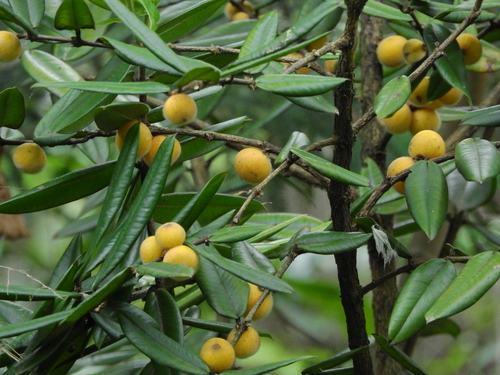
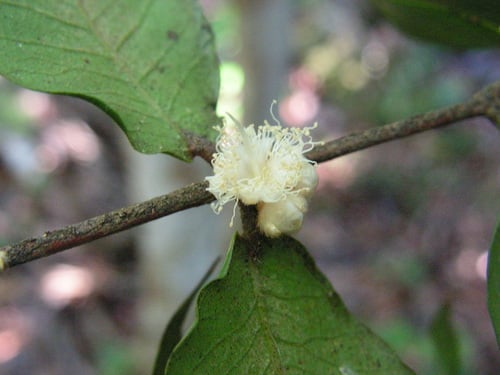
Eugenia ligustrina
(Sw.) Willd.
Birchberry, Privet stopper
iNaturalist· cc-by-nc
(c) greensxm, some rights reserved (CC BY-NC), uploaded by greensxm
iNaturalist· cc-by-nc
(c) Omar Monzon Carmona, some rights reserved (CC BY-NC)
Description
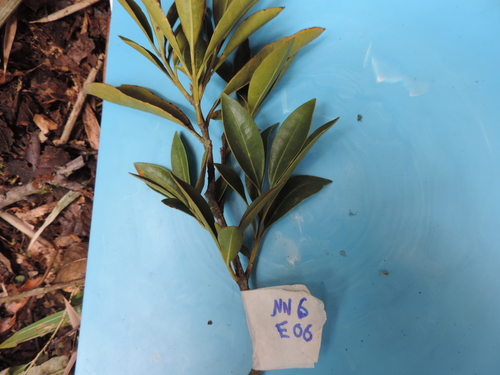
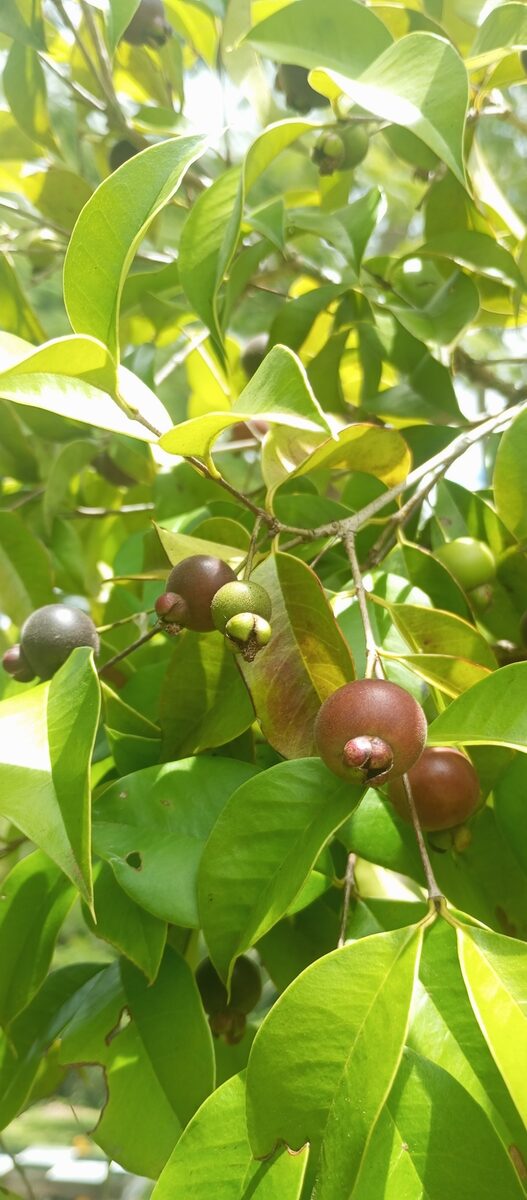
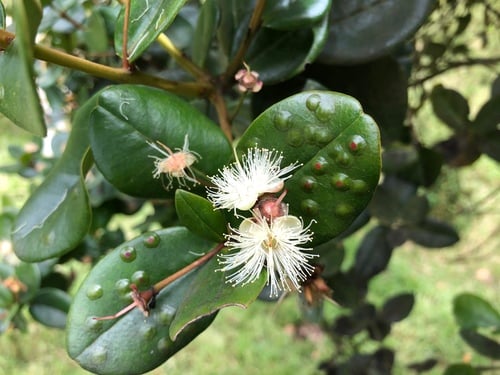
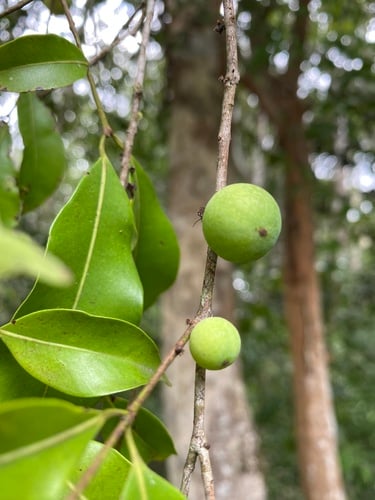
A shrub or small tree. It grows 2.5 - 4 m tall. The leaves are narrowly oval and 3 cm long by 2 cm wide. They are shiny green above. The leaves are smaller and scale like at the base of the twigs. The flowers occur singly on slender stalks. They are 2 cm across with 4 petals. The fruit are small round berries about 6 mm across.
Edible Uses
The pulp of the fruit is eaten raw and can be used to make jam.
Traditional Uses
The pulp of the fruit is eaten raw. They can be used for jam.
This uses section is brief — help expand it
Distribution
A tropical plant. In Puerto Rico it grows up to 200 m above sea level.
Where It Grows
Bolivia, Brazil, Cuba, Dominican Republic, Guianas, Guyana, Haiti, Leeward Island, Martinique, Mexico, Puerto Rico, South America, Suriname, Venezuela, West Indies*,
Cultivation
It can be used to make a hedge.
Notes
There are about 550 Eugenia species. They are mostly in tropical and subtropical South America.
Synonyms
Also Known As
Arraijan, Arrayan, Biriji, Cerise noire, Granadillo, Guapi-nhem, Palo de muleta
References (12)
- Grandtner, M. M., 2008, World Dictionary of Trees. Wood and Forest Science Department. Laval University, Quebec, Qc Canada. (Internet database http://www.wdt.qc.ca)
- Grandtner, M. M. & Chevrette, J., 2013, Dictionary of Trees, Volume 2: South America: Nomenclature, Taxonomy and Ecology. Academic Press p 239
- Hedrick, U.P., 1919, (Ed.), Sturtevant's edible plants of the world. p 299
- Kermath, B. M., et al, 2014, Food Plants in the Americas: A survey of the domesticated, cultivated and wild plants used for Human food in North, Central and South America and the Caribbean. On line draft. p 355
- Little, E. L., et al, 1974, Trees of Puerto Rico and the Virgin Islands. USDA Handbook 449. Forestry Service. p 658
Show all 12 references Hide references
- Martin, F.W., C.W. Campbell and R.M. Ruberté, 1987, Perennial edible fruits of the tropics - An inventory. United States Department of Agriculture, Agricultural Research Service, Agriculture Handbook No. 642. Washington, D.C., USA
- Miguel, E., et al, 1989, A checklist of the cultivated plants of Cuba. Kulturpflanze 37. 1989, 211-357
- NYBG herbarium "edible"
- Plants of Haiti Smithsonian Institute http://botany.si.edu/antilles/West Indies
- Segura, S., et al, 2018, The edible fruit species in Mexico. Genet Resour Crop Evol (2018) 65:1767–1793
- Sp. pl. 2(2):962. 1799
- www.colecionandofrutas.org