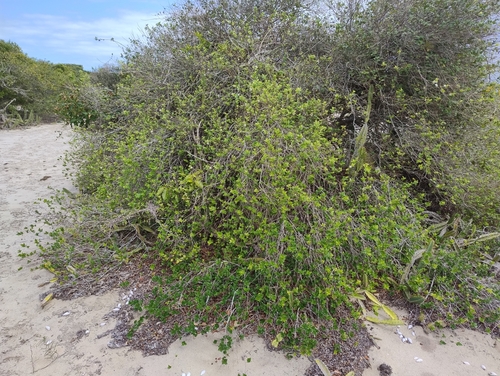
Eugenia leitonii
D. Legrand
iNaturalist· cc-by-nc
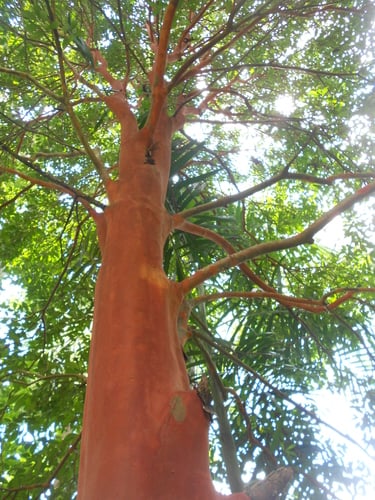
(c) gabriela_bl, some rights reserved (CC BY-NC), uploaded by gabriela_bl
iNaturalist· cc-by-nc
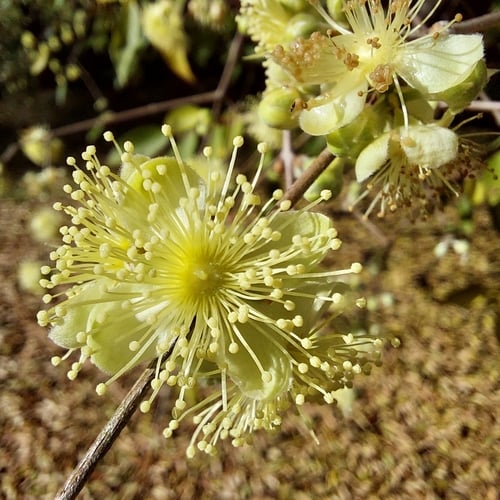
(c) gabriela_bl, some rights reserved (CC BY-NC)
Description
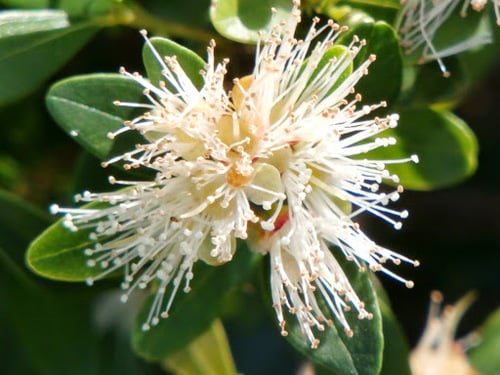
A tree. It grows 8-14 m tall. The crown is open. The trunk is 25-40 cm wide. The bark is smooth and orange-red and peels off. The leaves are thin and occur opposite. They are 9-17 cm long. The flowers are in an open group at the ends of the branches. They are small and white. The fruit is large and round. It is fleshy with a stone inside. It is yellow and has dark round seeds.
Edible Uses
Fruit - raw or in jellies. A thick, fleshy pulp with a slightly sweet, somewhat astringent flavour. The fruit is around 5cm in diameter, containing a single large seed.
Traditional Uses
The fruit are eaten fresh. They are also used for jellies.
This uses section is brief — help expand it
Medicinal Uses
No medicinal uses documented.
Distribution
It is a tropical plant. It grows in Brazil in the forest near the Atlantic.
Where It Grows
Brazil*, South America,
Cultivation
Plants are grown from seed. Ripe fruit are harvested and the seed removed under running water. They are dried in the shade. They can only be stored for a short time. Fresh seed are planted and they germinate in 40-80 days. Seedlings are ready for planting out after 10-11 months.
Propagation
Seed - best sown as soon as it is ripe in a partially shaded position in individual containers. A very high germination rate can be expected, with the seed sprouting within 40 - 80 days. Seedlings grow slowly and will be ready for planting out about 10 - 11 months later.
Other Uses
The sapwood is distinct and well developed. The wood is heavy, compact, soft, elastic, durable. It is used for fine cabinet making, general and naval construction etc.
Production
Trees grown slowly. They may reach 2.5 m after 2 years.
Other Information
The fruit are not popular.
Also Known As
Araca-piranga, Aracandiva, Aracanduba, Aracatunga, Goiabao, Goiabarana
References (3)
- H. Lorenzi, Arvores brasileiras 259. 1992, nom. inval.
- Lorenzi, H., 2002, Brazilian Trees. A Guide to the Identification and Cultivation of Brazilian Native Trees. Vol. 01 Nova Odessa, SP, Instituto Plantarum p 276
- Lorenzi, H., Bacher, L., Lacerda, M. & Sartori, S., 2006, Brazilian Fruits & Cultivated Exotics. Sao Paulo, Instituto Plantarum de Estuados da Flora Ltda. p 202