Syzygium eucalyptoides subsp. bleeseri
(F. Muell.) B. Hyland, (O. Shwarz.) B. Hyland
White love apple
iNaturalist· cc-by-nc
(c) Colour Blind Flora Enthusiast, some rights reserved (CC BY-NC), uploaded by Colour Blind Flora Enthusiast
iNaturalist· cc-by-nc
(c) ryanthughes, some rights reserved (CC BY-NC)
iNaturalist· cc-by-nc
(c) Kim McLachlan, some rights reserved (CC BY-NC), uploaded by Kim McLachlan
Summary
Source: WikipediaSyzygium eucalyptoides is a tree of the family Myrtaceae native to Western Australia and the Northern Territory.
Description
A tree with several stems. It grows from 2-18 m high. Often the tree has buttresses. But it can also occur as a clump of small suckers. The bark is grey-brown and mostly smooth although sometimes it is flaky. The leaves are rounded. The leaves are 5-14 cm long by 2-8 cm wide. The leaf stalk is long (3 cm). The leaves are produced opposite each other and are thick and leathery. They are a dull green with distinct veins. The tip of the leaf is rounded. The flowers occur in a cluster at the ends of branches. Sometimes flowers occur on branches or in leaf axils. The flowers are white or cream coloured and are fluffy in appearance due to the stamens which can be 2 cm long. The fruit is white or pale green but can be tinged with pink or red as it ripens. It can be 1.5-4 cm across. The surface of the fruit is ribbed. The fruit has a distinct crown at the end. There is one seed inside the succulent fruit. The fruit is edible.
Edible Uses
The fruit is eaten raw.
Traditional Uses
The fruit is eaten raw.
This uses section is brief — help expand it
Distribution
It is a tropical species. It occurs in the north-west of Australia. It grows in open forest. Often it occurs on sandy soils. It is common on poorer soils and often these soils are waterlogged in some seasons. It is resistant to fire due to a lignotuber under the ground. It can re-grow new shoots from this structure.
Where It Grows
Australia*,
Cultivation
Plants are grown from fresh seed.
Production
The flowers occur October to December (August to November) with fruit in January (September to December).
Nutrition
| Part | Moisture | kJ | kcal | Protein | Vit A | Vit C | Iron | Zinc |
|---|---|---|---|---|---|---|---|---|
| Fruit | 88.6 | 123 | 29 | 0.1 | — | — | 1.1 | 0.2 |
Synonyms
Also Known As
Andjalbbirdo, Bermbetjek, Morlanggi, Pinyama, Werner
References (16)
- Austral. J. Bot., suppl. 9:82. 1983
- Brock, J., 1993, Native Plants of Northern Australia, Reed. p 306
- Cherikoff V. & Isaacs, J., The Bush Food Handbook. How to gather, grow, process and cook Australian Wild Foods. Ti Tree Press, Australia p 201
- Garde, M., et al, 2003, A Preliminary List of Kundedjnjenghmi Plant Names. Northern Land Council. (Arnhem Land, Australia)
- Hiddins, L., 1999, Explore Wild Australia with the Bush Tucker Man. Penguin Books/ABC Books. p 153
Show all 16 references Hide references
- Kenneally, K.E., Edinger, D. C., and Willing T., 1996, Broome and Beyond, Plants and People of the Dampier Peninsula, Kimberley, Western Australia. Department of Conservation and Land Management. p 148
- Lazarides, M. & Hince, B., 1993, Handbook of Economic Plants of Australia, CSIRO. p 232
- Low, T., 1991, Wild Food Plants of Australia. Australian Nature FieldGuide, Angus & Robertson. p 148
- Paczkowska, G . & Chapman, A.R., 2000, The Western Australian Flora. A Descriptive Calatogue. Western Australian Herbarium. p 403
- Smith, N and Wightman, G.M., 1990, Ethnobotanical Notes from Belyuen Northern Territory Australia. Northern Territory Botanical Bulletin No 10. Parks and Wildlife Commission of the Northern Territory. p 25
- Smith, N. M., 1991, Ethnobotanical Field Notes from the Northern Territory, Australia, J. Adelaide Bot. Gard. 14(1): 1-65
- Smith, Nicholas et al. 1993, Ngarinyman Ethnobotany: Aboriginal Plant Use from the Victoria River Area Northern Australia. Northern Territory Botanical Bulletin No 16. Parks and Wildlife Commission of the Northern Territory. p 43
- Townsend, K., 1994, Across the Top. Gardening with Australian Plants in the tropics. Society for Growing Australian Plants, Townsville Branch Inc. p 345
- Vigilante, T., et al, 2013, Island country: Aboriginal connections, values and knowledge of the Western Kimberley islands in the context of an island biological survey. Records of the Western Australian Museum Supplement 81: 145-182
- Wheeler, J.R.(ed.), 1992, Flora of the Kimberley Region. CALM, Western Australian Herbarium, p 543
- Yunupinu Banjgul, Laklak Yunupinu-Marika, et al. 1995, Rirratjinu Ethnobotany: Aboriginal Plant Use from Yirrkala, Arnhem Land, Australia. Northern Territory Botanical Bulletin No 21. Parks and Wildlife Commission of the Northern Territory. p 71
More from Myrtaceae
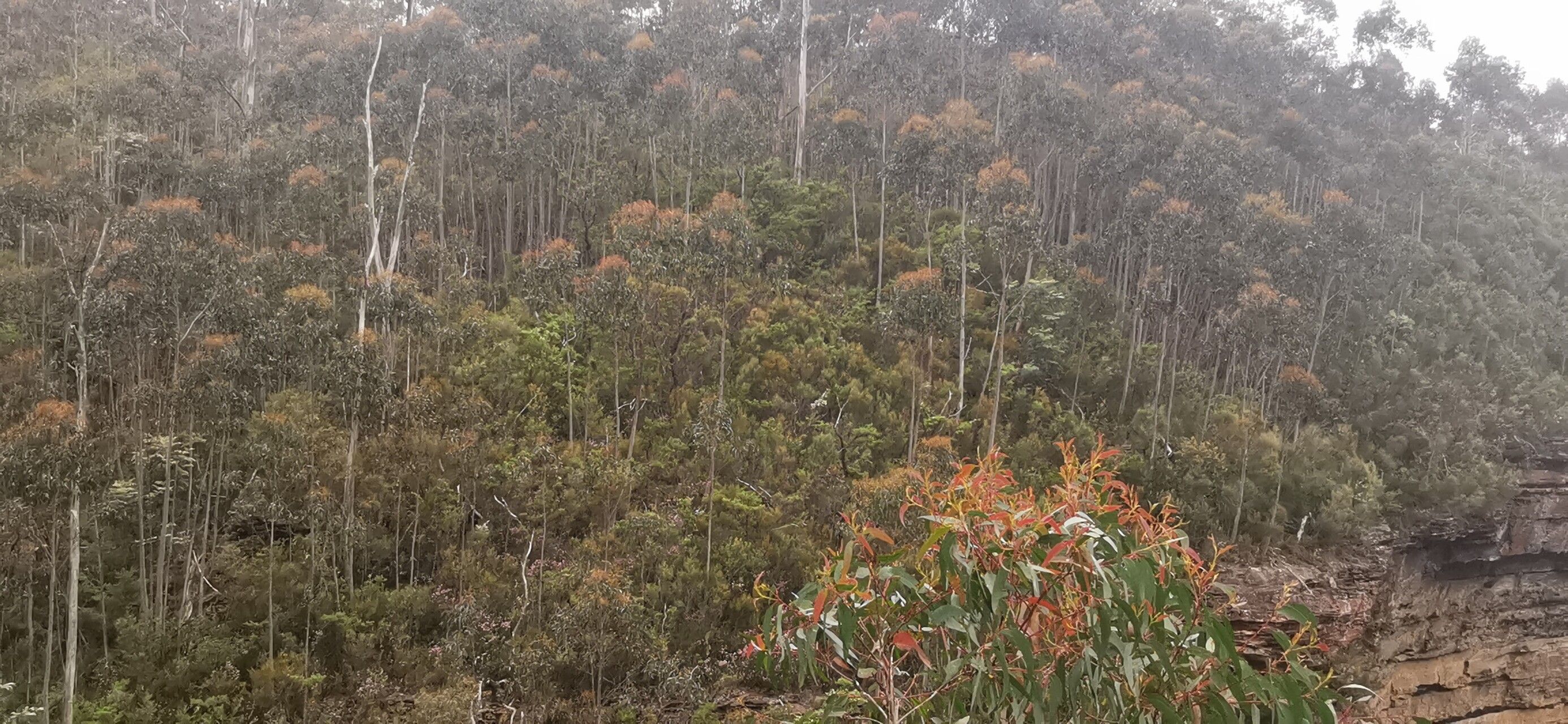
Eucalyptus macarthurii
Camden woollybutt
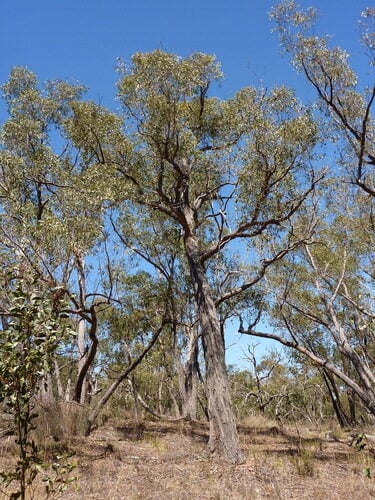
Eucalyptus macrorhyncha
Red Stringybark
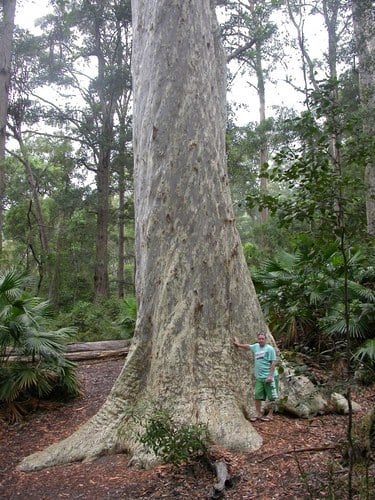
Eucalyptus maculata
Spotted gum
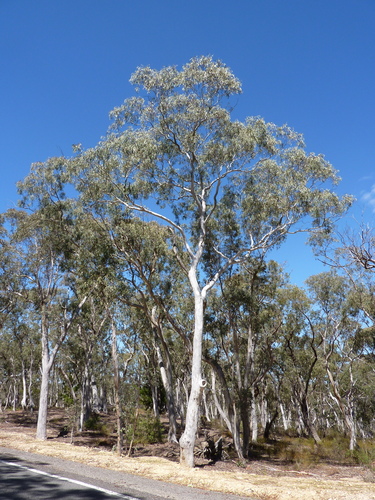
Eucalyptus mannifera
Mannifera, Red-spotted Gum, Brittle Gum, White brittle gum
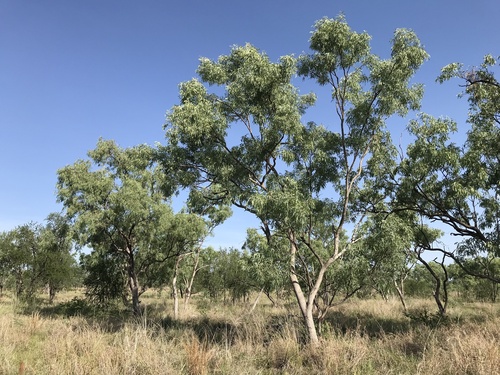
Eucalyptus microtheca
Coolabah, Coolibah, Flooded Box
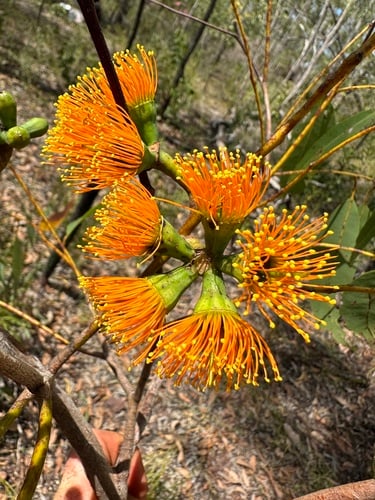
Eucalyptus miniata
Darwin Woolybutt, Manowan, Northern Woollybutt