Eucalyptus miniata
A.Cunn. ex Schauer
Darwin Woolybutt, Manowan, Northern Woollybutt
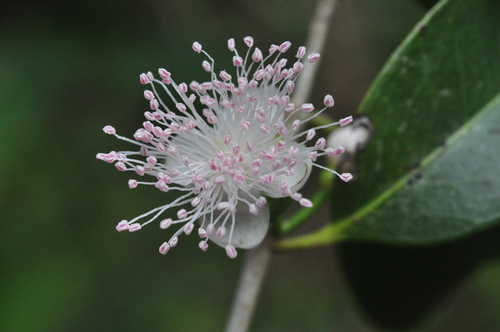
iNaturalist· cc-by-nc
(c) George (Clancy) Lester, some rights reserved (CC BY-NC), uploaded by George (Clancy) Lester
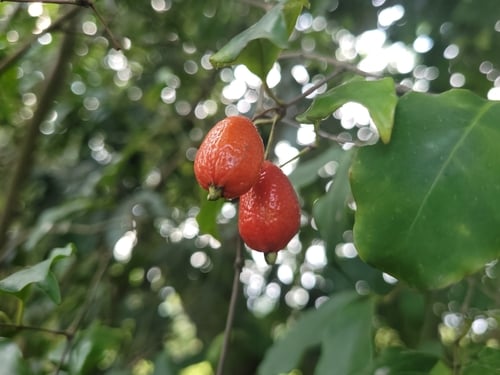
iNaturalist· cc-by-nc
(c) George (Clancy) Lester, some rights reserved (CC BY-NC), uploaded by George (Clancy) Lester
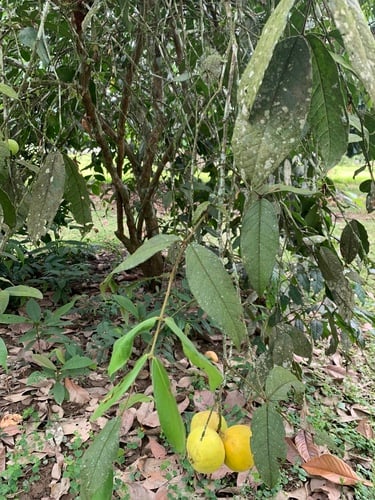
iNaturalist· cc-by-nc
(c) greg n, some rights reserved (CC BY-NC), uploaded by greg n
Summary
Source: WikipediaEucalyptus miniata, commonly known as the Darwin woollybutt or woolewoorrng, is a species of medium-sized to tall tree that is endemic to northern Australia. It has rough, fibrous, brownish bark on the trunk, smooth greyish bark above. Adult leaves are lance-shaped, the flower buds are ribbed and arranged in groups of seven, the flowers orange or scarlet and the fruit is cylindrical to barrel-shaped or urn-shaped, with ribs along the sides.
Description
An erect tree. It grows 10-30 m tall and has a tall trunk. It can spread 10-20 m wide. The lower bark is dark. It is loose, rough and papery and peels off to reveal smooth white bark. The young growth has a whitish bloom. The leaves are leathery and sword shaped. The blade is 8-15 cm long and 2-6 cm wide. The flowers are orange in clusters of about 7. These are on thick stalks in the axils of leaves. The fruit are ribbed. They are barrel shaped woody capsules. They are 3-6 cm long by 2-5 cm wide.
Edible Uses
The seeds and nectar are eaten.
Traditional Uses
The seeds are eaten.
This uses section is brief — help expand it
Distribution
A tropical plant. It grows in tropics in Australia. They grow on well-drained soils. It can grow in full sun or light shade. It grows in sandy forest country.
Where It Grows
Australia*,
Cultivation
Eucalyptus miniata is native to the tropical climate of northern Australia, where it is found at elevations up to 300 metres. Summers are hot and moist, with dry winters and a dry season of around 7 months. Mean annual rainfall is within the range 750 - 1,500mm; mean maximum temperature of the hottest month is 35°c; mean minimum temperature of the coldest month is 5°c, and there are generally no frosts. Eucalyptus species generally require a sunny position, succeeding in a wide range of well-drained, circumneutral soils of low to moderate fertility. The plant develops a lignotuber - this is a woody tuber that starts to develop near the base of seedlings and can become massive in the mature plants of some species. It possesses embedded vegetative buds, allowing the plant to regenerate following crown destruction, for example by fire.
Propagation
Seed - surface sow in a sunny position and make sure the compost is not allowed to dry out. Species that come from high altitudes appreciate 6 - 8 weeks cold stratification at 2°c. Pot up the seedlings into individual pots as soon as the second set of seed leaves has developed, if left longer than this they might not move well. The seedlings are ready for planting in the field when they are 25 - 30 cm tall, usually after 3 - 4 months. The seed has a long viability.
Other Uses
An essential oil is obtained from the leaves. Total quantity of the oil, and its composition, can vary widely from plant to plant, but we have reports that the fresh leaves contain around 1.0% (0.2 - 1.2% dry weight) essential oil. The main components include pinene (up to 85'% in some forms) and 1,8-cineole. The red to red-brown wood is hard, not very durable, the insides of the trees are often eaten out by termites. The wood is generally only used locally.
Notes
There are at least 500 Eucalyptus species mostly originally in Australia.
Synonyms
Also Known As
Andalanjdjarr, Djamadobdob, Mantiyurlaka, Timirraringa
References (23)
- Barwick, M., 2004, Tropical and Subtropical Trees. A Worldwide Encyclopedic Guide. Thames and Hudson p 171
- Bodkin, F., 1991, Encyclopedia Botanica. Cornstalk publishing, p 436
- Brock, J., 1993, Native Plants of Northern Australia, Reed. p 171
- Cherikoff V. & Isaacs, J., The Bush Food Handbook. How to gather, grow, process and cook Australian Wild Foods. Ti Tree Press, Australia p 200
- Cronin, L., 1989, The Concise Australian Flora. Reed. p 201
Show all 23 references Hide references
- Elliot, W.R., & Jones, D.L., 1992, Encyclopedia of Australian Plants suitable for cultivation. Vol 4. Lothian. p 148
- Garde, M., et al, 2003, A Preliminary List of Kundedjnjenghmi Plant Names. Northern Land Council. (Arnhem Land, Australia)
- Hearne, D.A., & Rance, S.J., 1975, Trees for Darwin and Northern Australia. AGPS, Canberra p 61, Pl 16
- Hibbert, M., 2002, The Aussie Plant Finder 2002, Florilegium. p 97
- Holliday, I., 1989, A Field Guide to Australian Trees. Hamlyn. p 164
- Kenneally, K.E., Edinger, D. C., and Willing T., 1996, Broome and Beyond, Plants and People of the Dampier Peninsula, Kimberley, Western Australia. Department of Conservation and Land Management. p 143
- Lazarides, M. & Hince, B., 1993, Handbook of Economic Plants of Australia, CSIRO. p 104
- Lord, E.E., & Willis, J.H., 1999, Shrubs and Trees for Australian gardens. Lothian. p 30
- Milson. J., 2000, Trees and Shrubs of north-west Queensland. DPI p 222
- Molyneux, B. and Forrester, S., 1997, The Austraflora A-Z of Australian Plants. Reed. p 88
- Paczkowska, G . & Chapman, A.R., 2000, The Western Australian Flora. A Descriptive Calatogue. Western Australian Herbarium. p 377
- Petheram, R. J. and Kok, B., 2003, Plants of the Kimberley Region of Western Australia. UWA Press p 457
- Tiwi Plants and Animals. 2001, Aboriginal flora and fauna knowledge from Bathurst and Melville Islands, northern Australia. Northern Territory Botanical Bulletin; No. 24 p 48
- Townsend, K., 1994, Across the Top. Gardening with Australian Plants in the tropics. Society for Growing Australian Plants, Townsville Branch Inc. p 195
- Vigilante, T., et al, 2013, Island country: Aboriginal connections, values and knowledge of the Western Kimberley islands in the context of an island biological survey. Records of the Western Australian Museum Supplement 81: 145-182
- Walp., Repert. bot. syst. 2:925. 1843
- Wheeler, J.R.(ed.), 1992, Flora of the Kimberley Region. CALM, Western Australian Herbarium, p 521
- Wightman, G. & Brown, J., 1994, Jawoyn Plant Identikit, Common Useful Plants in the Katherine Area of Northern Australia. Concervation Commission Northern Territory. p 22