Eucalyptus mannifera
Mudie
Mannifera, Red-spotted Gum, Brittle Gum, White brittle gum
iNaturalist· cc-by-nc
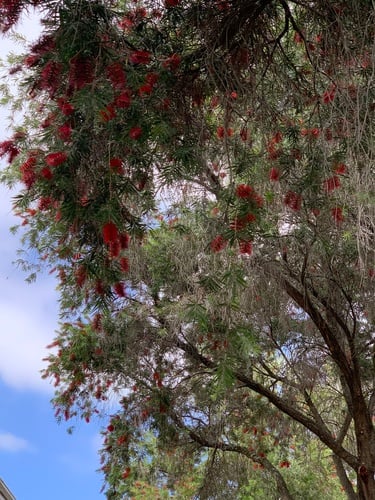
(c) Dean Nicolle, some rights reserved (CC BY-NC), uploaded by Dean Nicolle
iNaturalist· cc-by-nc
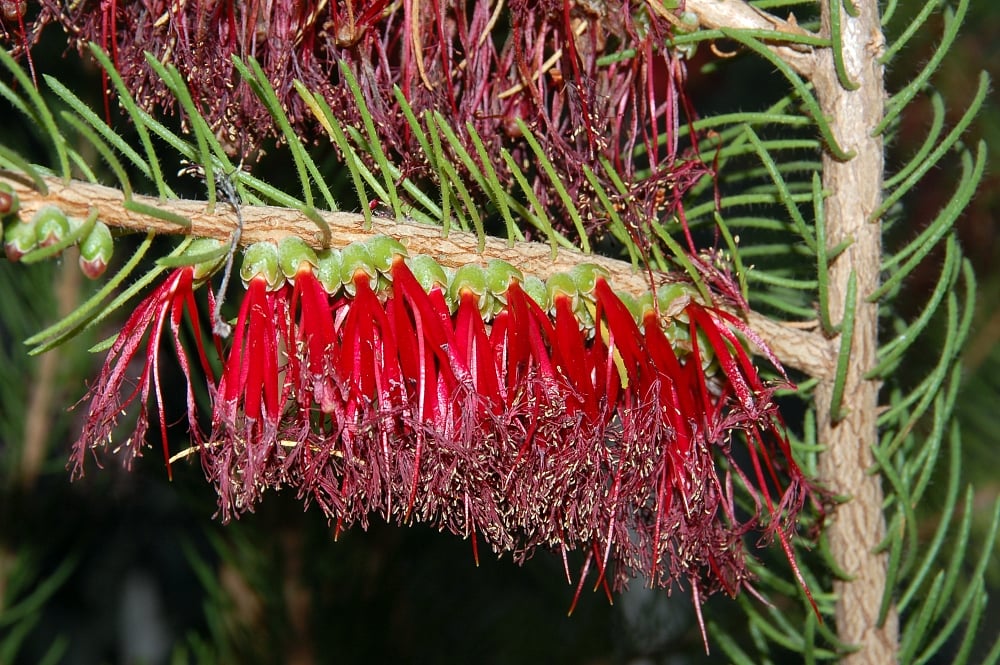
(c) Dean Nicolle, some rights reserved (CC BY-NC), uploaded by Dean Nicolle
iNaturalist· cc-by-nc
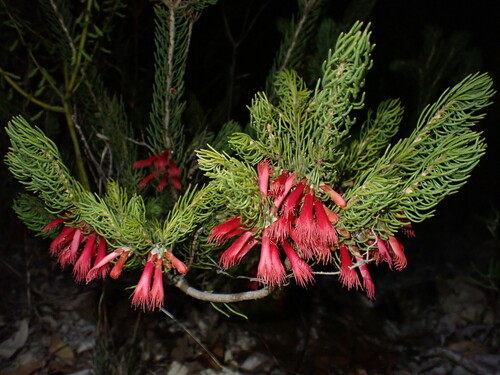
(c) Dean Nicolle, some rights reserved (CC BY-NC), uploaded by Dean Nicolle
Summary
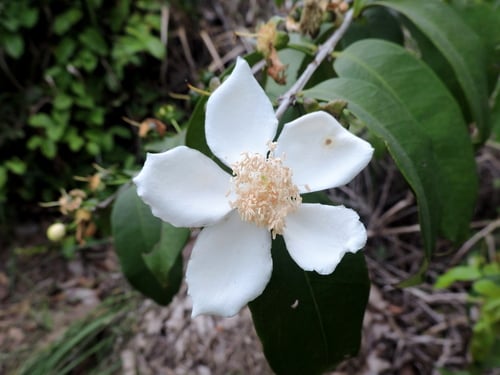
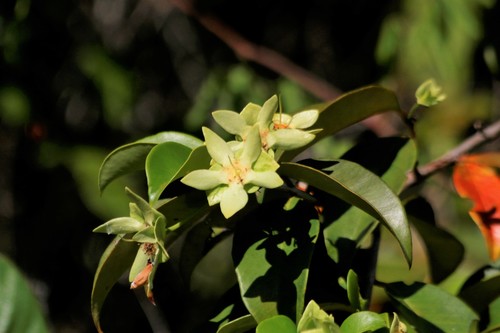
Source: WikipediaEucalyptus mannifera, commonly known as the brittle gum or red spotted gum, is a species of small to medium-sized tree that is endemic to south-eastern Australia. It has smooth, powdery white bark, lance-shaped to curved adult leaves, flower buds in groups of seven, white flowers and cup-shaped, hemispherical or conical fruit.
Description
A small to medium tree. It grows 8-14 m high and spreads 5-10 m wide. It can be 21 m high. The bark is powdery white. The bark turns reddish before shedding in short ribbons. The leaves are grey-green. They are 20 cm long and droop. The flowers are cream. They are small and in clusters.
Edible Uses
An exudation of the leaves and twigs called manna, which forms a white sugary substance, is used as food.
Traditional Uses
An exudation of the leaves and twigs called manna is used as food. It leaves a white sugary substance on the surface.
This uses section is brief — help expand it
Distribution
It grows in temperate regions. It can grow in the subtropics. It needs well drained soil. It can grow in full sun of light shade. It can stand heavy frosts. It is common in Canberra. It suits hardiness zones 8-10.
Where It Grows
Australia*,
Notes
There are at least 500 Eucalyptus species mostly originally in Australia.
Synonyms
References (14)
- Bodkin, F., 1991, Encyclopedia Botanica. Cornstalk publishing, p 434
- Cribb, A.B. & J.W., 1976, Wild Food in Australia, Fontana. p 187
- Cronin, L., 1989, The Concise Australian Flora. Reed. p 198
- Cundall, P., (ed.), 2004, Gardening Australia: flora: the gardener's bible. ABC Books. p 573
- Elliot, W.R., & Jones, D.L., 1992, Encyclopedia of Australian Plants suitable for cultivation. Vol 4. Lothian. p 140
Show all 14 references Hide references
- Etherington, K., & Imwold, D., (Eds), 2001, Botanica's Trees & Shrubs. The illustrated A-Z of over 8500 trees and shrubs. Random House, Australia. p 303
- Facciola, S., 1998, Cornucopia 2: a Source Book of Edible Plants. Kampong Publications, p 141
- Greig, D., 1996, Flowering Natives for Home Gardens. Angus & Robertson. p 173
- Hibbert, M., 2002, The Aussie Plant Finder 2002, Florilegium. p 97
- Lazarides, M. & Hince, B., 1993, Handbook of Economic Plants of Australia, CSIRO. p 104
- Lord, E.E., & Willis, J.H., 1999, Shrubs and Trees for Australian gardens. Lothian. p 29
- Low, T., 1991, Wild Food Plants of Australia. Australian Nature FieldGuide, Angus & Robertson. p 153
- Molyneux, B. and Forrester, S., 1997, The Austraflora A-Z of Australian Plants. Reed. p 88
- Trans. Roy. Med.-Bot. Soc. London 1(3):24. 1834