Aristolochia bracteolata
Lamk.
Bracteated birthwort
iNaturalist· cc0
no rights reserved, uploaded by Jaya Rakesh
iNaturalist· cc0
no rights reserved, uploaded by Jaya Rakesh
iNaturalist· cc-by
(c) Lalithamba, some rights reserved (CC BY)
Summary
Source: WikipediaAristolochia bracteolata also known as 'worm killer' in English due to its anthelminthic activity and trypanocidal effect, is a perennial herb growing from 10–60 cm tall. The plant is important in traditional medicine in Africa, India and the Middle East.
Description
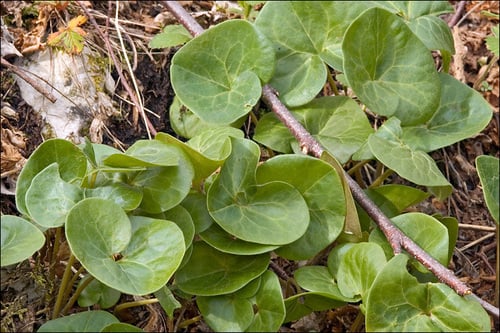
A herb that lies along the ground. It keeps growing from year to year. It has an unpleasant smell. The leaves are 1.5-3 cm long and oval but spear shaped at the base. The flowers have large bracts.
Edible Uses
The flowers can be brewed as a tea.
Medicinal Uses
Aristolochia bracteolata has been used in traditional medicine in Nigeria, India, and Ethiopia as an infusion of dried leaves to treat intestinal worms, skin itch, or insect bites.
Known Hazards
The plant contains aristolochic acid and is poisonous to mammals.
Distribution
A tropical plant.
Where It Grows
Africa, Asia, East Africa, Ethiopia, India, Middle East, Pakistan, Saudi Arabia, Sri Lanka, Sudan,
Cultivation
A plant of the drier tropics and subtropics, usually growing where there is a distinct dry season. The flowers of many species in this genus form an intricate trap for pollinating insects. The insects are tempted to an area of the flower where they are unable to grip and they slide down into the utricle - downward pointing hairs prevent them climbing out. The trap helps to ensure the fertilization of the flowers and the insects are eventually released.
Notes
The Aristolochiaceae are mostly tropical and subtropical. There are about 350-500 Aristolochia species. Chemical composition (flower): Protein (crude) = 12.4% (dry). Fat = 5.6% (dry). Fibre (crude) = 23.0% (dry). Ash (insoluble) = 6.9% (dry). Carbohydrate (soluble): Starch = 2.4% (dry). Sucrose = 0.7% (dry). D-glucose = 0.9% (dry). D-fructose = 0.7% (dry). Amino acids (g [16g N]-1): Aspartic acid = 7.2g. Threonine = 3.1g. Serine = 3.1g. Glutamic acid = 9.1g. Proline = 8.3g. Glycine = 4.1g. Alanine = 3.7g. Valine = 4.1g. Cysteine = 0.7g. Methionine = 1.1g. Isoleucine = 2.8g. Leucine = 4.8g. Tyrosine = 2.5g. Phenylalanine = 3.0g. lysine = 5.0g. Histidine = 1.5g. Arginine = 6.5g. Minerals: Sulphur = 0.20% (dry). Potassium = 0.27% (dry). Magnesium = 0.48% (dry). Calcium = 1.14% (dry). Na = 0.01% (dry). K = 1.42% (dry). Zinc = 24 mg/kg-1 (dry). Iron = 365 mg/kg-1 (dry). Copper = 10 mg/kg-1 (dry).
Synonyms
Also Known As
Adumuttada-gida, Aduthina-palai, Aulosa, Boro, Dhumra-patra, Jufa, Kidamari, Kidemar, Kiramar, Paniri, Um-glaigla
References (4)
- ABDELMUTI
- Ambasta S.P. (Ed.), 2000, The Useful Plants of India. CSIR India. p 53
- Molla, A., Ethiopian Plant Names. http://www.ethiopic.com/aplants.htm
- Observ. bot. 5:29. 1788 ("1789")
More from Aristolochiaceae
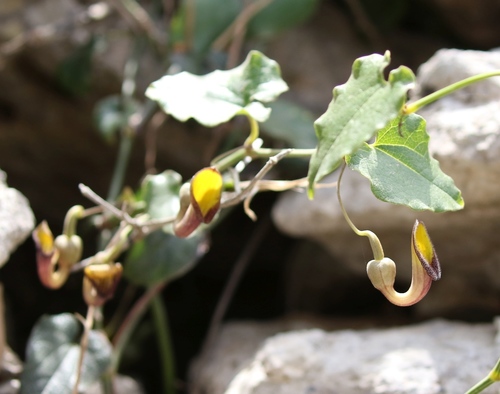
Aristolochia sempervirens
Green Dutchman's pipe
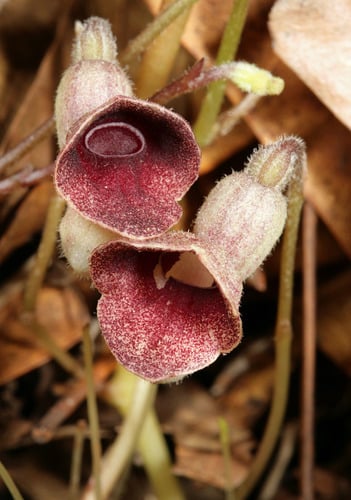
Aristolochia serpentaria
Virginia snakeroot, Serpentary
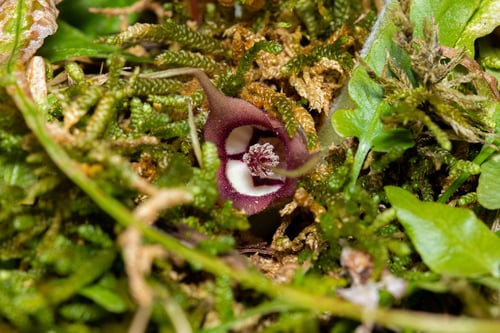
Asarum canadense
Wild ginger, Canada Snakeroot, Vermont snakeroot, Heart snakeroot, American wild ginger
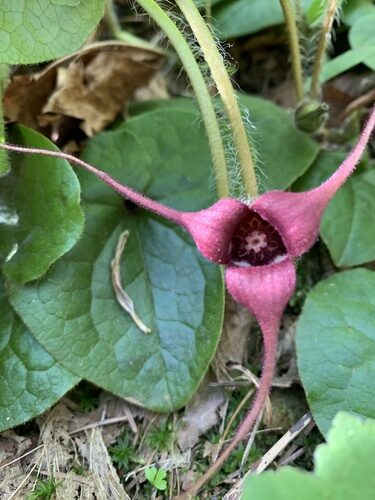
Asarum caudatum
Wild Ginger, British Columbia wildginger
Asarum dilatatum
Asarum europaeum
European wild ginger