Aristolochia saccata
Wall.
Dawkum
wikimedia· cc-by-sa
Wikimedia Commons - Rijuroy89
Description
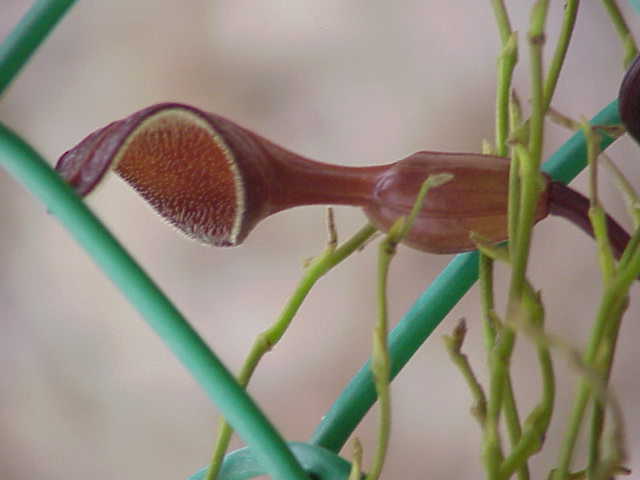
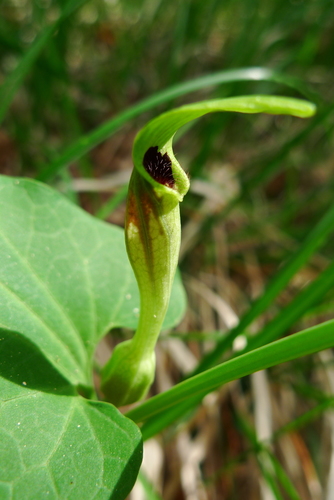
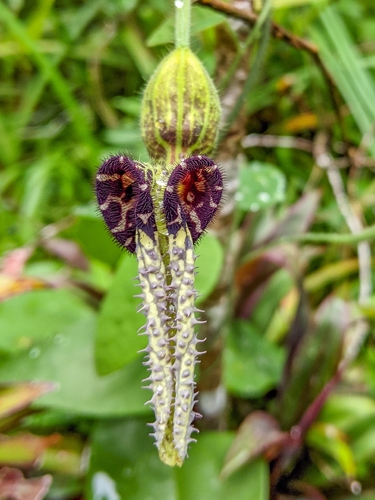
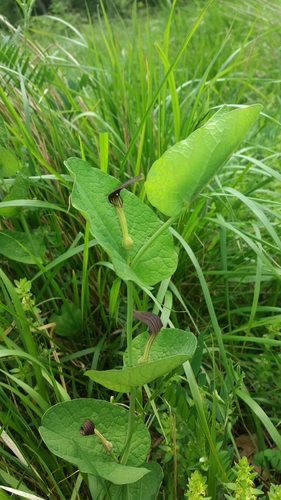
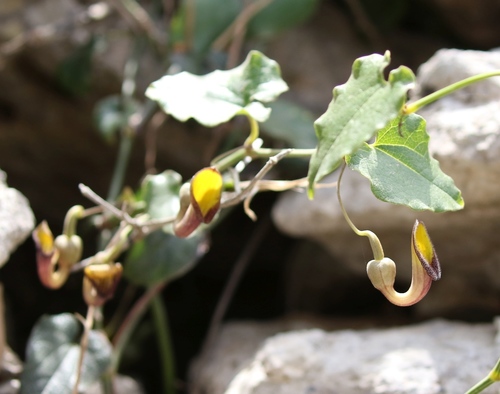
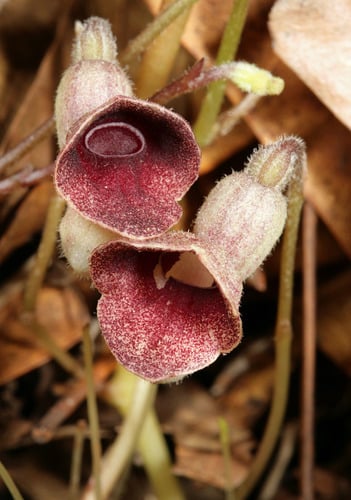
A climbing shrub. The stems have lines along them and a brown coating. The leaf stalks are 8-10 cm long. The leaves are oval or heart shaped. They are 20-35 cm long by 15-30 cm wide. They are leathery and have a white coating underneath. There are 5-6 pairs of veins spreading out like fingers on a hand. The flowers are on old woody stems. There are 3-5 flowers in a group.
Edible Uses
The leaves are eaten.
Medicinal Uses
It is used in medicine.
Distribution
It is a tropical plant. It grows in dense forest valleys.
Where It Grows
Asia, Bhutan, China, Himalayas, India, Myanmar, Nepal, Northeastern India, SE Asia, Sikkim,
Notes
It is used in medicine.
Synonyms
Aristolochia cathcartii Hook.f.Aristolochia saccata var. angustifolia (Klotzsch) Duch.Siphisia angustifolia KlotzschSiphisia saccata (Wall.) Klotzsch
Also Known As
Han resang
References (3)
- Gangwar, A. K. & Ramakrishnan, P. S., 1990, Ethnobotanical Notes on Some Tribes of Arunachal Pradesh, Northeastern India. Economic Botany, Vol. 44, No. 1 pp. 94-105
- Teron, R. & Borthakur, S. K., 2016, Edible Medicines: An Exploration of Medicinal Plants in Dietary Practices of Karbi Tribal Population of Assam, Northeast India. In Mondal, N. & Sen, J.(Ed.) Nutrition and Health among tribal populations of India. p 149 (As Aristolochia cathcartii)
- www.eFloras.org Flora of China