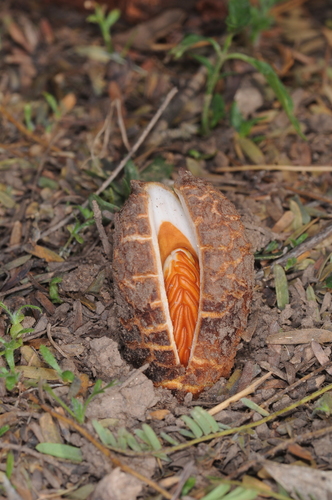
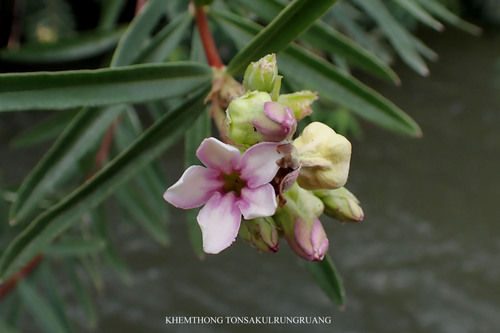
Aristolochia rotunda
L.
Snakeroot
iNaturalist· cc-by-nc
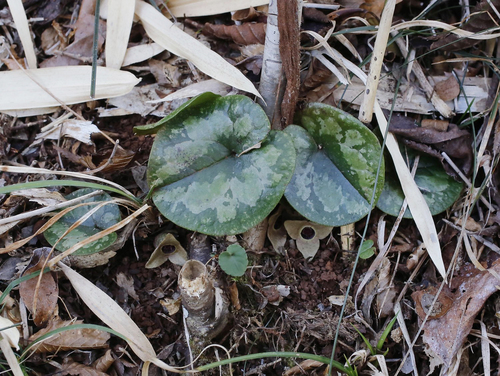
(c) Marco Bonifacino, some rights reserved (CC BY-NC), uploaded by Marco Bonifacino
iNaturalist· cc-by-nc
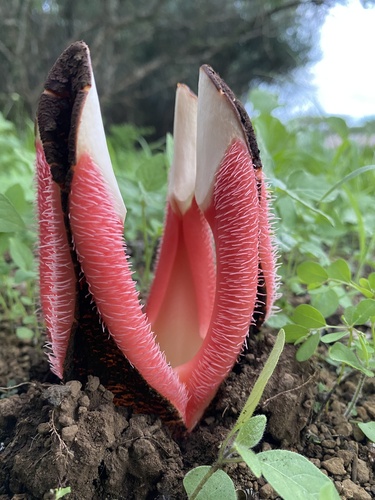
(c) Eliott Huguet, some rights reserved (CC BY-NC), uploaded by Eliott Huguet
iNaturalist· cc-by-nc
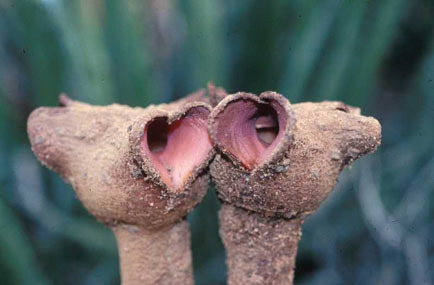
(c) shi, some rights reserved (CC BY-NC), uploaded by shi
Summary
Source: WikipediaAristolochia rotunda, commonly known as smearwort or round-leaved birthwort, is a herbaceous perennial tuberous plant native to Southern Europe.
Description
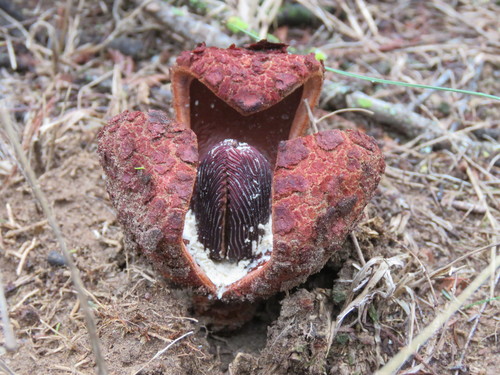
A medium sized herb. The stems can be 60 cm high. It has a tuberous root. It keeps growing from year to year. The leaves are oval or heart shaped. They clasp the stem. The flowers are 3-5 cm long. They are yellow with a long brown limb bent over the opening of the straight tube.
Edible Uses
None known
Traditional Uses
The starch of the root is a famine food for extending bread flour, after removing the acrid element. CAUTION: Many plants in this group are poisonous.
Medicinal Uses
Abortifacient Antitussive Diuretic Eczema Emmenagogue Pectoral Vermifuge Vulnerary The root is antitussive, diuretic, emmenagogue, pectoral, vermifuge and vulnerary. This herb should only be used internally with expert advice since large doses can provoke abortions as well as poisoning with inflammation of the mucous membranes, resulting in respiratory paralysis. The plant contains aristolochic acid which, whilst stimulating white blood cell activity and speeding the healing of wounds, is also carcinogenic and damaging to the kidneys. Externally the plant is used to treat a variety of skin complaints including eczema and difficult to heal ulcers. The root is harvested in late spring and dried for later use.
Known Hazards
The plant is poisonous in large quantities. The plant contains aristolochic acid, this has received rather mixed reports on its toxicity. According to one report aristolochic acid stimulates white blood cell activity and speeds the healing of wounds, but is also carcinogenic and damaging to the kidneys. Another report says that it is an active antitumour agent but is too toxic for clinical use. Another report says that aristolochic acid has anti-cancer properties and can be used in conjunction with chemotherapy and radiotherapy and that it also increases the cellular immunity and phagocytosis function of the phagocytic cells.
Distribution
It grows in hedges and dry fields. It is often in rocky and stony places. It grows in Mediterranean countries.
Where It Grows
Albania, Australia, Europe, France, Mediterranean, Spain,
Cultivation
Prefers a well-drained loamy soil, rich in organic matter, in sun or semi-shade. Succeeds in ordinary garden soil. Most species in this genus have malodorous flowers that are pollinated by flies.
Propagation
Seed - best sown in a greenhouse as soon as it is ripe in the autumn. Pre-soak stored seed for 48 hours in hand-hot water and surface sow in a greenhouse. Germination usually takes place within 1 - 3 months at 20°c. Stored seed germinates better if it is given 3 months cold stratification at 5°c. When large enough to handle, prick the seedlings out into individual pots and grow them on in the greenhouse for their first winter. Plant out in late spring or early summer after the last expected frosts. Division in autumn. Root cuttings in winter.
Other Uses
None known Special Uses
Other Information
A famine food.
Notes
The Aristolochiaceae are mostly tropical and subtropical. There are about 500 Aristolochia species. It is used as medicine.
Also Known As
English mercury, Mercury goosefoot, Round-leaved birthwort, Smearwort
References (7)
- Blamey, M and Grey-Wilson, C., 2005, Wild flowers of the Mediterranean. A & C Black London. p 37
- Bodkin, F., 1991, Encyclopedia Botanica. Cornstalk publishing, p 102
- Lim, T. K., 2015, Edible Medicinal and Non Medicinal Plants. Volume 9, Modified Stems, Roots, Bulbs. Springer p 12
- Morley, B. & Everard, B., 1970, Wild Flowers of the World. Ebury press. Plate 31
- PARMENTIER, 1781,
Show all 7 references Hide references
- Sp. pl. 2:962. 1753
- Tardio, J., et al, Ethnobotanical review of wild edible plants in Spain. Botanical J. Linnean Soc. 152 (2006), 27-71