Aristida stipoides
Lam.
Grootfontein bristlegrass
wikimedia· cc-by
Wikimedia Commons - Biodiversity Heritage Library
wikimedia· cc0
Wikimedia Commons - Domin, Karel
Description
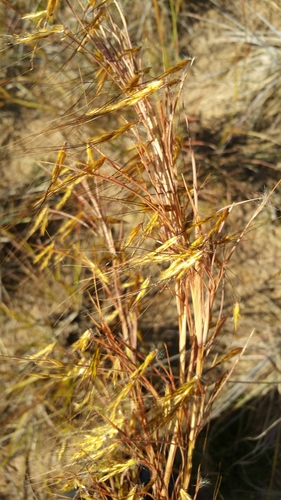
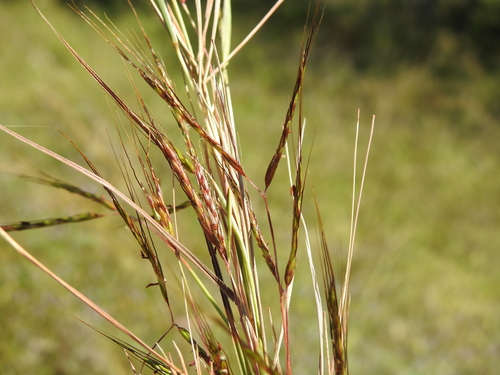
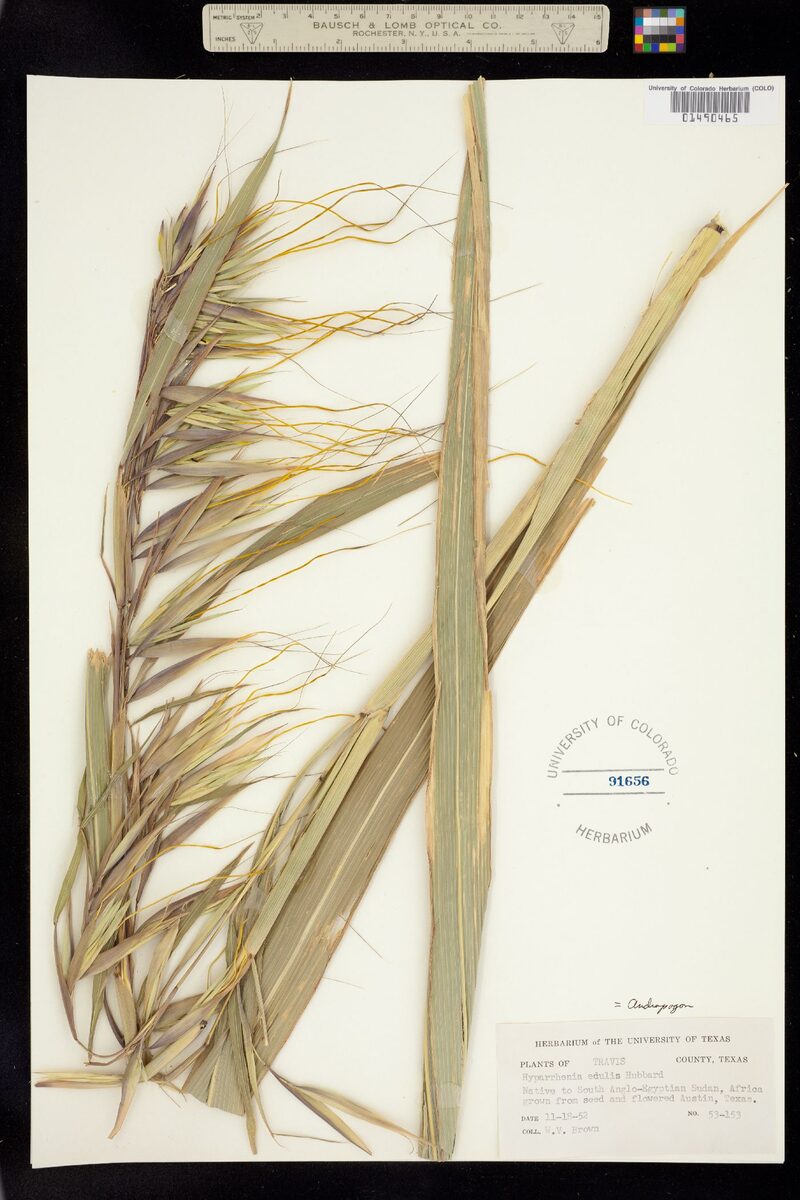
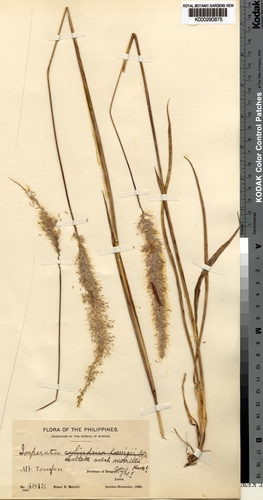
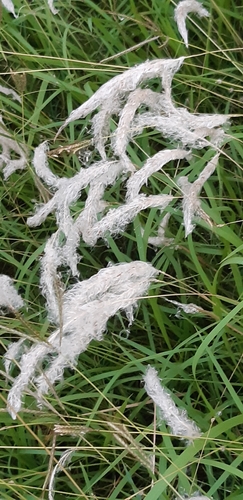
An annual grass. It is a robust tufted plant. It grows 1.5 m high. The stems usually have 3 nodes. The leaf blade is 30 cm long by 0.4 cm wide. The flower panicle is 50 cm long. It can be nodding.
Edible Uses
The inner stems are sweet and are sucked, particularly by children. The leaves, seeds, stem pith, and cereal are also eaten.
Traditional Uses
The inner stems are sweet and are sucked.
This uses section is brief — help expand it
Distribution
A tropical plant. It grows along roadsides across the Sahel. It can grow in arid places. In Kenya it grows between 1,200-1,350 m above sea level.
Where It Grows
Africa, Botswana, Burkina Faso, Central Africa, Chad, East Africa, Ethiopia, Kenya, Mali, Niger, Nigeria, Sahel, Senegal, Southern Africa, Sudan, Tanzania, West Africa, Zambia, Zimbabwe,
Other Information
They are eaten mainly by children.
Notes
There are about 330 Aristida species.
Synonyms
References (8)
- Burkill, H. M., 1985, The useful plants of west tropical Africa, Vol. 4. Kew.
- Dalziel, J. M., 1937, The Useful plants of west tropical Africa. Crown Agents for the Colonies London.
- Flora Zambesiaca. http://apps.kew.org/efloras
- Grivetti, L. E., 1980, Agricultural development: present and potential role of edible wild plants. Part 2: Sub-Saharan Africa, Report to the Department of State Agency for International Development. p 24 (As stapoides)
- Jardin, C., 1970, List of Foods Used In Africa, FAO Nutrition Information Document Series No 2.p 56
Show all 8 references Hide references
- Martin, F.W. & Ruberte, R.M., 1979, Edible Leaves of the Tropics. Antillian College Press, Mayaguez, Puerto Rico. p 193
- Peters, C. R., O'Brien, E. M., and Drummond, R.B., 1992, Edible Wild plants of Sub-saharan Africa. Kew. p 19
- World Checklist of Useful Plant Species 2020. Royal Botanic Gardens, Kew