Hygroryza aristata
(Retz.) Nees ex Wight & Arnott
Bengal wild rice
iNaturalist· cc-by-nc
(c) 艸目伊, some rights reserved (CC BY-NC)
iNaturalist· cc-by-nc
(c) 艸目伊, some rights reserved (CC BY-NC)
iNaturalist· cc-by-nc
(c) Andrey Efremov, some rights reserved (CC BY-NC)
Description
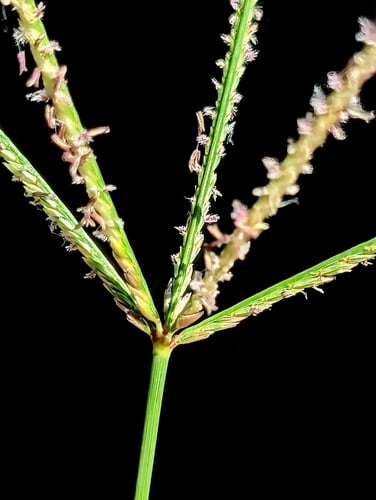
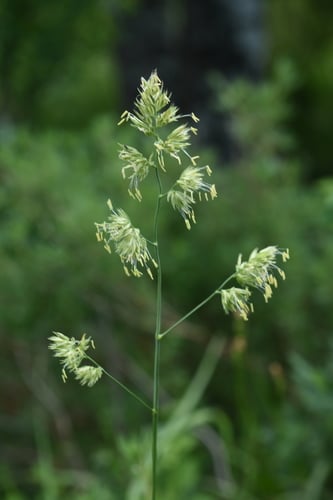
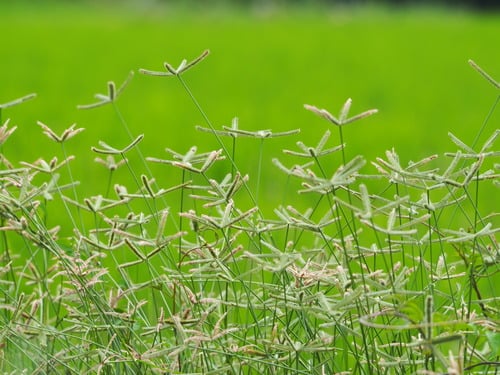
A grass which grows in water and keeps growing from year to year. It floats and forms dense mats. The stems are 1.5 m long. They are spongy and have irregular branching. Stems root at the nodes. The leaf sheath is inflated. The leaf blade is 3-6 cm long by 5-17 mm wide. The leaves are in pairs and float on the water. The flower panicle has 4-5 main branches. They are in rings at the top of the stalk. The spikelets have one flower. The seed is 2-3 mm long.
Edible Uses
The grain is cooked and eaten as rice, particularly when other food is scarce.
Traditional Uses
The grain is eaten when food is scarce. It is cooked as rice.
This uses section is brief — help expand it
Distribution
A tropical plant. It grows in quiet water and can creep over wet ground. It grows in shallow water up to 60 cm deep. It is floating. It grows up to 350 m altitude. In Yunnan.
Where It Grows
Asia, Bangladesh, Cambodia, China, Himalayas, India, Indochina, Laos, Malaysia, Myanmar, Nepal, Northeastern India, Pakistan, SE Asia, Sri Lanka, Taiwan, Thailand, Vietnam,
Notes
There is only one Hygroryza species.
Synonyms
Also Known As
Ahu, Aranyadhanya, Aranyajali, Bahpatai, Deobhata, Jangalidal, Janglidal, Jyarahumedhe, Nirvallipullu, Phutki, Puchaoloitha, Putidal, Thia thia, Uridhan, Vallipullu, Vanti, Ya-phonglom
References (10)
- Ambasta S.P. (Ed.), 2000, The Useful Plants of India. CSIR India. p 279
- Deka, N. & Devi, N., 2015, Wild edible aquatic and marshland angiosperms of Baka district, BTC area, Assam, India. Asian J. Plant Sci. Res. 5(1):32-48
- Dobriyal, M. J. R. & Dobriyal, R., 2014, Non Wood Forest Produce an Option for Ethnic Food and Nutritional Security in India. Int. J. of Usuf. Mngt. 15(1):17-37
- Flora of Pakistan. www.eFloras.org
- Peduruhewa, P. S., et al, 2021, Potential of Underutilized Wild Edible Plants as the Food for the Future – A Review. Journal of Food Security, Vol. 9, No. 4, 136-147
Show all 10 references Hide references
- PROSEA (Plant Resources of South East Asia) handbook Volume 10 Cereals. p 152
- Romanowski, N., 2007, Edible Water Gardens. Hyland House. p 107
- Singh, H.B., Arora R.K.,1978, Wild edible Plants of India. Indian Council of Agricultural Research, New Delhi. p 84
- Swapna, M. M. et al, 2011, A review on the medicinal and edible aspects of aquatic and wetland plants of India. J. Med. Plants Res. 5 (33) pp. 7163-7176
- World Checklist of Useful Plant Species 2020. Royal Botanic Gardens, Kew