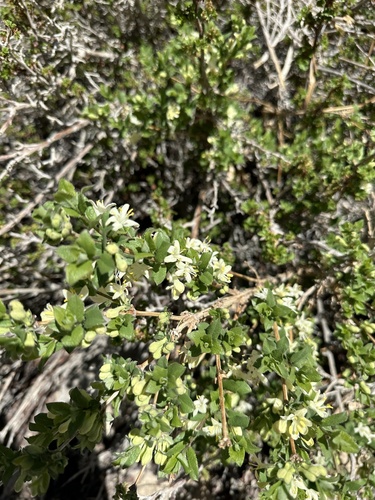
Succisa pratensis
Moench
Devil's bit scabious
iNaturalist· cc-by-sa
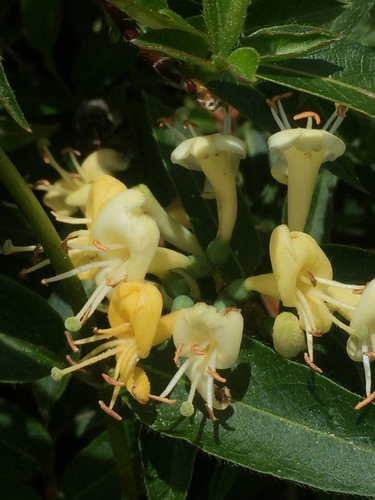
(c) Udo Schmidt, some rights reserved (CC BY-SA)
iNaturalist· cc-by-nc
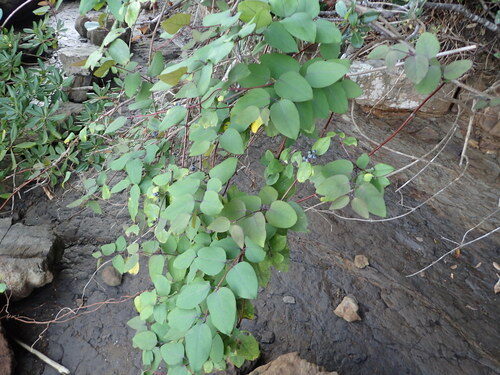
(c) Marcel, some rights reserved (CC BY-NC), uploaded by Marcel
iNaturalist· cc-by-nc
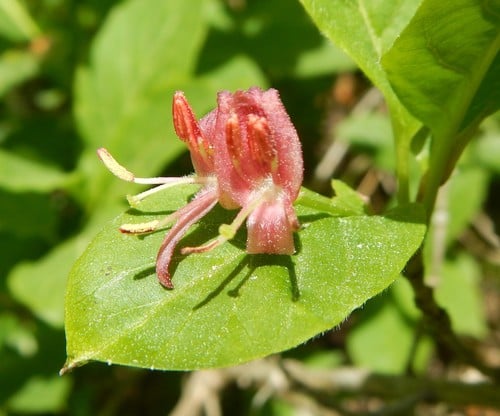
(c) Alexander Yakovlev, some rights reserved (CC BY-NC), uploaded by Alexander Yakovlev
Summary
Source: WikipediaSuccisa pratensis, known as devil's-bit scabious or simply devil's-bit, is a flowering plant in the honeysuckle family Caprifoliaceae, formerly included in the teasel family Dipsacaceae. It is common throughout northern Europe and western Asia in heathland, unimproved damp grassland and chalk or limestone grassland, where it is restricted to nutrient-poor soils. It has decreased somewhat due to agricultural intensification in many areas, but remains widespread and even common throughout its range. Its name derives from the curiously truncated root, which in ancient times was thought to be associated with magical or medicinal properties.
Description
A small plant. It grows 30-100 cm high and spreads 15-30 cm wide. It keeps growing from year to year. It forms a ring of leaves are the base. These are oblong or lance shaped. They are lightly downy. The flowering stems are slender and 100 cm tall. The flowers are like pincushions. They are dark purple or pink. The flower heads are 25 mm wide. They are in the axils of purple-tipped leafy bracts.
Edible Uses
The tender young shoots can be eaten raw and are sometimes added to spring salads.
Traditional Uses
The young leaves are added to salads.
This uses section is brief — help expand it
Medicinal Uses
The herb is anthelmintic, demulcent, depurative, slightly diaphoretic, diuretic, emmenagogue, mildly expectorant, febrifuge and stomachic. It makes a useful tea for treating coughs, fevers and internal inflammations, and is also applied externally to eczema and other cutaneous eruptions. A tincture of the plant gently but reliably treats bruises by aiding quick re-absorption of the blood pigment. Good results have been achieved using a distilled water from the plant as an eye lotion to treat conjunctivitis. The whole herb is collected in early autumn and dried for later use.
Distribution
It grows naturally in wet grassy places in heath or open forest. It needs moist soil and sun or light shade. It suits hardiness zones 5-9.
Where It Grows
Africa, Asia, Australia, Britain, Eurasia, Europe, Luxembourg, North Africa, North America, Romania, Slovenia, Spain, Turkey, Türkiye, USA,
Cultivation
Succeeds in ordinary garden soil, preferring damp conditions, in sun or semi-shade. Prefers a moist peaty soil. Hardy to about -20°c. Grows well in the summer meadow, it is an excellent bee and butterfly plant and a food plant for the caterpillars of many butterfly species.
Propagation
Sow seed in April in a cold frame. Germination is usually rapid, but seedlings are prone to damping off so ensure good ventilation. Prick out into individual pots once large enough to handle and plant out in summer. Alternatively, divide plants in spring and plant straight out into their permanent positions.
Other Uses
A green dye is obtained from the leaves.
Notes
There is one Succisa species. Also put in the family Dipsacaceae.
Synonyms
Also Known As
Travniška izjevka
References (6)
- Cundall, P., (ed.), 2004, Gardening Australia: flora: the gardener's bible. ABC Books. p 1382
- Heywood, V.H., Brummitt, R.K., Culham, A., and Seberg, O. 2007, Flowering Plant Families of the World. Royal Botanical Gardens, Kew. p 128 (Genus)
- http://www.botanic-gardens-ljubljana.com/en/plants
- Jack, M., Wild Foods and Medicines of Forest Garden Transylvania. http://www.forestgardentransylvania.org/ p30
- Methodus 489. 1794
Show all 6 references Hide references
- Plants for a Future database, The Field, Penpol, Lostwithiel, Cornwall, PL22 0NG, UK. http://www.scs.leeds.ac.uk/pfaf/