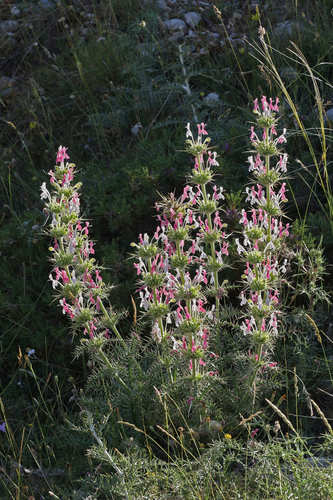
Symphoricarpos occidentalis
Hook.
Western Snowberry, Wolfberry, Buckbush
iNaturalist· cc-by-nc
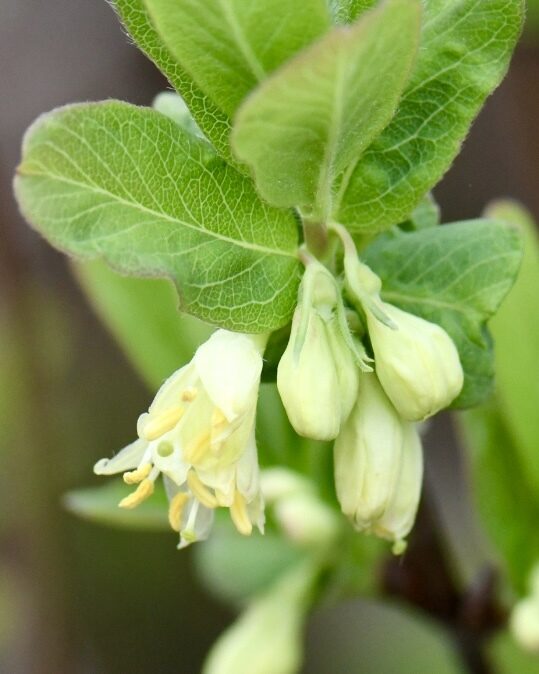
(c) Matthew Thompson, some rights reserved (CC BY-NC), uploaded by Matthew Thompson
iNaturalist· cc-by-nc-nd
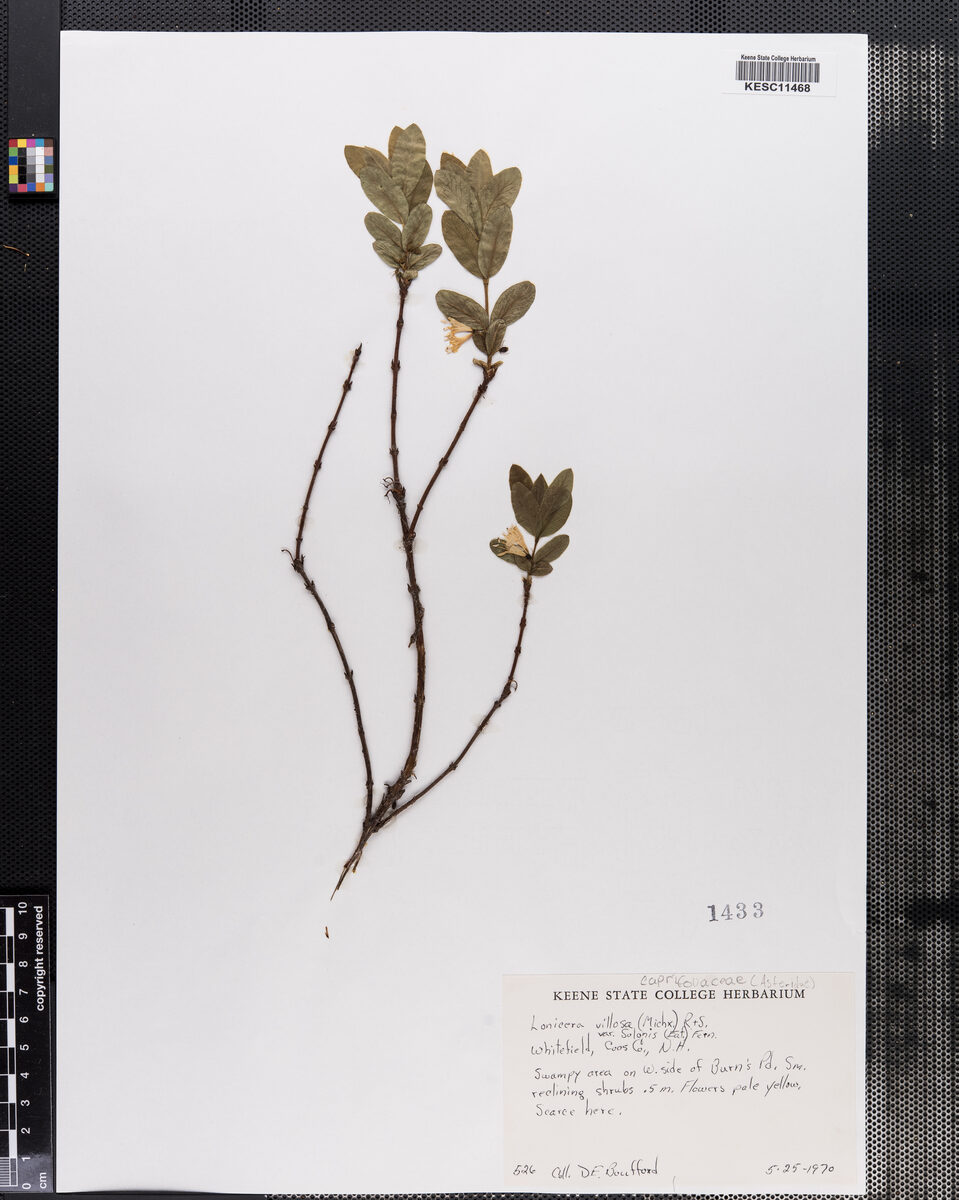
(c) Charles Thomas Hash, Jr., some rights reserved (CC BY-NC-ND), uploaded by Charles Thomas Hash, Jr.
iNaturalist· cc-by-nc
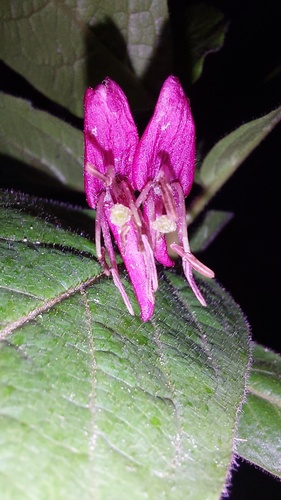
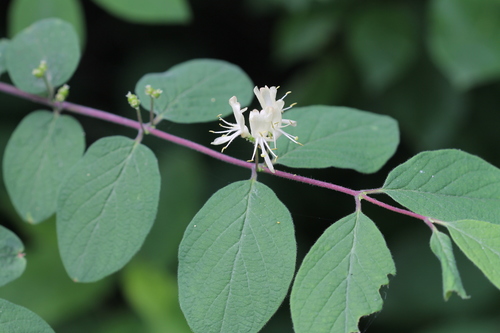
(c) plj, some rights reserved (CC BY-NC)
Summary
Source: WikipediaSymphoricarpos occidentalis, commonly called western snowberry, is a woody species of flowering plant in the honeysuckle family.
Description
A small plant. It grows 25-100 cm high. It has creeping roots. The leaves are opposite and simple. They are oval or oblong and have a short leaf stalk. They are thick and leathery. They are 2.5-8 cm long. They have soft hairs underneath. The flowers are pinkish-white and small. They are 6 cm long. Several flowers occur together in clusters in the axils of the leaves. The fruit are a dull greenish-white berry.
Edible Uses
The fruit, around 8mm in diameter, can be eaten raw or cooked, though it is insipid and best used cooked. It is considered a famine food, used only as a last resort. See notes regarding possible toxicity.
Traditional Uses
The fruit are eaten in times of scarcity.
This uses section is brief — help expand it
Medicinal Uses
An infusion of the leaves has been used as a wash for weak and inflamed eyes. An infusion of the root has been used to cleanse the afterbirth and aid in convalescence.
Known Hazards
No report of toxicity has been seen for this species but the fruit of many if not all members of this genus contains saponins. Although toxic, these substances are very poorly absorbed by the body and so tend to pass through without causing harm. They are also destroyed by thorough cooking. Saponins are found in many plants, including several that are often used for food, such as certain beans. It is advisable not to eat large quantities of food that contain saponins but it would take extremely large doses of many kilos of fruit from this plant in order to produce toxic symptoms. Saponins are much more toxic to some creatures, such as fish, and hunting tribes have traditionally put large quantities of them in streams, lakes etc in order to stupefy or kill the fish.
Distribution
It is a temperate plant. It grows in prairies and poplar woods.
Where It Grows
Canada, North America, USA,
Cultivation
Tolerates most soils and conditions, including poor soils and amongst the roots and under the drip of trees. Grows well in heavy clay soils. Prefers a well-drained soil. Does well in sun or shade. Tolerates urban pollution and maritime exposure. A very hardy plant, tolerating temperatures down to about -40°c. Plants in this genus are notably resistant to honey fungus.
Propagation
Sow seed as soon as it is ripe in a cold frame. Stored seed requires 3 months of warm stratification followed by 5 months of cold stratification. Prick seedlings out into individual pots once large enough to handle and grow on in a greenhouse through their first winter. Plant out in late spring or early summer after the last expected frosts. Alternatively, take cuttings of half-ripe wood in July or August in a frame, or cuttings of mature wood from the current year's growth, 15–25cm long preferably with a heel, in a sheltered outdoor bed in winter, with a high success rate. Suckers can be divided in winter and planted directly into permanent positions.
Other Uses
Plants have extensive root systems and are used to stabilize soils on banks and slopes. The branches can be made into brooms. The plant is very tolerant of trimming and can be grown as a medium to tall hedge.
Notes
There are about 15 Symphoricarpus species.
Synonyms
References (6)
- Beckstrom-Sternberg, Stephen M., and James A. Duke. "The Foodplant Database." http://probe.nalusda.gov:8300/cgi-bin/browse/foodplantdb.(ACEDB version 4.0 - data version July 1994)
- Cormack, R. G. H., 1967, Wild Flowers of Alberta. Commercial Printers Edmonton, Canada. p 327
- Fl. bor.-amer. 1:285. 1833
- Moerman, D. F., 2010, Native American Ethnobotany. Timber Press. p 548
- Plants for a Future database, The Field, Penpol, Lostwithiel, Cornwall, PL22 0NG, UK. http://www.scs.leeds.ac.uk/pfaf/
Show all 6 references Hide references
- Stubbs, R. D., 1966, An investigation of the Edible and Medicinal Plants used by the Flathead Indians. MA thesis University of Montana. p 50