Symphoricarpos orbiculatus
Moench
Coralberry, Indian currant
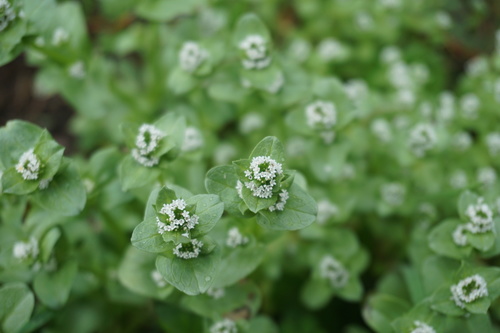
iNaturalist· cc-by-sa
(c) Meghan Cassidy, some rights reserved (CC BY-SA), uploaded by Meghan Cassidy
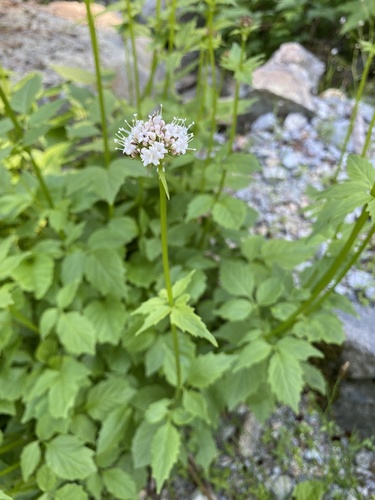
iNaturalist· cc-by-nc-sa
(c) Lee Elliott, some rights reserved (CC BY-NC-SA), uploaded by Lee Elliott
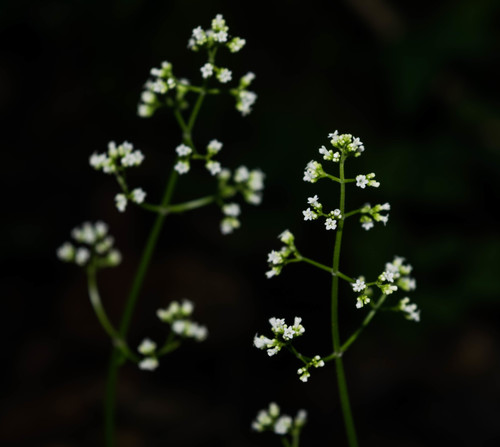
iNaturalist· cc-by
(c) Sam Kieschnick, some rights reserved (CC BY), uploaded by Sam Kieschnick
Summary
Source: WikipediaSymphoricarpos orbiculatus, commonly called coralberry, buckbrush or Indian currant is a woody species of flowering plant in the honeysuckle family.
Description
A shrub. It grows 1.8 m high and spreads 1.8 m wide. The leaves are dark green. They are grey underneath. They develop red tints in autumn. The flowers are white with pink flushes. The fruit are purplish red berries.
Edible Uses
The fruit, around 6mm in diameter, can be eaten raw or cooked, though it is scarcely eaten. Some caution is advised; see notes on toxicity.
Medicinal Uses
A decoction of the inner bark or leaves has been used as a wash for weak, inflamed or sore eyes. A cold decoction of the root bark has also been used as an eye wash to treat sore eyes.
Known Hazards
No report of toxicity has been seen for this species but the fruit of many if not all members of this genus contains saponins. Although toxic, these substances are very poorly absorbed by the body and so tend to pass through without causing harm. They are also destroyed by thorough cooking. Saponins are found in many plants, including several that are often used for food, such as certain beans. It is advisable not to eat large quantities of food that contain saponins but it would take extremely large doses of many kilos of fruit from this plant in order to produce toxic symptoms. Saponins are much more toxic to some creatures, such as fish, and hunting tribes have traditionally put large quantities of them in streams, lakes etc in order to stupefy or kill the fish.
Distribution
To produce berries well they need sun and good growing conditions. Melbourne Botanical gardens. It suits hardiness zones 3-9.
Where It Grows
Australia, Canada, Central Asia, Mexico, North America, Tajikistan, USA,
Cultivation
Tolerates most soils and conditions, including poor soils and amongst the roots and under the drip of trees. Grows well in heavy clay soils. Prefers a well-drained soil. Does well in sun or shade. Tolerates urban pollution and maritime exposure. A very hardy plant, tolerating temperatures down to about -40°c. Plants sucker freely and quickly form thickets. This species does not fruit freely in Britain, except after a hot summer. A good bee plant. There are some named forms, selected for their ornamental value. Plants in this genus are notably resistant to honey fungus.
Propagation
Sow seed as soon as it is ripe in a cold frame. Stored seed requires 3 months of warm stratification followed by 5 months of cold stratification. Prick seedlings out into individual pots once large enough to handle and grow on in a greenhouse through their first winter. Plant out in late spring or early summer after the last expected frosts. Take cuttings of half-ripe wood in July or August in a frame, or cuttings of mature wood from the current year's growth, 15–25cm long preferably with a heel, in a sheltered outdoor bed in winter, with a high success rate. Divide suckers in winter and plant directly into permanent positions.
Other Uses
Plants can be grown as a hedge or informal screen and are very tolerant of trimming. Their extensive root system and free-suckering habit make them useful for soil stabilization.
Notes
There are about 15 Symphoricarpus species.
Synonyms
References (6)
- Cundall, P., (ed.), 2004, Gardening Australia: flora: the gardener's bible. ABC Books. p 1385
- Hibbert, M., 2002, The Aussie Plant Finder 2002, Florilegium. p 295
- Joyce, D., 1998, The Garden Plant Selector. Ryland, Peters and Small. p 161
- Kremer, B.P., 1995, Shrubs in the Wild and in Gardens. Barrons. p 79
- Methodus 503. 1794
Show all 6 references Hide references
- Plants for a Future database, The Field, Penpol, Lostwithiel, Cornwall, PL22 0NG, UK. http://www.scs.leeds.ac.uk/pfaf/