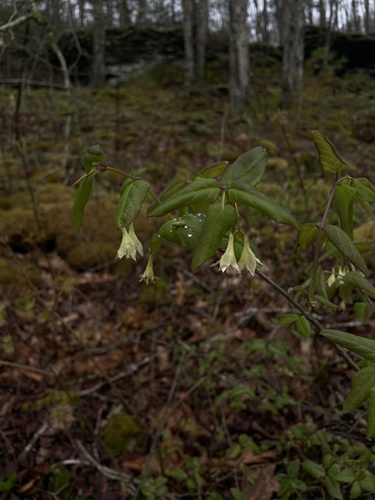
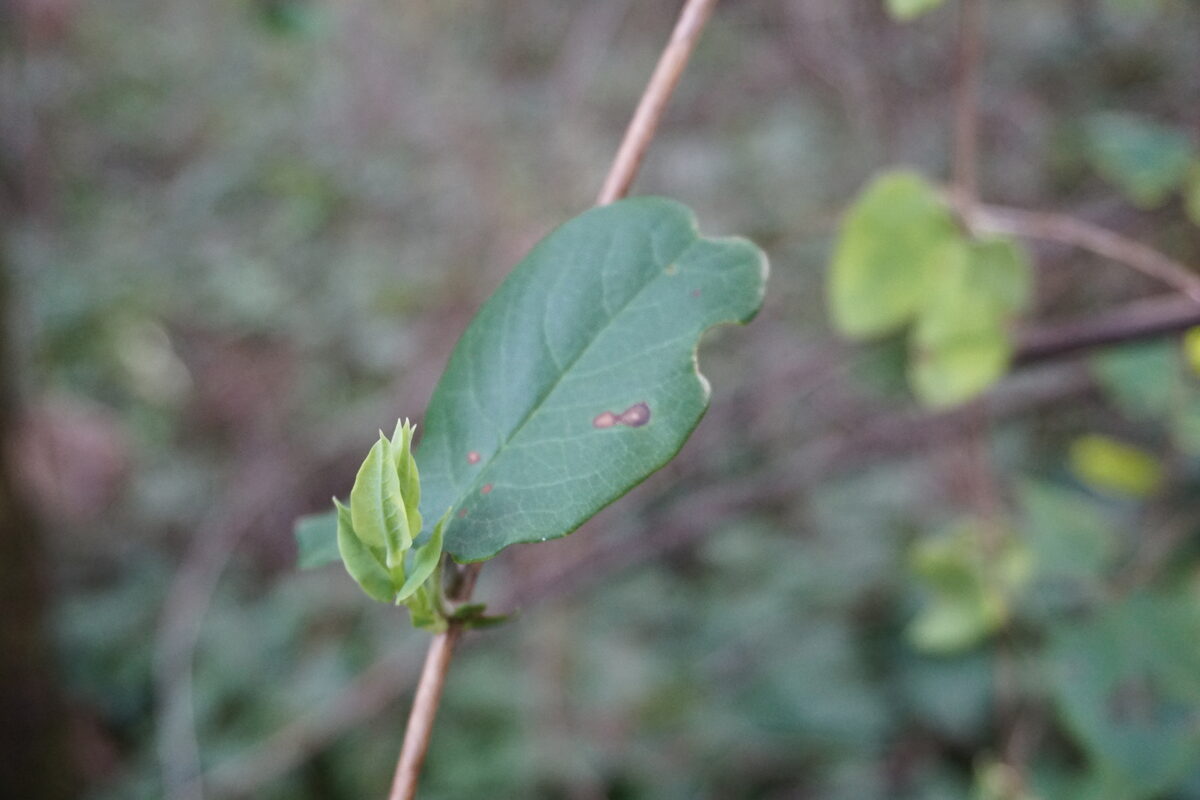
Triosteum perfoliatum
Linn.
Fever root, Wild coffee, Tinker's weed
iNaturalist· cc-by-nc
(c) Mark Kluge, some rights reserved (CC BY-NC)
iNaturalist· cc-by-sa
(c) Dave Bonta, some rights reserved (CC BY-SA)
iNaturalist· cc-by-nc
(c) Grant Fessler, some rights reserved (CC BY-NC)
Summary
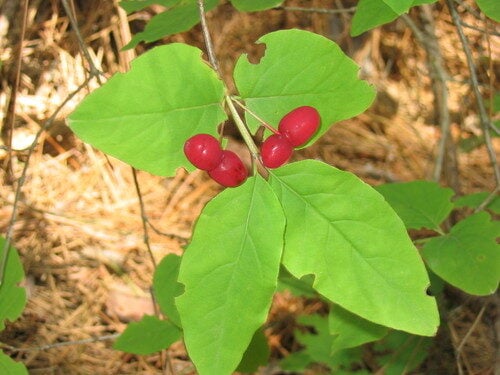
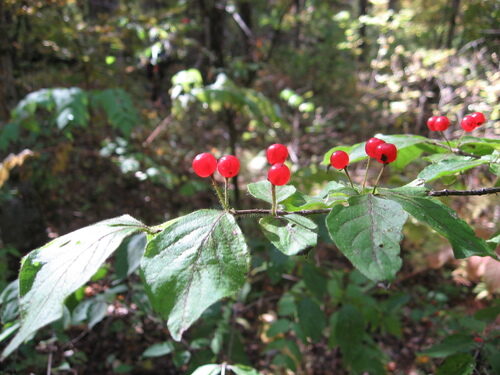
Source: WikipediaTriosteum perfoliatum, commonly known as perfoliate tinker's-weed, late horse gentian, common horse gentian, perfoliate-leaved horse-gentian, feverwort, and wild coffee, is a species of flowering plant belonging to the family Caprifoliaceae (honeysuckle). It is found in eastern and central North America. The yellow-orange berries can be dried, roasted, ground, and used as a coffee substitute.
Description
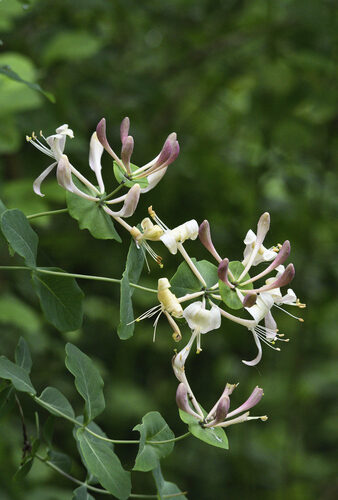
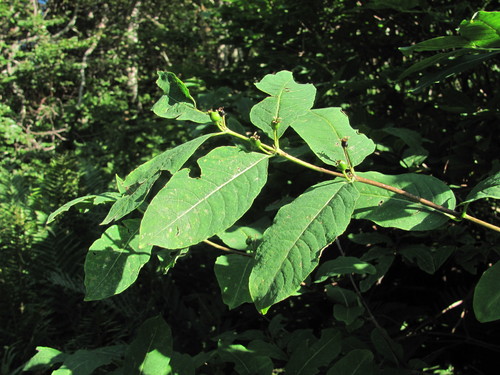
A plant up to 1.2 m high. The leaves are in pairs and united around the stem. The stem is densely hairy. The flowers are yellow to purplish. The fruit are a dull orange-yellow berry.
Edible Uses
The dried and roasted seeds have been used as a coffee substitute, though opinions on the flavour vary widely.
Traditional Uses
The dried and roasted berries are used as a coffee substitute.
This uses section is brief — help expand it
Medicinal Uses
A decoction of the leaves is diaphoretic and is used to treat fever and ague. The roots are diaphoretic, diuretic, laxative, pectoral, and stomachic; in large doses they act as an emetic and cathartic. An infusion of the root has been used to treat severe colds, pneumonia, irregular or profuse menses, painful urination, stomach problems, and constipation, and has also been used to help both adults and babies gain weight. A poultice of the roots is applied to snakebites, sores, and felons. An infusion of the plant has been used to soak sore feet, and an ooze from the plant has been applied as a wash for swollen legs. The rhizome contains an alkaloid and has been used as a cathartic.
Distribution
It is a temperate plant.
Where It Grows
Canada, North America, USA,
Cultivation
Succeeds in a light humus-rich soil in part shade. Succeeds in the wild or woodland garden.
Propagation
No specific information is available for this species. It is suggested to sow seed in a cold frame in early spring. When large enough to handle, prick seedlings out into individual pots and grow them on in the greenhouse for at least their first winter. Plant out into permanent positions in late spring or early summer, after the last expected frosts. Can also be propagated by division in spring.
Other Uses
None known Special Uses
References (4)
- Hedrick, U.P., 1919, (Ed.), Sturtevant's edible plants of the world. p 656
- Facciola, S., 1998, Cornucopia 2: a Source Book of Edible Plants. Kampong Publications, p 72
- Kermath, B. M., et al, 2014, Food Plants in the Americas: A survey of the domesticated, cultivated and wild plants used for Human food in North, Central and South America and the Caribbean. On line draft. p 879
- MacKinnon, A., et al, 2009, Edible & Medicinal Plants of Canada. Lone Pine. p 186