Symphoricarpos albus var. laevigatus
(Fernald) S. F. Blake
Common Snowberry, Coral-berry, Indian Currant
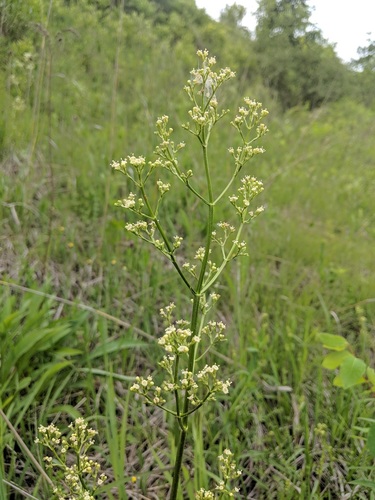
iNaturalist· cc-by-nc
(c) Steve Kelley, some rights reserved (CC BY-NC), uploaded by Steve Kelley
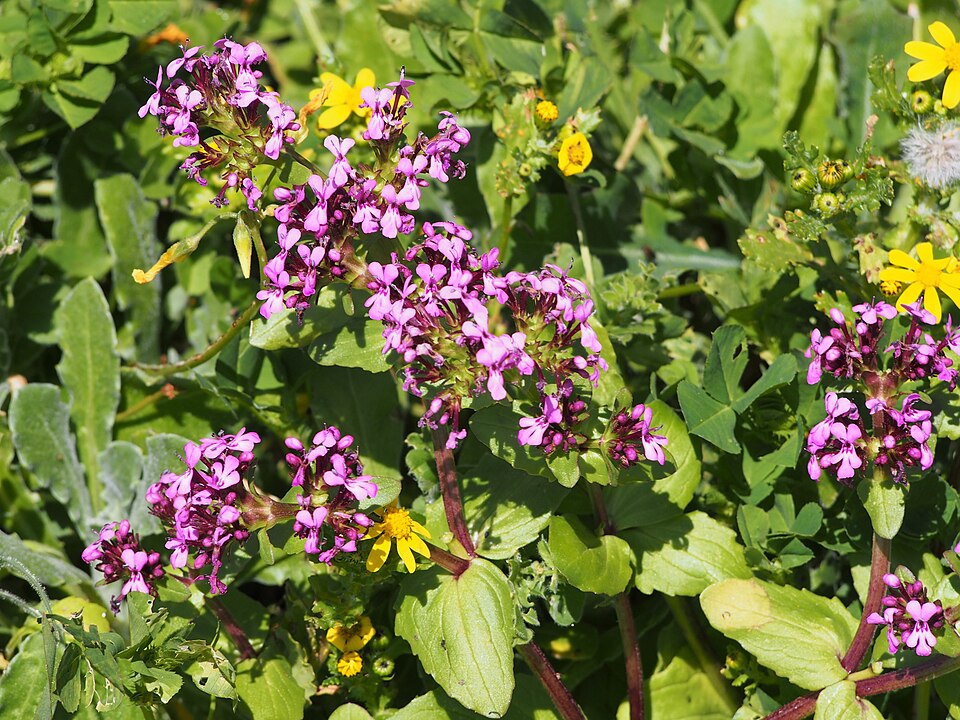
iNaturalist· cc-by-nc
(c) Donna Pomeroy, some rights reserved (CC BY-NC), uploaded by Donna Pomeroy
iNaturalist· cc-by-nc
(c) Steve Kelley, some rights reserved (CC BY-NC), uploaded by Steve Kelley
Summary
Source: WikipediaSymphoricarpos albus is a species of flowering plant in the honeysuckle family known by the common name common snowberry. Native to North America, it is browsed by some animals and planted for ornamental and ecological purposes, but is poisonous to humans.
Description
A shrub. It develops suckers and forms thickets. It grows 1-1.8 m high. The leaves are smooth and oval and are opposite each other. The edge of the leaves is wavy. The flowers are pink and bell shaped. The berries are white.
Edible Uses
The fruit can be eaten but are not particularly palatable.
Traditional Uses
The fruit can be eaten but are not attractive.
This uses section is brief — help expand it
Medicinal Uses
Native Americans used the plant as medicine, soap, and the wood was good for arrow shafts. In Russia, the berries are crushed in the hands and rubbed about for a soothing folk-remedy hand lotion. This shrub is used for erosion control in riparian areas, and it is planted in ecological restoration projects on disturbed sites, such as abandoned mines. Its white fruits and blue-green foliage made it a popular ornamental plant, planted around old houses from the 1890s to the 1920s, similar to the Vanhoutte spirea or bridal wreath. It is still sold by some large, diverse conventional nurseries and native plant nurseries, and can be found occasionally in modern landscapes. It thrives in full sun or partial shade and in well-drained soil with a pH range of about 6.0 to 8.5. It is easy to transplant thanks to its fibrous, shallow root system. It fares well in U.S. Department of Agriculture hardiness zones of 2 to 7. The plant is popular among children in Germany, who play with its ripe berries due to the popping sound they make when thrown on the ground. Because of this the plant, and specifically its berries, are also called Knallerbsen in German.
Known Hazards
The fruit and shrub are poisonous to humans, causing vomiting.
Distribution
It can grow on most soils and can tolerate shade.
Where It Grows
Australia, Britain, Europe, North America, USA,
Notes
There are about 15 Symphoricarpus species.
Synonyms
References (7)
- Cundall, P., (ed.), 2004, Gardening Australia: flora: the gardener's bible. ABC Books. p 1384
- Harris, E & J., 1983, Field Guide to the Trees and Shrubs of Britain. Reader's Digest. p 90 (As Symphoricarpos rivularis)
- Hibbert, M., 2002, The Aussie Plant Finder 2002, Florilegium. p 295
- Kremer, B.P., 1995, Shrubs in the Wild and in Gardens. Barrons. p 79 (Fruit thought to be poisonous). (As Symphoricarpos rivularis)
- Mabey, R., 1973, Food for Free. A Guide to the edible wild plants of Britain, Collins. p 183 (As Symphoricarpos rivularis)
Show all 7 references Hide references
- Plants for a Future database, The Field, Penpol, Lostwithiel, Cornwall, PL22 0NG, UK. http://www.scs.leeds.ac.uk/pfaf/
- Rhodora 16:119. 1914