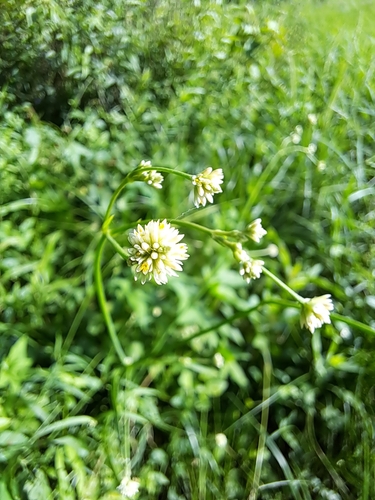
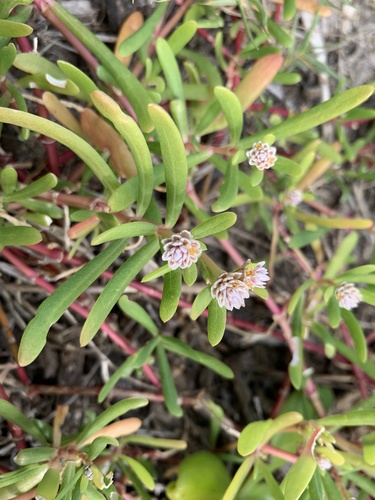
Suaeda occidentalis
Watson
iNaturalist· cc-by-nc-sa
(c) 1999 California Academy of Sciences, some rights reserved (CC BY-NC-SA)
iNaturalist· cc-by
(c) Steve Matson, some rights reserved (CC BY)
Summary
Annual herb with wind-pollinated self-fertile hermaphrodite flowers blooming July to October and ripening seeds August to October. Grows in light sandy or medium loamy soils in neutral to basic pH, tolerating very alkaline and saline conditions. Needs full sun and moist soil with strong maritime exposure tolerance.
Description
Annual herb with wind-pollinated self-fertile hermaphrodite flowers blooming July to October and ripening seeds August to October. Grows in light sandy or medium loamy soils in neutral to basic pH, tolerating very alkaline and saline conditions. Needs full sun and moist soil with strong maritime exposure tolerance.
Edible Uses
Young leaves can be eaten raw or cooked and have a salty flavour. The seeds are also edible raw or cooked.
Medicinal Uses
None known
Distribution
It is a temperate plant.
Where It Grows
North America, USA,
Cultivation
We have very little information on this species and do not know if it will be hardy in Britain, though judging by its native range it should succeed outdoors in many parts of this country. This species is easily confused with Suaeda calceoliformis, which occurs throughout its range. There are virtually no differences in floral characters. It dislikes shade, see the plants native range for other ideas on its cultivation needs.
Propagation
Sow seed in spring, direct in situ.
Other Uses
None known
Notes
Also put in the family Chenopodiaceae.
References (1)
- Plants for a Future database, The Field, Penpol, Lostwithiel, Cornwall, PL22 0NG, UK. http://www.scs.leeds.ac.uk/pfaf/