Chenopodium bonus-henricus
Linn.
Good King Henry
iNaturalist· cc-by-nc
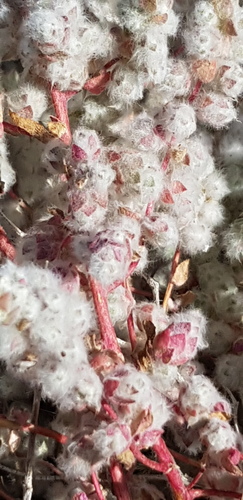
(c) Мария Аргир, some rights reserved (CC BY-NC)
iNaturalist· cc-by-nc
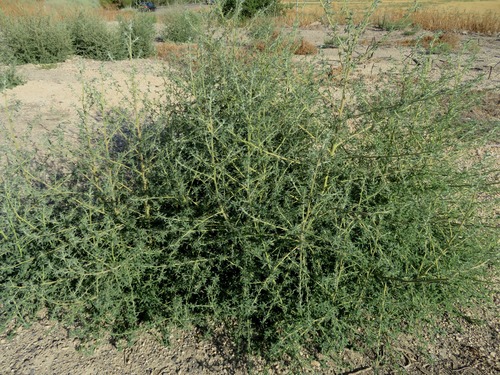
(c) lucca_maistrelli, some rights reserved (CC BY-NC)
iNaturalist· cc-by-nc
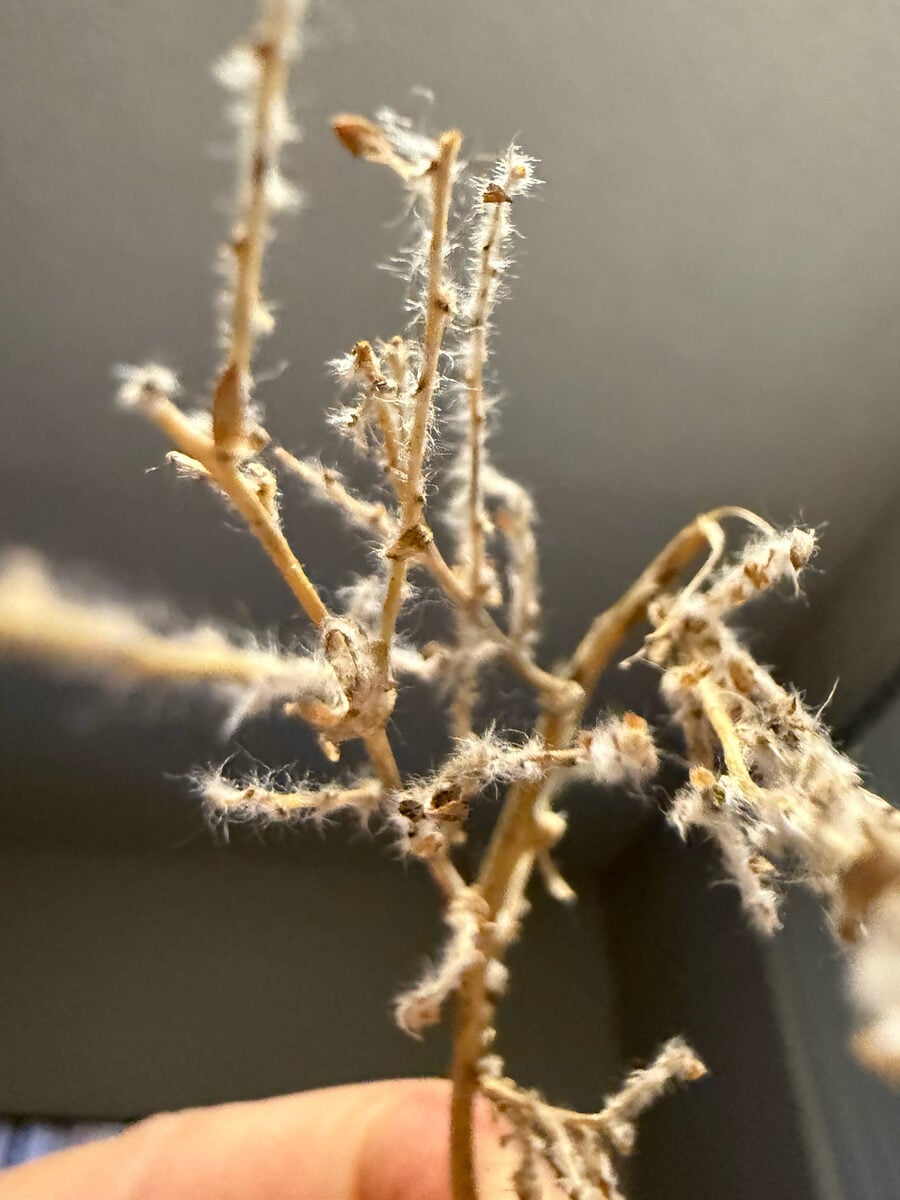
(c) audulinka, some rights reserved (CC BY-NC)
Summary
A perennial herb growing 0.3 m tall with a 0.3 m spread. Hardy to UK zone 5. Flowers May to July with seeds maturing June to August. Tolerates light sandy, medium loamy, and heavy clay soils across mildly acidic to basic pH ranges. Requires full sun and prefers moist conditions. Wind-pollinated hermaphrodite.
Description
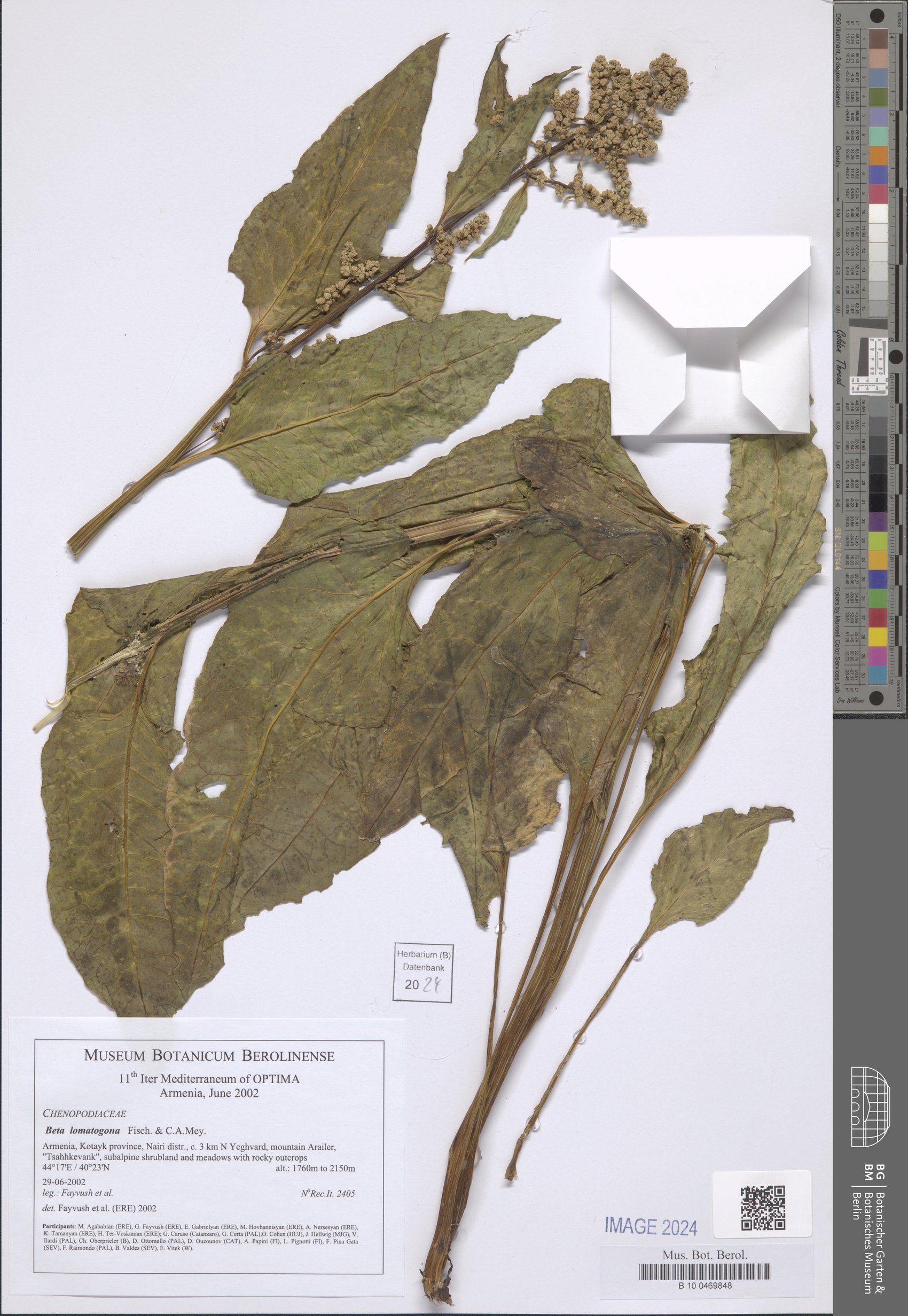
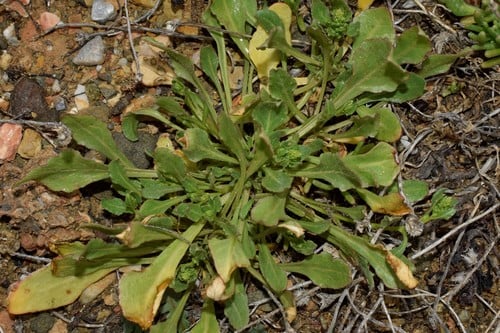
A perennial plant. It grows up to 60-100 cm tall. It spreads to 60 cm wide. The roots are fleshy and thick. The stem is hollow. It has triangular shaped leaves. They are deep green. They are 10 cm long. The flower spikes do not have leaflets. The flowers are greenish in spikes at the top of the plant. The seeds are rust coloured.
Edible Uses
Young leaves can be eaten raw or cooked. They wilt quickly after picking and should be used as soon after harvest as possible. The leaves are best in spring and early summer; older leaves become tough and bitter. Raw leaves should only be eaten in small quantities. Young leaves can be chopped and used as a small component of mixed salads, though their flavour is not particularly appealing. Cooked, they make an acceptable spinach substitute, best mixed with more flavourful leaves. The leaves are a good source of iron. Young flowering shoots can be cooked: when grown on good soil they can reach pencil thickness, and when about 12cm long they are cut just below ground level, peeled, and used like asparagus — a very pleasant spring vegetable. The plant is sometimes blanched by excluding light to produce longer and more succulent shoots, though this also reduces the vitamin content. Young flower buds are cooked and considered a gourmet food, though they are small and harvesting any meaningful quantity takes considerable time. The seed can be ground and mixed with flour for use in bread and similar foods. It is small but relatively easy to harvest, and should be soaked overnight and thoroughly rinsed before use to remove saponins.
Traditional Uses
The young leaves are eaten as a potherb. The young shoots can be cut under the ground and peeled and used as an asparagus substitute. The tender flower clusters are eaten. The seeds can also be eaten and sprinkled on bread and cakes.
Medicinal Uses
The herb is emollient, laxative, and vermifuge. It should not be used by people suffering from kidney complaints or rheumatism. A poultice of the leaves has been used to cleanse and heal chronic sores, boils, and abscesses. The seed acts as a gentle laxative suitable for children.
Known Hazards
The leaves and seeds of all members of this genus are more or less edible. However, many of the species in this genus contain saponins, though usually in quantities too small to do any harm. Although toxic, saponins are poorly absorbed by the body and most pass straight through without any problem. They are also broken down to a large extent in the cooking process. Saponins are found in many foods, such as some beans. Saponins are much more toxic to some creatures, such as fish, and hunting tribes have traditionally put large quantities of them in streams, lakes etc in order to stupefy or kill the fish. The plants also contain some oxalic acid, which in large quantities can lock up some of the nutrients in the food. However, even considering this, they are very nutritious vegetables in reasonable quantities. Cooking the plants will reduce their content of oxalic acid. People with a tendency to rheumatism, arthritis, gout, kidney stones or hyperacidity should take especial caution if including this plant in their diet since it can aggravate their condition.
Distribution
It is a temperate plant. It will grow on a range of soils. It is resistant to drought and frost. In Hobart Botanical gardens. It suits hardiness zones 5-10.
Where It Grows
Africa, Albania, Andorra, Australia, Austria, Balkans, Belarus, Bosnia, Britain, Bulgaria, Czech Republic, Estonia, Europe*, France, Georgia, Germany, Greece, Hungary, Ireland, Italy, Latvia, Lithuania, Luxembourg, Macedonia, Madagascar, Mediterranean, North America, Norway, Poland, Romania, Russia, Scandinavia, Siberia, Slovakia, Slovenia, Spain, Sweden, Switzerland, Tasmania, Ukraine, USA, Yugoslavia,
Cultivation
Historic Grain Crop Management: Standard Staple Crop: Balanced carb. Prefers a fertile humus rich soil in a sunny position. The plant produces a better quality harvest in the summer if it is grown in light shade. A very easily grown plant, it tolerates considerable neglect and succeeds in most soils and situations. Good King Henry was at one time frequently cultivated in the garden as a perennial vegetable, but it has fallen out of favour and is seldom grown at present. About thirty plants can produce a good supply of food for four people.
Propagation
Sow seed in spring in a cold frame. Germination can be slow but usually achieves a high rate. Seeds germinate best at 20°C; cold stratification of up to 9 weeks at 4°C prior to exposure at 20°C will improve germination. Prick out seedlings into individual pots once large enough to handle, and plant out into permanent positions in summer. Division can be done in spring. Larger clumps can be replanted directly into permanent positions; smaller clumps are best potted up and grown on in a cold frame until rooting well, then planted out in summer or the following spring.
Other Uses
Gold and green dyes can be obtained from the whole plant.
Production
Plants take a couple of years to get established but then continue to produce leaves. They self seed, if allowed.
Other Information
It is a commercially cultivated vegetable.
Notes
There are about 100-150-250 Chenopodium species. They are mostly in temperate regions. Also put in the family Chenopodiaceae.
Nutrition
| Part | Moisture | kJ | kcal | Protein | Vit A | Vit C | Iron | Zinc |
|---|---|---|---|---|---|---|---|---|
| Leaves | 162 | 39 | 6.5 | — | — | — | — | — |
Synonyms
Also Known As
All good, Angiarde, Blite, Brasnjenik, Chrestovy spenat, Chuven, Engari, Espinac de muntanya, Goosefoot, Gracka, Ingri, Mastna, Orles, Ourla, Perennial goosefoot, Sarrion, Spinacio che fa in montogna, Stajska metlika, Takasimboloina, Valcordi, Verkouenyo, Zel'ina
References (45)
- Abbet, C., et al, 2014, Ethnobotanical survey on wild alpine food plants in Lower and Central Valais (Switzerland). Journal of Ethnopharmacology 151 (2014) 624–634
- Bianchini, F., Corbetta, F., and Pistoia, M., 1975, Fruits of the Earth. Cassell. p 78
- Biscotti, N. et al, 2018, The traditional food use of wild vegetables in Apulia (Italy) in the light of Italian ethnobotanical literature. Italian Botanist 5:1-24 (As Blitum bonus-henricus)
- Bodkin, F., 1991, Encyclopedia Botanica. Cornstalk publishing, p 249
- Bremness, L., 1994, Herbs. Collins Eyewitness Handbooks. Harper Collins. p 160
Show all 45 references Hide references
- Bussman, R. W., et al, 2021, Unity in diversity—food plants and fungi of Sakartvelo (Republic of Georgia), Caucasus. Journal of Ethnobiology and Ethnomedicine (2021) 17:72 p 4
- Cerne, M., 1992, Wild Plants from Slovenia used as Vegetables. Acta Horticulturae 318
- Cheifetz, A., (ed), 1999, 500 popular vegetables, herbs, fruits and nuts for Australian Gardeners. Random House p 53
- Crawford, M., 2012, How to grow Perennial Vegetables. Green Books. p 113
- Cundall, P., (ed.), 2004, Gardening Australia: flora: the gardener's bible. ABC Books. p 370
- Facciola, S., 1998, Cornucopia 2: a Source Book of Edible Plants. Kampong Publications, p 77
- Hedrick, U.P., 1919, (Ed.), Sturtevant's edible plants of the world. p 184
- Hibbert, M., 2002, The Aussie Plant Finder 2002, Florilegium. p 66
- Irving, M., 2009, The Forager Handbook, A Guide to the Edible Plants of Britain. Ebury Press p 190
- Jackes, D. A., Edible Forest Gardens
- Kays, S. J., and Dias, J. C. S., 1995, Common Names of Commercially Cultivated Vegetables of the World in 15 languages. Economic Botany, Vol. 49, No. 2, pp. 115-152
- Kiple, K.F. & Ornelas, K.C., (eds), 2000, The Cambridge World History of Food. CUP p 1750, 1779
- Lamp, C & Collet F., 1989, Field Guide to Weeds in Australia. Inkata Press. p 70
- Luczaj, L., 2012, Ethnobotanical review of wild edible plants of Slovakia. Acta Societatis Botanicorum Poloniae 81(4):245-255
- Łukasz Łuczaj and Wojciech M Szymański, 2007, Wild vascular plants gathered for consumption in the Polish countryside: a review. J Ethnobiol Ethnomedicine. 3: 17
- Mabey, R., 1973, Food for Free. A Guide to the edible wild plants of Britain, Collins. p 90
- Mattalia, G., et al, 2012, Traditional uses of wild food and medicinal plants among Brigasc, Kye ́, and Provenc ̧al communities on the Western Italian Alps. Genet Resour Crop Evol. Springer
- Michael, P., 2007, Edible Wild Plants and Herbs. Grub Street. London. p 101
- Nedelcheva A., 2013, An ethnobotanical study of wild edible plants in Bulgaria. EurAsian Journal of BioSciences 7, 77-94
- Paoletti, M.G., Dreon, A.L., and Lorenzoni, G.G., 1995, Pistic, Traditional Food from Western Friuli, NE Italy. Economic Botany 49(1) pp 26-30
- Pieroni, A., 1999, Gathered wild food plants in the Upper Valley of the Serchio River (Garfagnana), Central Italy. Economic Botany 53(3) pp 327-341
- Pieroni, A., 2008, Local plant resources in the ethnobotany of Theth, a village in the Northern Albanian Alps. Genet Resour Crop Evol (2008) 55:1197–1214
- Pieroni, A.,& Giusti, M. E., 2009, Alpine Ethnobotany in Italy: Journal of Ethnobiology and Ethnomedicine. 5:32
- Pieroni, A. et al, 2013, One century later: the folk botanical knowledge of the last remaining Albanians of the upper Reka Valley, Mount Korab, Western Macedonia. Journal of Ethnobiology and Ethnomedicine. 9:22
- Plants for a Future database, The Field, Penpol, Lostwithiel, Cornwall, PL22 0NG, UK. http://www.scs.leeds.ac.uk/pfaf/
- Redzic, S. J., 2006, Wild Edible Plants and their Traditional Use in the Human Nutrition in Bosnia-Herzegovina. Ecology of Food and Nutrition, 45:189-232
- Rigat, M et al, 2009, Ethnobotany of Food Plants in the High River Ter Valley (Pyrenees, catalonia, Iberian Peninsula): Non-Crop Food Vascular Plants and Crop Food Plants with medicinal Properties. Ecology of Food and Nutrition, 48:303-327
- Seidemann J., 2005, World Spice Plants. Economic Usage, Botany, Taxonomy. Springer. p 96
- Simkova, K. et al, 2014, Ethnobotanical review of wild edible plants used in the Czech Republic. Journal of Applied Botany and Food Quality 88, 49-67
- Smith, K., 1998, Growing Uncommon Fruits and Vegetables. New Holland. p 113
- Sp. pl. 1:218. 1753
- Stern, G., 1986, Australian Weeds. A Source of Food and Medicine. Harper & Row. p 103
- Tardio, J., et al, 2006, Ethnobotanical review of wild edible plants in Spain. Botanical J. Linnean Soc. 152, 27-71
- Tronickova, E. & Krejcova, Z., 1987, Ortaggi, Instituto Geografico de Agostini, Cecoslovacchia. p 211
- Turner, N. J. et al, 2011, Edible and Tended Wild Plants, Traditional Ecological Knowledge and Agroecology. Critical Reviews in Plant Sciences, 30:198-225
- Ulian, T., et al, 2020, Unlocking plant resources to support food security and promote sustainable agriculture. Plants, People, Planet. 2020;2:421–445.
- USDA, ARS, National Genetic Resources Program. Germplasm Resources Information Network - (GRIN). [Online Database] National Germplasm Resources Laboratory, Beltsville, Maryland. Available: www.ars-grin.gov/cgi-bin/npgs/html/econ.pl (10 April 2000)
- van Wyk, B., 2005, Food Plants of the World. An illustrated guide. Timber press. p 129
- Wiersema, J. H. & Leon, B., 2013, World Economic Plants. A Standard Reference CRC Press. 2nd Ed. p 168
- World Checklist of Useful Plant Species 2020. Royal Botanic Gardens, Kew (As Blitum bonus-henricus)