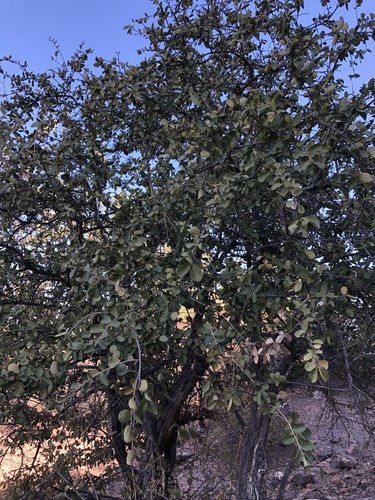
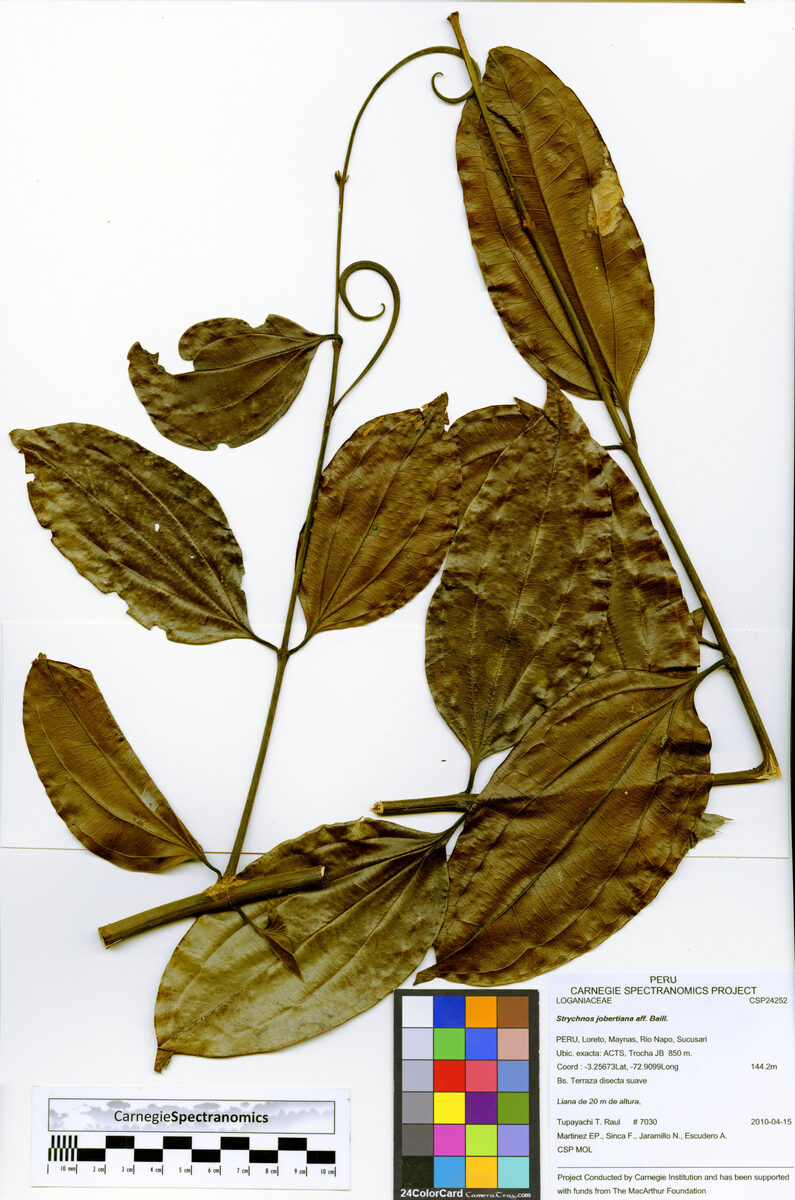
Strychnos potatorum
Linn.f.
Grape strychnos
iNaturalist· cc-by-nc
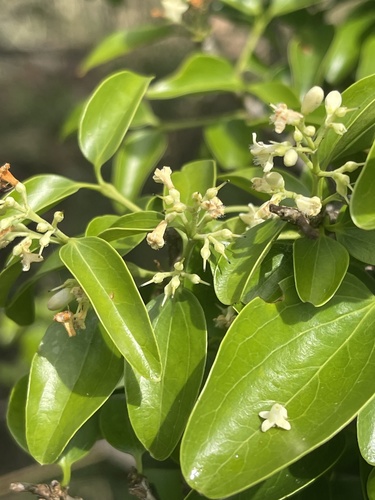
(c) Grant Reed, some rights reserved (CC BY-NC), uploaded by Grant Reed
iNaturalist· cc-by-nc
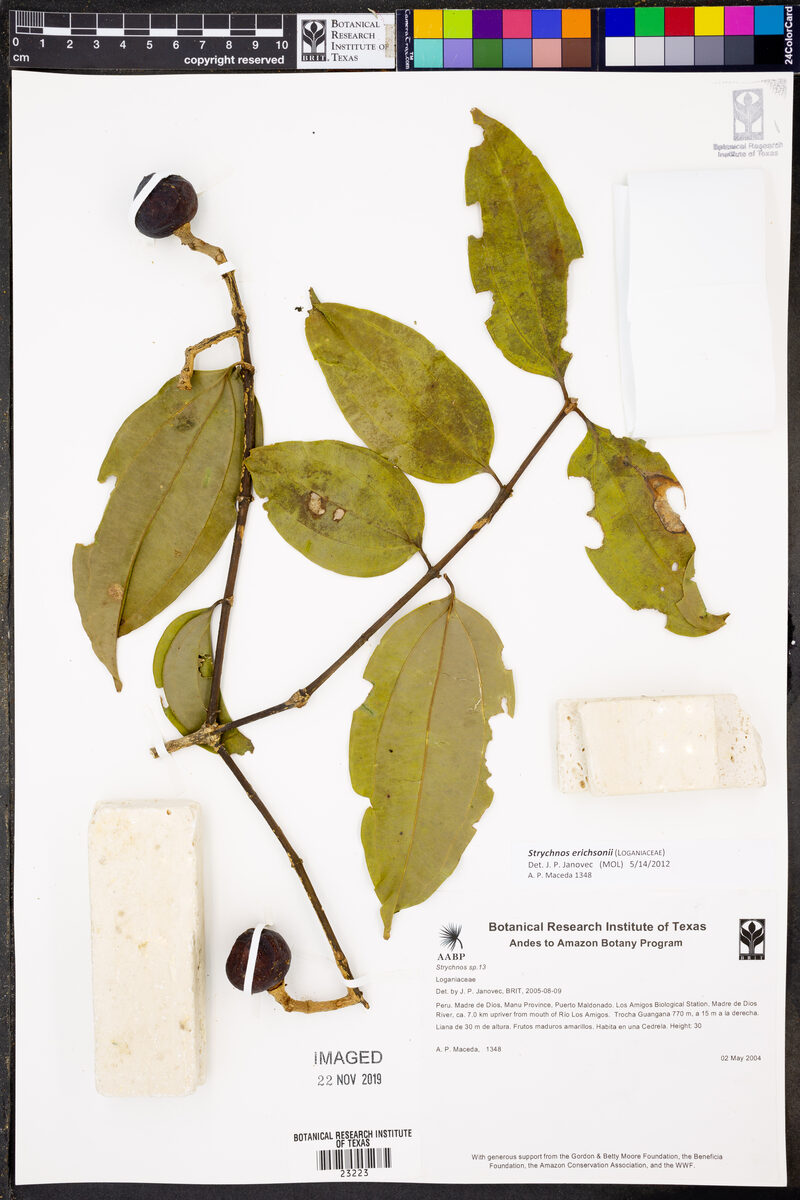
(c) Bart Wursten, some rights reserved (CC BY-NC), uploaded by Bart Wursten
iNaturalist· cc-by-nc
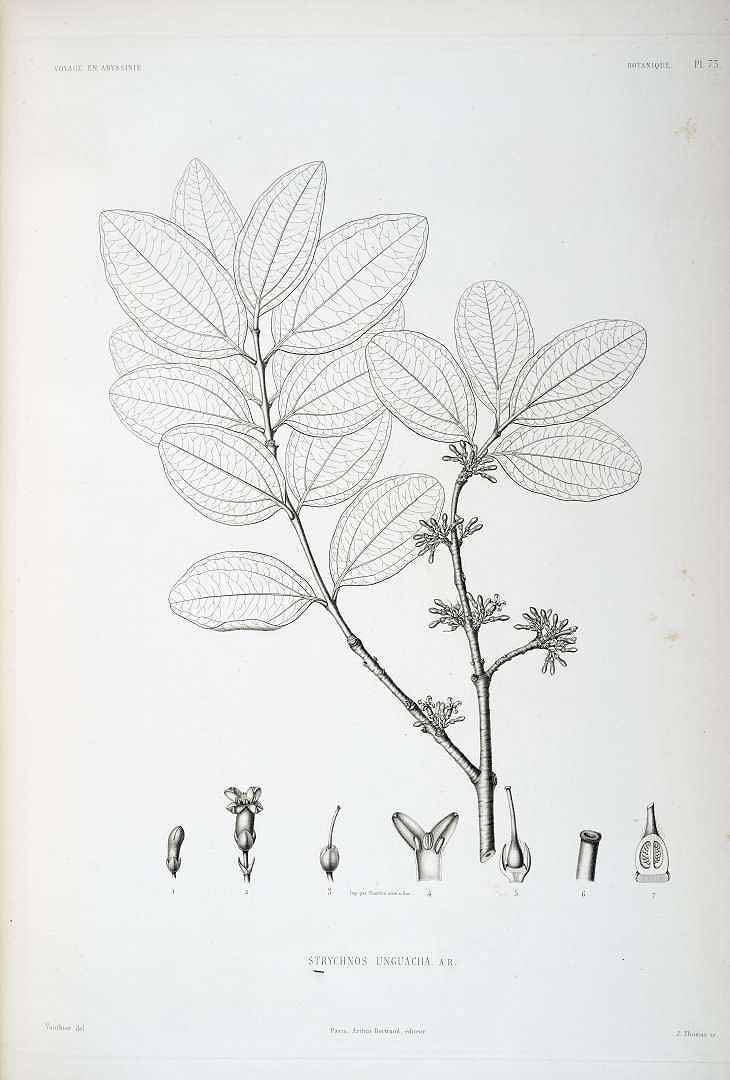
(c) Troos van der Merwe, some rights reserved (CC BY-NC), uploaded by Troos van der Merwe
Summary
Source: WikipediaStrychnos potatorum also known as clearing-nut tree (Telugu: చిల్లగింజ, Kannada: kataka/ಕತಕ, Tamil: தேத்தான் கொட்டை(Thethankottai), Bengali: কতকা Hindi: Nirmali Burmese: ခပေါင်းရေကြည်, Sinhala ඉඟිනි) is a deciduous tree which has height up to 40 feet (12 meters). The seeds of the tree are commonly used in traditional medicine as well as for purifying water in India and Myanmar.
Description
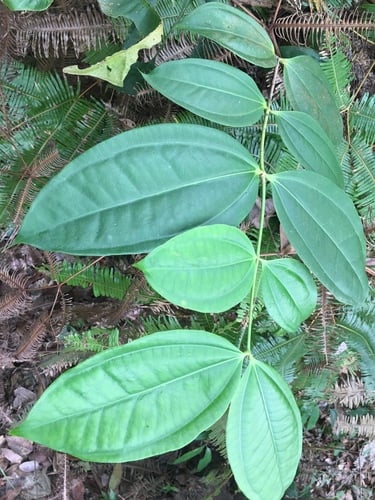
A shrub or tree. It can be 5-15 m high. The bark is pale grey or silver-grey. The leaves are oval and 6-15 cm long by 3-9 cm wide. They are thin in texture. They are glossy green above and paler underneath. The flowers are whitish to yellowish-green. They are 5 mm long. They occur in 2-5 flowered heads on very slender stalks. Several heads occur together forming a spiky looking cluster. The fruit are round and softly fleshy. They are smooth and 2 cm across.
Edible Uses
Young fruits are occasionally eaten fresh or made into preserves, with the pulp being the part consumed. They are also an ingredient in 'Raja's Cup', an Ayurvedic coffee substitute. The fruit is a sub-globose berry, 12–18mm in diameter, with a firm skin that turns black when ripe and contains 1–2 seeds in a whitish pulp.
Traditional Uses
The ripe fruit are eaten raw and made into preserves. The skin and seeds are avoided. The very young fruit are made into a preserve and eaten. In India the seeds are roasted and eaten. CAUTION: The fruit are considered poisonous. CAUTION: Many Loganiaceae are very poisonous.
Medicinal Uses
Pounded leaves are applied to treat watering and aching eyes, and a decoction is taken for epilepsy. The roots are considered aphrodisiac, and the vapour from a root decoction is inhaled to treat colds and venereal diseases. A decoction of the roots and leaves is taken for coughs. The seeds are used to treat a wide range of conditions including liver, kidney, and stomach complaints; gonorrhoea; leucorrhoea; bronchitis; chronic diarrhoea; strangury; kidney and bladder stones; diabetes; and eye diseases. The plant contains numerous monomeric and dimeric indole alkaloids, with the root bark being especially rich. The root bark alkaloid cantleyine has shown a relaxing effect on isolated tracheal smooth muscles, suggesting it may be responsible for anti-cough and anti-asthmatic activity. Normacusine B, a monomeric corynanthe-class alkaloid also found in Rauvolfia, Tabernaemontana, and Vinca species, is sympatholytic with hypotensive activity stronger than reserpine. Total alkaloid extracts from the seeds, bark, and leaves showed strychnine-like activity in vivo, marked hypotensive effects, and a depressant action on isolated heart muscle. In-vivo tests with seed powder and aqueous seed extract demonstrated prevention of ulcer formation through reduced acid secretion and increased mucin activity. An aqueous seed extract has shown significant hepatoprotective activity, and a methanol extract of the seeds exhibited both diuretic and antidiarrhoeal effects against castor oil-induced diarrhoea.
Known Hazards
Various parts of Strychnos plants, especially the seeds and bark, contain toxic alkaloids such as strychnine and brucine. The fleshy pulp of the ripe fruits, however, is often edible. The pounded fruits are used as fish poison. The crushed bark is used as a fish poison.
Distribution
It is a tropical plant. It grows at medium to low altitudes. It occurs in open woodland and along dry watercourses.
Where It Grows
Africa, Asia, Botswana, East Africa, India, Malawi, Mozambique, Namibia, South Africa, Southern Africa, Zambia, Zimbabwe,
Cultivation
A shade-bearing tree, growing up well under the canopy of deciduous forest. Established trees are very drought tolerant. The plant produces root suckers.
Propagation
Sow seed in deep individual containers or in situ, as the seedling quickly produces a soft, delicate taproot. Half-ripe cuttings can also be taken. The plant can also be propagated from root suckers.
Other Uses
The cut seeds can be rubbed around the inside of a rough earthenware vessel before water is added; this causes most impurities to settle to the bottom, allowing cleaner water to be poured off. The seeds contain polyelectrolytes that act as coagulants, and laboratory tests using them in direct filtration of turbid surface water produced substantial improvements in aesthetic and microbiological quality. The yellowish-grey wood has conspicuous white markings, is close-grained, very hard, and termite resistant, but splits easily and is therefore unsuitable for carving. It is used to make carts, shafts, agricultural implements, and tool handles.
Notes
The ripe seeds are used to clear muddy water.
Synonyms
Also Known As
Ambu-prasada, Black bitterberry, Chillachettu, Chilladabeeja, Chillaginjalu, Chilu, Clearing nut, Dupa, Gajrah, Induga, Indupachettu, Iriya, Kariakval, Kataka, Katakami, Kotaku, Kuchla, M'tupa, Mitupe, Neimal, Nelmal, Nirmali, Sillakottai, Tetan-kotai, Tetran-paral, Tetta, Tettamparel, Tettan cottay marum, Tettran, Toillaghenjaloo, Water-filter nut
References (16)
- Chandrakumar, P., et al, 2015, Ethnobotanical studies of wild edible plants of Gond, Halba and Kawar tribes of Salekasa Taluka, Gondia District, Maharashtra State, India. International Research Journal of Pharmacy 6(8)
- Facciola, S., 1998, Cornucopia 2: a Source Book of Edible Plants. Kampong Publications, p 240
- Fowler, D. G., 2007, Zambian Plants: Their Vernacular Names and Uses. Kew. p 62
- Fox, F. W. & Young, M. E. N., 1982, Food from the Veld. Delta Books. p 261
- Hedrick, U.P., 1919, (Ed.), Sturtevant's edible plants of the world. p 636
Show all 16 references Hide references
- Misra S. & Misra M., 2016, Ethnobotanical and Nutritional Evaluation of Some Edible Fruit Plants of Southern Odisha, India. International Journal of Advances in Agricultural Science and Technology, Vol.3 Issue.1, March- 2016, pg. 1-30
- Misra, S., 2020, Survey of edible plants for human consumption in south Odisha, India. Journal of Emerging Technologies and Innovative Research (JETIR) Vol. 7, Issue 12 p 292
- Palgrave, K.C., 1996, Trees of Southern Africa. Struik Publishers. p 768
- Rasingam, L., 2012, Ethnobotanical studies on the wild edible plants of Irula tribes of Pillur Valley, Coimbatore district, Tamil Nadu, India. Asian Pacific Journal of Tropical Biomedicine. (2012) S1493-S1497
- Reddy, K. N. et al, 2007, Traditional knowledge on wild food plants in Andhra Pradesh. Indian Journal of Traditional Knowledge. Vol. 6(1): 223-229
- Schmidt, E., Lotter, M., & McCleland, W., 2007, Trees and shrubs of Mpumalanga and Kruger National Park. Jacana Media p 542
- SHORTT,
- Suppl. pl. 148. 1782 ("1781")
- UPHOF,
- WATT,
- World Checklist of Useful Plant Species 2020. Royal Botanic Gardens, Kew