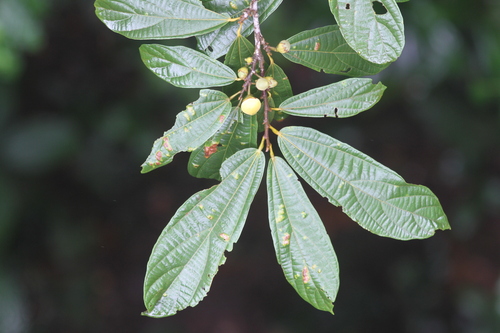
Sterculia holtzei
F. Muell.
gbif· cc-by-nc-sa
Royal Botanic Gardens Victoria
gbif· cc-by-nc-sa
Royal Botanic Gardens Victoria
gbif· cc-by-nc-sa
Royal Botanic Gardens Victoria
Description
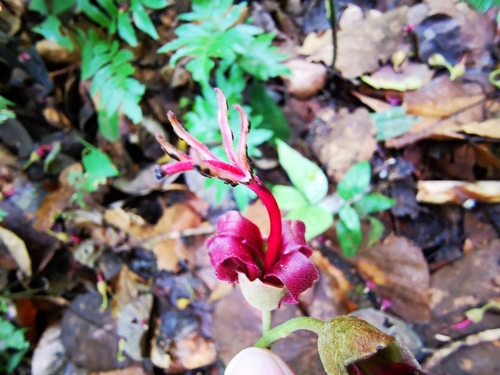
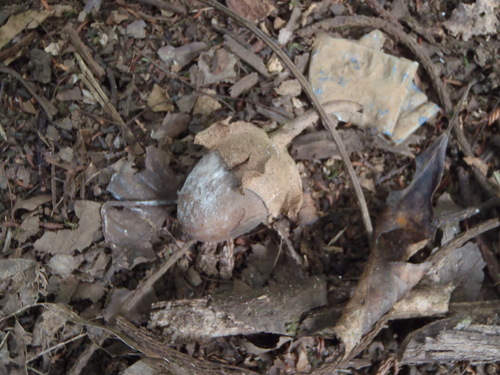
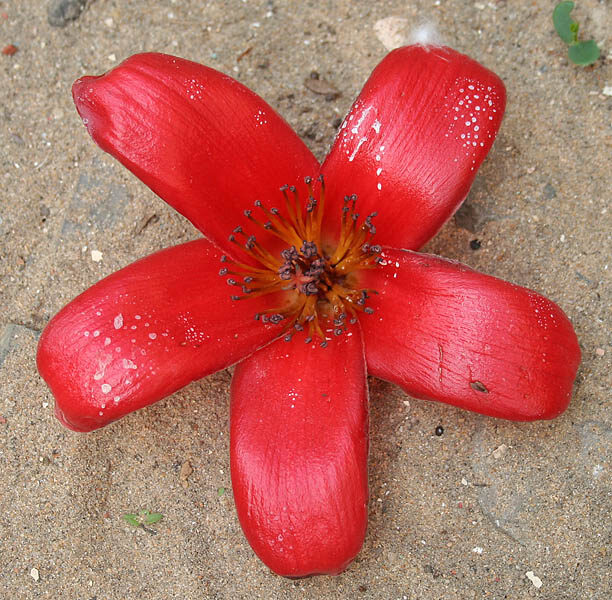
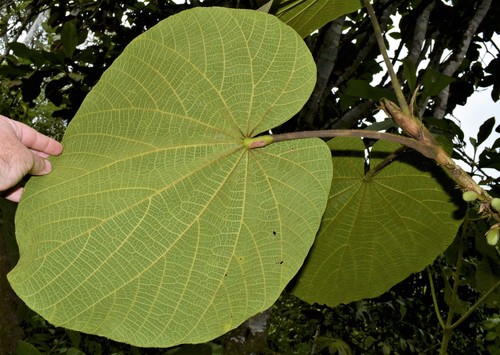
A deciduous tree. It grows 25 m high. The trunk has buttresses at the base. The bark is pale grey or cream and smooth. The leaves are 6-15 cm long by 4-8 cm wide. It loses its leaves during the dry season. The flowers are in groups in the axils of leaves. There are 5-8 flowers in a group. The flowers are cream and yellow. The fruit are yellow to orange and made up of 4 follicles. These are banana shaped and 4-6 cm long by 2-3 cm wide. There are 1-5 seeds in each follicle. The seeds are shiny and black. They are about 1.5 cm long.
Distribution
A tropical plant. It grows in swamps. It grows from sea level to 150 m above sea level. It grows in northern Western Australia and the Northern Territory.
Where It Grows
Australia*,
Cultivation
Plants are grown from fresh seeds. Trees can re-sprout after fire.
Production
Trees produce seeds after 11 years. Trees live for more than 20 years. In northern West Australia flowers are May to September and fruit in August to November.
Notes
Also put in the family Sterculiaceae.
References (4)
- Lazarides, M. & Hince, B., 1993, Handbook of Economic Plants of Australia, CSIRO. p 229
- Paczkowska, G . & Chapman, A.R., 2000, The Western Australian Flora. A Descriptive Calatogue. Western Australian Herbarium. p 545
- Townsend, K., 1994, Across the Top. Gardening with Australian Plants in the tropics. Society for Growing Australian Plants, Townsville Branch Inc. p 338
- Wheeler, J.R.(ed.), 1992, Flora of the Kimberley Region. CALM, Western Australian Herbarium, p 195