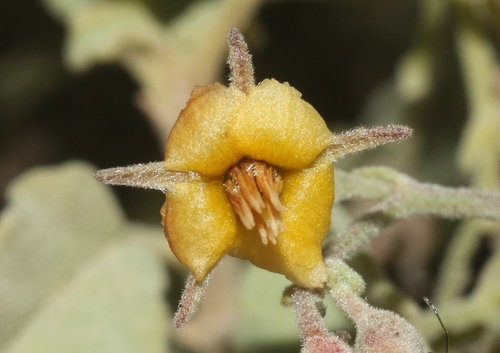
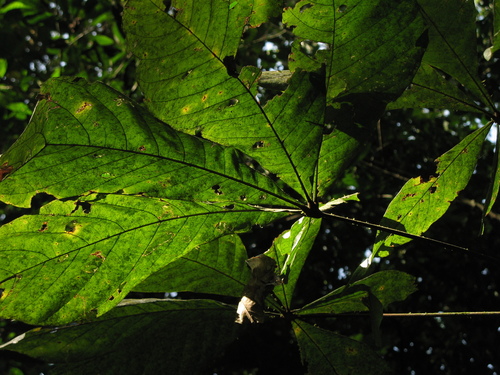
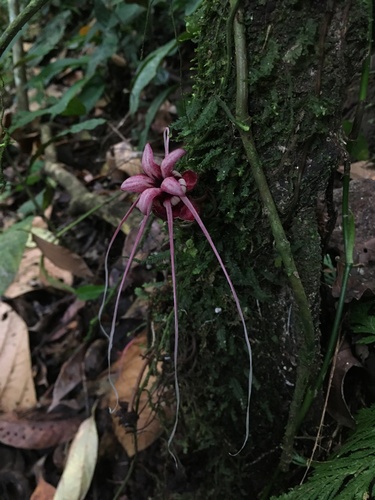
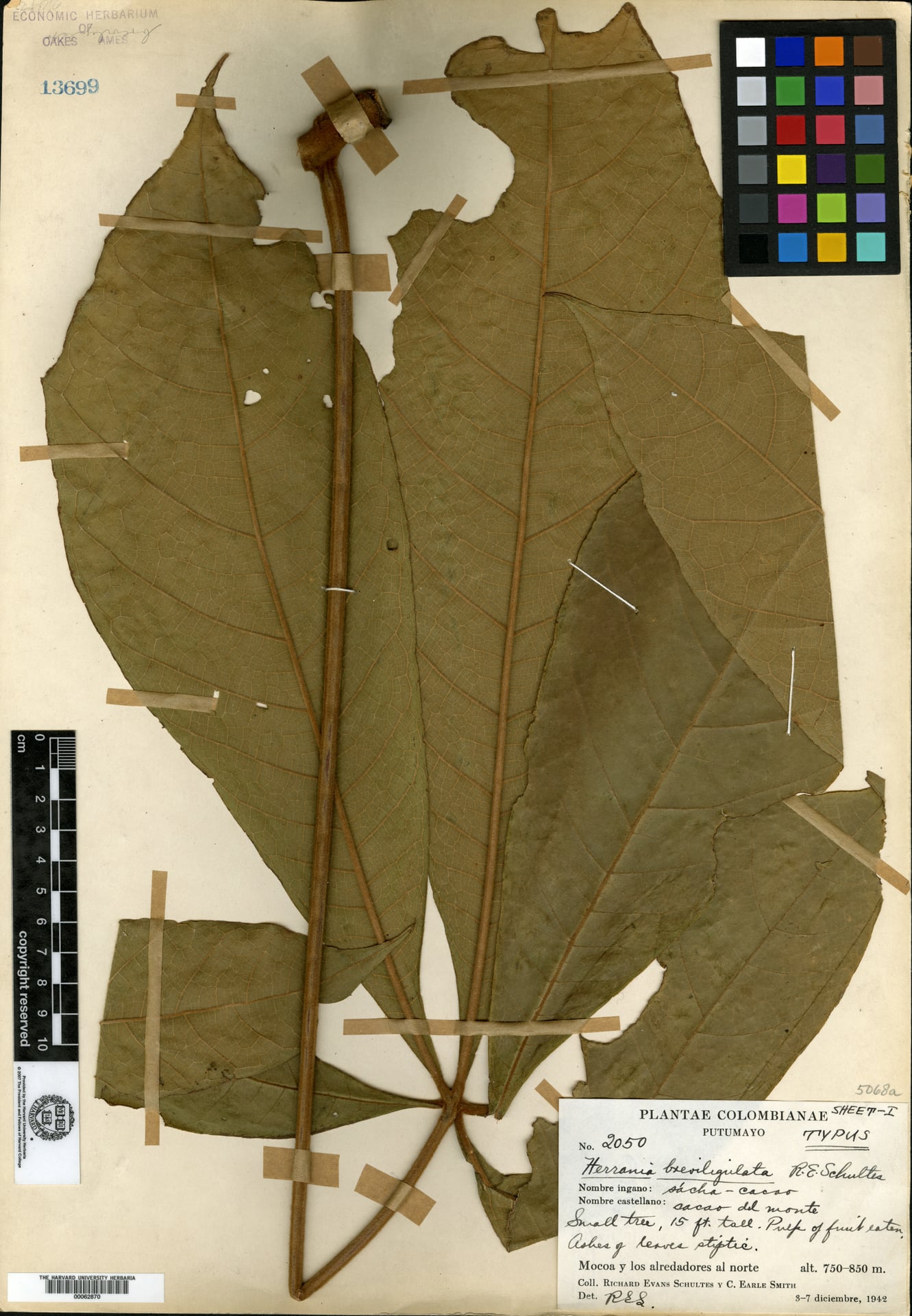
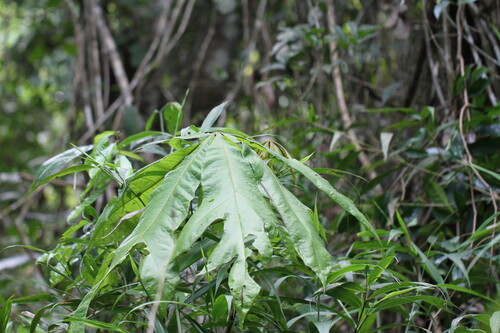
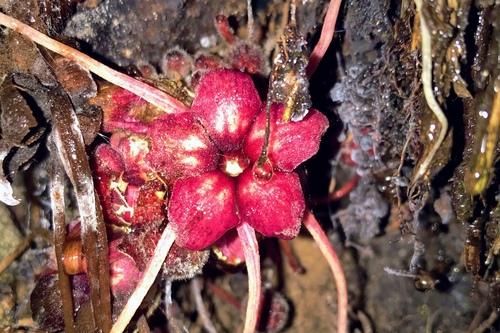
Grewia pubescens
P. Beauv.
gbif· cc-by-nc-nd
Ehoarn Bidault / Missouri Botanical Garden
gbif· cc-by-nc-nd
Ehoarn Bidault / Missouri Botanical Garden
gbif· cc-by
Picturae
Description
A straggling bush or small tree in the Malvaceae family, growing up to 9 m high. It is a tropical plant found in secondary jungle and clearings in primary forest.
Edible Uses
Fruit - raw. The fruit is a 2 - 4 lobed drupe, each lobe around 6 - 7mm long and 5 - 6mm wide. The ashes of the burnt roots are used as a salt-like flavouring in foods.
Medicinal Uses
The leaves are febrifuge and an infusion is used in the treatment of fevers. Applied topically, the leaves or the mucilage extracted from them, are used to treat wounds, cuts, sores and ulcers. The leaf-sap is antidote and is used to treat venomous stings, bites, etc An infusion of the bark is used in the treatment of diarrhoea and dysentery. Applied topically, the bark, or the mucilage extracted from it, is used to treat wounds, cuts and sores. The root is used topically to treat smallpox pustules.
Distribution
A tropical plant. It grows in secondary jungle and clearings in primary forest.
Where It Grows
Africa, Benin, Central Africa, Côte d'Ivoire, East Africa, Ghana, Guinea, Guinée, Ivory Coast, Liberia, Nigeria, Sierra Leone, Togo, West Africa,
Propagation
Seed - we have no specific information for this species but seed of this genus is generally best sown as soon as it is ripe. Stored seed has a hard seedcoat and may benefit from scarification before sowing in order to speed up and improve germination. This can usually be done by pouring a small amount of nearly boiling water on the seeds (being careful not to cook them!), allowing the mix to cool somewhat and then leaving it in a warm place to soak for 12 - 24 hours. Sow the seeds in situ or in a nursery seedbed or trays - do not allow the compost to become dry. Germination and early growth are usually quite quick. Cuttings - best taken with a heel.
Other Uses
A fibre obtained from the bark is used to make cordage. The stems are beaten, washed and then dried to make a sponge-like material that is used for washing the body. The wood is light in weight, strong and elastic. It is used for spears
Notes
There are about 200 Grewia species. They are mostly tropical. The fruit of most may be edible. These were in the Sparrmanniaceae and the Tiliaceae.
Synonyms
References (6)
- Burkill, H. M., 1985, The useful plants of west tropical Africa, Vol. 5. Kew.
- Dalziel, J. M., 1937, The Useful plants of west tropical Africa. Crown Agents for the Colonies London.
- Jardin, C., 1970, List of Foods Used In Africa, FAO Nutrition Information Document Series No 2.p 140
- Peters, C. R., O'Brien, E. M., and Drummond, R.B., 1992, Edible Wild plants of Sub-saharan Africa. Kew. p 193
- von Katja Rembold, 2011, Conservation status of the vascular plants in East African rain forests. Dissertation Universitat Koblenz-Landau p 168
Show all 6 references Hide references
- World Checklist of Useful Plant Species 2020. Royal Botanic Gardens, Kew