Grewia robusta
Burch.
iNaturalist· cc-by-nc
(c) Mark Johnston, some rights reserved (CC BY-NC), uploaded by Mark Johnston
iNaturalist· cc-by-nc
(c) Craig Peter, some rights reserved (CC BY-NC), uploaded by Craig Peter
iNaturalist· cc-by-sa
(c) Nicola van Berkel, some rights reserved (CC BY-SA), uploaded by Nicola van Berkel
Summary
Source: WikipediaGrewia robusta is a multi-stemmed shrub or small tree, up to 3 m high, endemic to the semi-desert Karoo of South Africa, and very similar to Grewia occidentalis. It is one of some 325 species of Grewia in the family Malvaceae, and having a tropical African, Asian and Australian distribution. It is found in the arid regions of the Karoo and Eastern Cape, and generally prefers growing among dry scrub on rocky hillsides. The species has a twiggy and rigid form, with grey bark, while abbreviated twigs give it a spiny appearance. The leathery leaves are fascicled and about 25 mm in length with very short petioles. Like most Grewias its leaves are markedly 3-veined from the base; leaf margins are bluntly toothed or crenate to almost entire. Flowers are small, bright pink and fragrant. The hairy fruits are fleshy drupes some 20 mm across, reddish brown when ripe and either entire or deeply 2- to 4-lobed. This species is favoured by browsing Black rhino.
Description
An erect evergreen shrub in the Malvaceae family that grows in Mediterranean climates with arid conditions, typically found in dry soil at elevations of 300-600 m in areas receiving 150-200 mm annual rainfall.
Edible Uses
The fruit are used as a vegetable.
Traditional Uses
The fruit are used as a vegetable.
This uses section is brief — help expand it
Distribution
It is a Mediterranean climate plant. It grows in dry soil. It grows in areas with an annual rainfall between 150-200 mm. It grows between 300-600 m above sea level. It can grow in arid places.
Where It Grows
Africa, South Africa*, Southern Africa,
Notes
These were in the Sparrmanniaceae and the Tiliaceae.
Synonyms
References (4)
- Royal Botanic Gardens, Kew (1999). Survey of Economic Plants for Arid and Semi-Arid Lands (SEPASAL) database. Published on the Internet; http://www.rbgkew.org.uk/ceb/sepasal/internet [Accessed 11th June 2011]
- Ruiters-Welcome, A. K., 2019, Food plants of southern Africa. Ph.D. thesis. Univ. of Johannesburg p 76
- Welcome, A. K. & Van Wyk, B.-E., 2019, An inventory and analysis of the food plants of southern Africa. South African Journal of Botany 122 (2019) 136–179
- World Checklist of Useful Plant Species 2020. Royal Botanic Gardens, Kew
More from Malvaceae
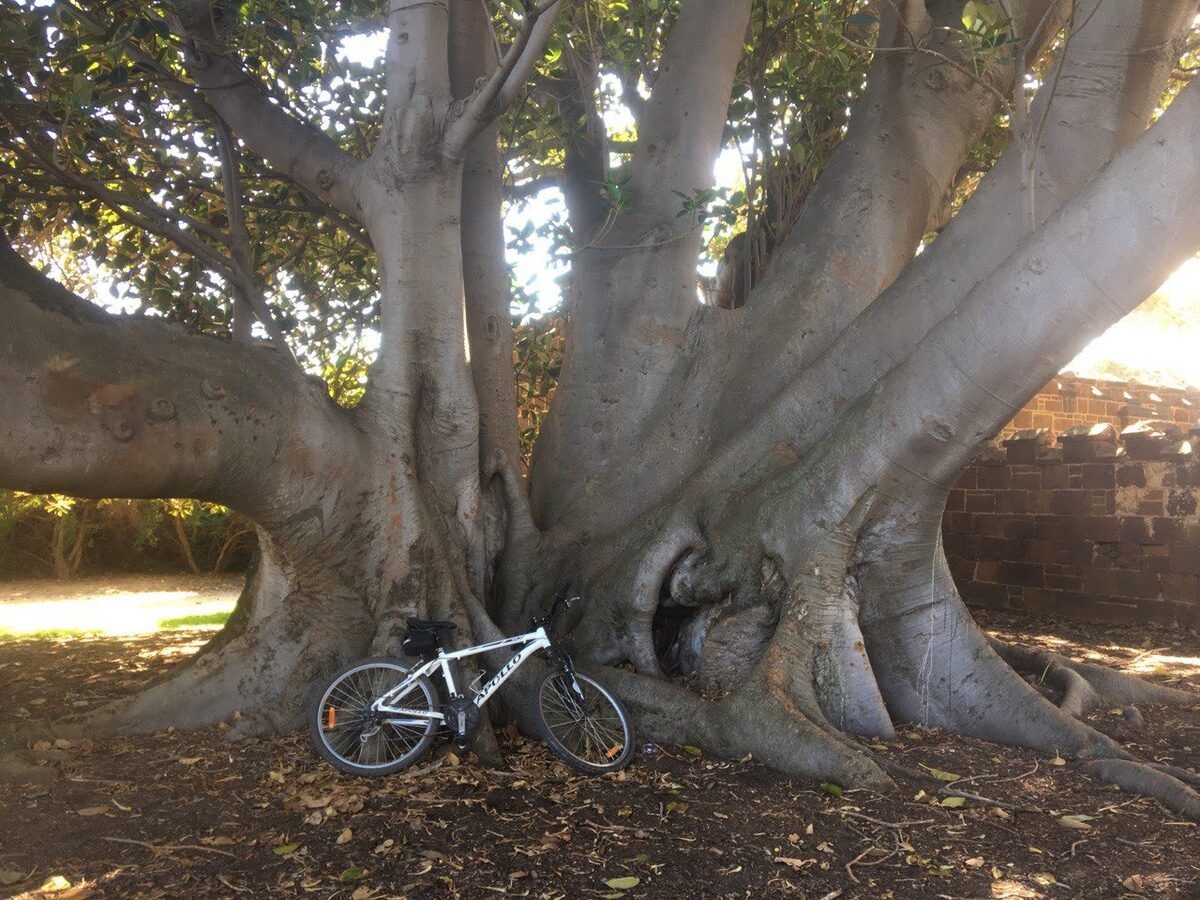
Brachychiton macrophylla
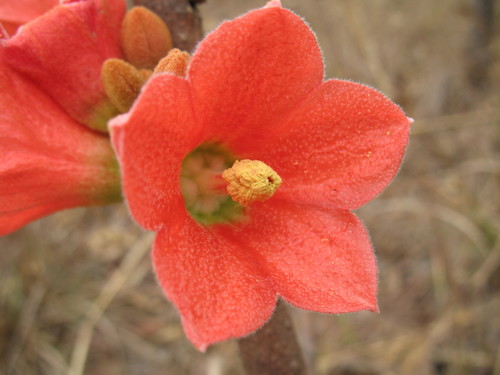
Brachychiton megaphyllus
Red flowered kurrajong
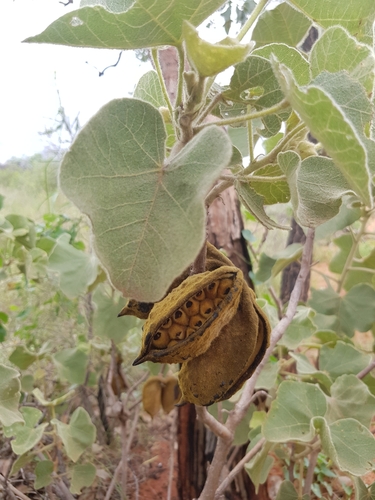
Brachychiton multicaulis
Wild curry kurrajong
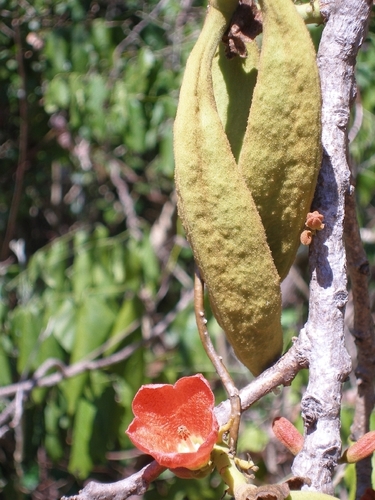
Brachychiton paradoxus
Red Kurrajong, Red-flowered Kurrajong
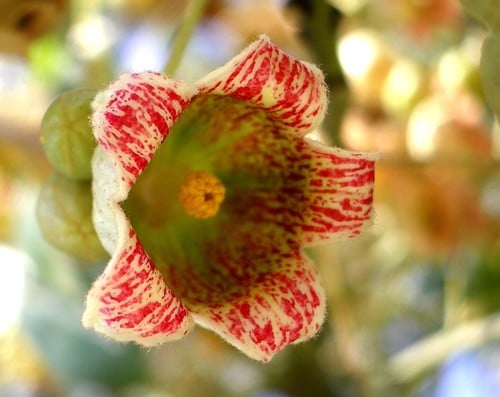
Brachychiton populneus
Black kurrajong
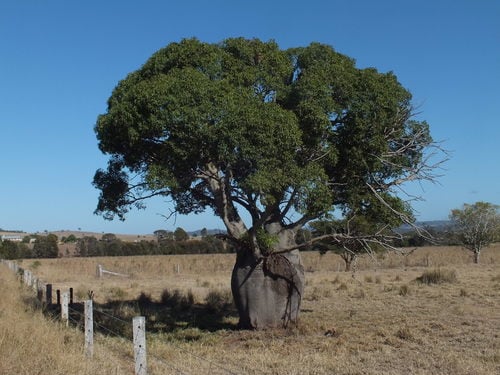
Brachychiton rupestris
Bottle tree, Narrow-leaved bottle tree, Queensland Bottle Tree, Barrel tree