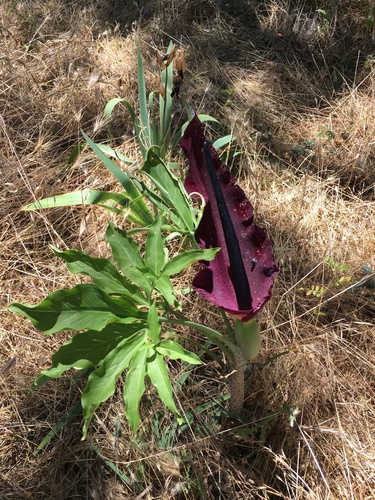
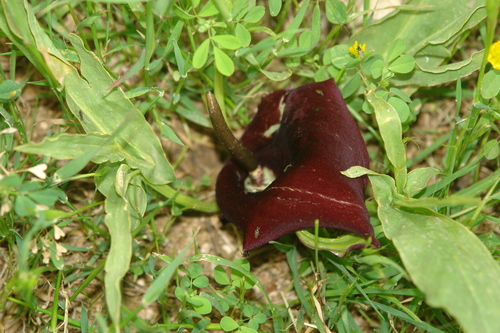
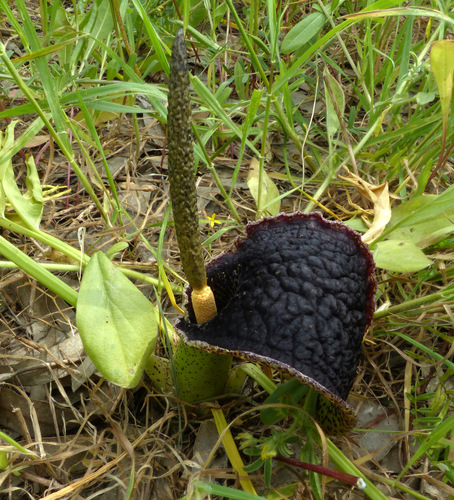
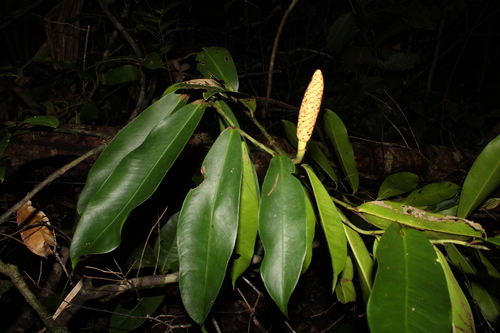
Arisaema negishii
Makino
Japanese cobra lily
iNaturalist· cc-by-nc
(c) hakkahamushi, some rights reserved (CC BY-NC), uploaded by hakkahamushi
iNaturalist· cc-by-nc
(c) Ryoko Fukuyama, some rights reserved (CC BY-NC)
Summary
Source: WikipediaHerbaceous perennial with dioecious flowers requiring separate male and female plants; fly-pollinated and self-sterile. Prefers light sandy or medium loamy, well-drained soils with mildly acid to alkaline pH. Tolerates full to partial shade and requires moist conditions.
Description
Herbaceous perennial with dioecious flowers requiring separate male and female plants; fly-pollinated and self-sterile. Prefers light sandy or medium loamy, well-drained soils with mildly acid to alkaline pH. Tolerates full to partial shade and requires moist conditions.
Edible Uses
Edible Parts: Root Edible Uses: Root - boiled and peeled. The root must be thoroughly cooked or dried before use, see the notes above on toxicity.
Traditional Uses
The root are dried or cooked and the water changed to remove oxalates before eating.
This uses section is brief — help expand it
Medicinal Uses
None known
Known Hazards
The plant contains calcium oxylate crystals. These cause an extremely unpleasant sensation similar to needles being stuck into the mouth and tongue if they are eaten but they are easily neutralized by thoroughly drying or cooking the plant or by steeping it in water.
Distribution
It is a temperate plant.
Where It Grows
Asia, Japan, Korea,
Cultivation
We have very little information on this species and do not know if it will be hardy in Britain, though judging by its native range it could succeed outdoors in many parts of this country. The following notes are based on the general needs of the genus. Prefers a cool moist peaty soil in the bog, woodland garden or a sheltered border in semi-shade. Prefers a loamy or peaty soil and will tolerate a sunny position if the soil is moist but not water-logged and the position is not too exposed. Only plant out full sized tubers and mulch them with organic matter in the winter. Plants need protection from slugs. Most species in this genus are dioecious, but they are sometimes monoecious and can also change sex from year to year.
Propagation
Seed - best sown as soon as it is ripe in a shady position in a cold frame. Stored seed remains viable for at least a year and can be sown in spring in the greenhouse but it will probably require a period of cold stratification. Germination usually takes place in 1 - 6 months at 15°c. When large enough to handle, prick the seedlings out into individual pots and grow them on in light shade in the greenhouse for at least a coupe of years until the corms are more than 20mm in diameter. Plant out into their permanent positions whilst they are dormant. Division of tubers when the plant dies down in late summer.
Other Uses
None known Special Uses
Notes
There are about 150-170 Arisaema species.
Synonyms
References (1)
- Plants for a Future database, The Field, Penpol, Lostwithiel, Cornwall, PL22 0NG, UK. http://www.scs.leeds.ac.uk/pfaf/