Arisaema murrayi
(J. Graham) Hook.
Murray's cobra lily
iNaturalist· cc-by-nc-sa
(c) Satish Nikam, some rights reserved (CC BY-NC-SA)
iNaturalist· cc-by-nc
(c) Shiwalee Samant, some rights reserved (CC BY-NC), uploaded by Shiwalee Samant
iNaturalist· cc-by-nc
(c) Mayuresh Kulkarni, some rights reserved (CC BY-NC), uploaded by Mayuresh Kulkarni
Summary
Source: WikipediaArisaema murrayi, commonly called Murray's cobra lily or snake lily, is a species of flowering plant. It got its name due to its flower which often resembles with cobra snake's hood.
Description
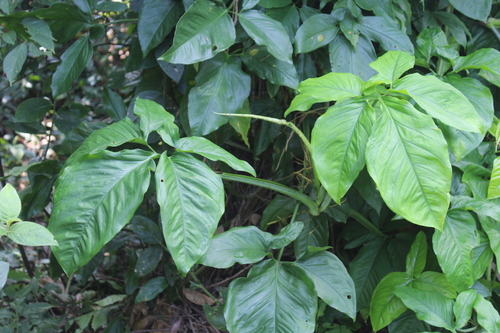
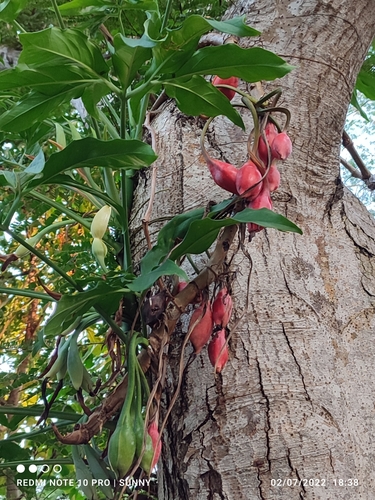
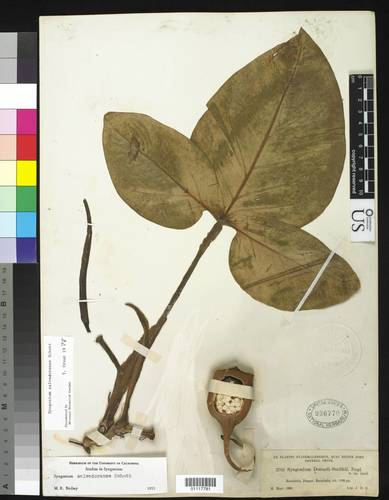
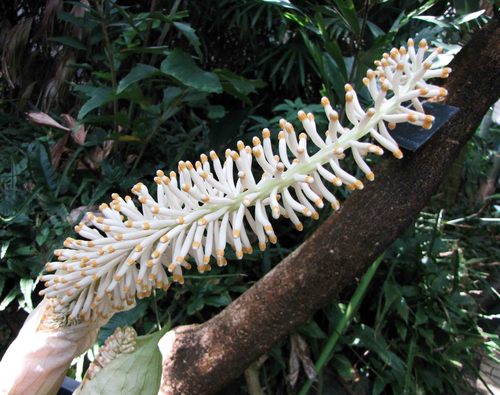
A herb. It keeps growing from year to year. It grows 30-50 cm tall. It has a corm about 3 cm across. It has a single leaf. The leaves have 5 or 6 leaflets. The spathe or leaf-like bract around the flower is white with a purple ring on the inside. It is 5-15 cm long and curves over at the top. The spadix or flower stalk in the centre curves out the top of the spathe.
Edible Uses
The corms are soaked overnight in water to remove bitterness, then cooked in water and eaten with salt and chilli.
Traditional Uses
The corms are cooked in water then eaten with salt and chilli. They are soaked in water overnight to remove bitterness.
This uses section is brief — help expand it
Medicinal Uses
Traditionally prepared as a culinary/food preparation rather than medicinal use.
Distribution
A tropical plant. It grows near Mumbai. It has been recorded up to 1,000 m above sea level.
Where It Grows
Asia, India,
Cultivation
It can be grown from small tubers.
Notes
There are about 150-170 Arisaema species.
Synonyms
Also Known As
Badada, Badadha, Baddha, Dhudhda, Diwa, Pandhra sap-kanda
References (5)
- GAMMIE
- Khyade, M. S., et al, 2009, Wild Edible Plants Used By the Tribes of Akole Tahasil of Ahmednagar District (Ms), India. Ethnobotanical Leaflets 13: 1328-36, 2009
- Lim, T. K., 2015, Edible Medicinal and Non Medicinal Plants. Volume 9, Modified Stems, Roots, Bulbs. Springer p 11
- Rahangdale, D.R. & Rahangdale, S.S., 2014, Potential Wild Edible Plant Resources from Maharashtra Future Prospects for their Conservation and Improvement. Life Science Leaflets. http://lifesciencesleaflets.ning.com
- Sharma, B.D., & Lakshminarasimhan, P., 1986, Ethnobotanical Studies on the Tribals of Nasik District (Maharashtra). J. Econ. Tax. Bot. Vol. 8 No. 2 pp 439-446