Peltandra sagittifolia
(Michx.) Morong
White Arrow Arum
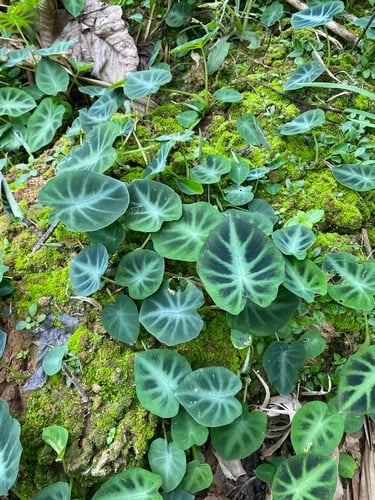
iNaturalist· cc-by-nc
(c) lillybyrd, some rights reserved (CC BY-NC), uploaded by lillybyrd
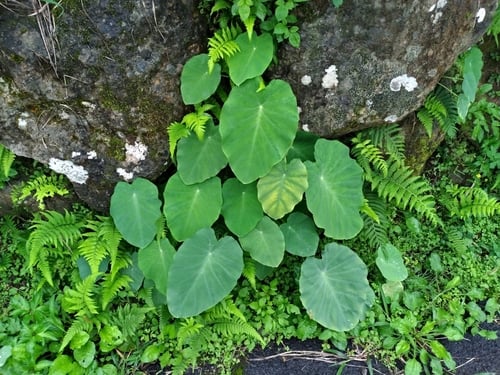
iNaturalist· cc-by-nc
(c) AmandaC, some rights reserved (CC BY-NC), uploaded by AmandaC
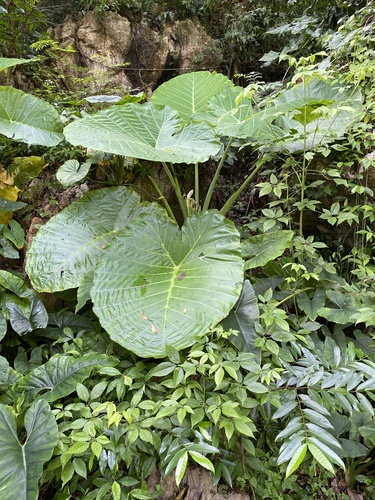
iNaturalist· cc-by-nc
(c) Alvin Diamond, some rights reserved (CC BY-NC), uploaded by Alvin Diamond
Summary
Source: WikipediaPeltandra sagittifolia is a species of plant in the genus Peltandra. It is commonly known as the spoonflower or the white arrow arum, native to the southeastern United States from eastern Louisiana to eastern Virginia.
Description
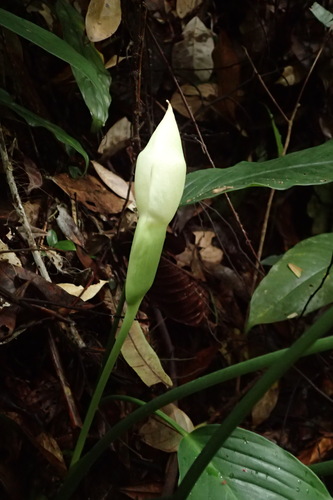
It has a short rhizome. The leaves are like arrow heads. They are bright green and have easy to see veins. The flower is lily like and white. It is about 8-10 cm long. It grows about 45 cm above the water. The fruit are red fleshy berries.
Edible Uses
The roots must be thoroughly cooked to destroy an acrimonious principle. They contain a large amount of farinaceous material and can weigh up to 2.7 kilos each. The fruit is also edible, though caution is advised due to the same toxicity concerns.
Traditional Uses
Caution: Like all plants in this family it needs special processing to remove the oxalates. The corms are dried and roasted and made into flour. The cooked, dried fruit are eaten as a vegetable.
Medicinal Uses
None known
Distribution
A temperate plant. It grows well near the edge of shallow water.
Where It Grows
North America, USA,
Cultivation
Plants can be grown from seed sown into waterlogged soil.
Propagation
Seed is best sown as soon as it is ripe in late summer in pots of soil submerged to their rims in water. Prick seedlings out into individual pots when large enough to handle and grow on in trays of water in the greenhouse through their first winter. Plant out into permanent positions in late spring or early summer, after the last expected frosts. Divide in spring; larger divisions can go directly into permanent positions, while smaller divisions are better potted up and grown on in light shade in a cold frame until well established before planting out in late spring or early summer. Stem cuttings can be rooted in wet mud during summer.
Other Uses
None known Special Uses
Notes
There are 2-3 Peltandra species. They grow in temperate places.
Synonyms
Also Known As
Red-fruited arrow arum, Spoonflower
References (9)
- Beckstrom-Sternberg, Stephen M., and James A. Duke. "The Foodplant Database." http://probe.nalusda.gov:8300/cgi-bin/browse/foodplantdb.(ACEDB version 4.0 - data version July 1994)
- Brickell, C. (Ed.), 1999, The Royal Horticultural Society A-Z Encyclopedia of Garden Plants. Convent Garden Books. p 765
- Kermath, B. M., et al, 2014, Food Plants in the Americas: A survey of the domesticated, cultivated and wild plants used for Human food in North, Central and South America and the Caribbean. On line draft. p 626
- Lim, T. K., 2015, Edible Medicinal and Non Medicinal Plants. Volume 9, Modified Stems, Roots, Bulbs. Springer p 64
- Mem. Torrey Bot. Club 5:102. 1894 "sagittaefolia"
Show all 9 references Hide references
- Plants for a Future database, The Field, Penpol, Lostwithiel, Cornwall, PL22 0NG, UK. http://www.scs.leeds.ac.uk/pfaf/
- Romanowski, N., 2007, Edible Water Gardens. Hyland House. p 112
- Saunders, C.F., 1948, Edible and Useful Wild Plants. Dover. New York. p 37 (As Peltandra alba)
- Slocum, P.D. & Robinson, P., 1999, Water Gardening. Water Lilies and Lotuses. Timber Press. p 99