Orontium aquaticum
Linn.
Golden club
iNaturalist· cc-by-nc
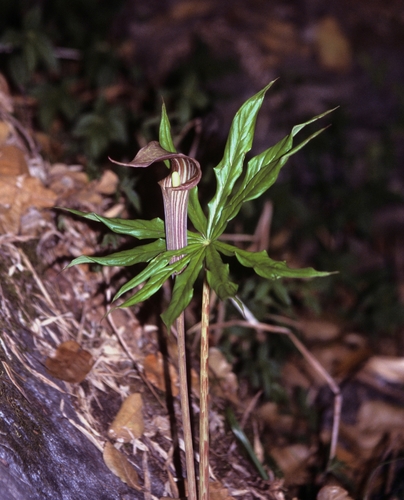
(c) kwillard, some rights reserved (CC BY-NC), uploaded by kwillard
iNaturalist· cc-by-sa
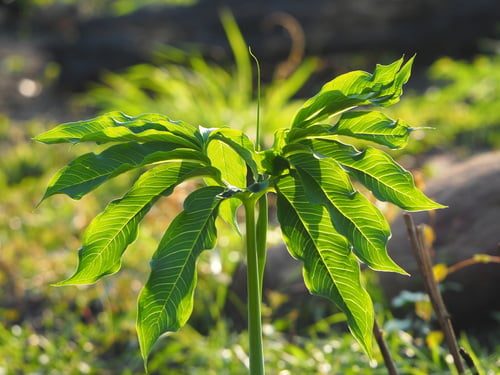
(c) Douglas Goldman, some rights reserved (CC BY-SA), uploaded by Douglas Goldman
iNaturalist· cc-by-sa
(c) Douglas Goldman, some rights reserved (CC BY-SA), uploaded by Douglas Goldman
Summary
Source: WikipediaOrontium aquaticum , sometimes called golden-club, floating arum, never-wets or tawkin, is a species of flowering plants in the family Araceae. It is the single living species in the genus Orontium, which also contains several extinct species described from fossils. O. aquaticum is endemic to the eastern United States and is found growing in ponds, streams, and shallow lakes. It prefers an acidic environment. The leaves are pointed and oval with a water repellent surface. The inflorescence is most notable for having an extremely small almost indistinguishable sheath surrounding the spadix. Very early in the flowering this green sheath withers away leaving only the spadix. The sheath was originally classified by Adolf Engler as a spathe due it being the last foliar piece before the spadix. He also noted that species lacked a sympodial leaf. However, in a 1988 paper Thomas Ray argued that the structure was misidentified by Engler and was actually a sympodial leaf. According to Ray the spathe was missing and not the sympodial leaf. This interpretation was determined based on observations of morphological charactestics namely the appearance of a two-keeled bracteole and its positioning. Despite this, the floral structure is still commonly identified in the literature as being a spathe.
Description
A taro family plant which grows in water. It grows to 30-45 cm high and 60-75 cm across. It has large thick rhizomes. The leaves are narrowly oblong. They can be under the water, floating on the water, or above the water. The leaves can be 25 cm long. The leaves often have a purple tint underneath. The flowers are small and bright yellow. These are near the top of cylinder shaped white flower stalks. The flower stalks are 18 cm long.
Edible Uses
Both the roots and seeds of Orontium aquaticum are edible when properly prepared. The root sits deep in the mud and can be tricky to extract. It contains calcium oxalate in its raw state, which causes a sensation like hundreds of small needles in the mouth. Soaking the root in cold water for several hours before cooking removes most of the acrid taste, and thorough cooking breaks down the calcium oxalate entirely, making it safe to eat. Drying the root also neutralises the calcium oxalate; dried roots can be ground into a powder and blended with flour for breads, biscuits, and similar baked goods. The seeds must also be soaked before use, and repeated boiling in changes of water is necessary to make them edible. Once properly prepared, they have a taste similar to peas.
Traditional Uses
Caution: The roots and seeds are toxic without proper processing. The roots can be dried and made into flour. The seeds are dried. They need to be boiled several times. The flowers are eaten.
Medicinal Uses
None known
Known Hazards
The plant is rich in calcium oxylate, this is toxic and if consumed makes the mouth and digestive tract feel as though hundreds of needles are being stuck into it. However, calcium oxylate is easily destroyed by thoroughly cooking or drying the plant.
Distribution
A temperate plant. A plant which grows in water. It can tolerate frost. It grows in deep mud. The water should not be more than 45 cm deep. It suits hardiness zones 7-10.
Where It Grows
Australia, North America, USA,
Cultivation
Succeeds in the bog garden or pond margins up to 45cm deep, but plants do less well if they are not grown in water. Requires a fertile loamy soil in full sun. Plant the rootstock in at least 30cm of soil. Another report says that the plant should be under at least 15cm of water. Plants are hardy to -15°c in one report, to -20°c in another, though another says they they may require protection in harsh winters. A most unpleasant animal smell is emitted from the flowers.
Propagation
Sow seed as soon as it is ripe in submerged containers in a cold frame. Once seedlings are large enough to handle, prick them out into individual pots and grow on in trays of water in the cold frame through their first winter. Plant out into permanent positions in late spring or early summer, after the last expected frosts. Note that the seed develops underwater on the plant, forming small green berries. Division in spring is also an option and is very easy — divisions can be planted directly into their permanent positions.
Other Uses
None known
Notes
There is only one Orontium species.
References (13)
- Beckstrom-Sternberg, Stephen M., and James A. Duke. "The Foodplant Database." http://probe.nalusda.gov:8300/cgi-bin/browse/foodplantdb.(ACEDB version 4.0 - data version July 1994)
- Brown, D., 2000, Aroids. Plants of the Arum family. Timber Press. (Second edition) p 270
- Brickell, C. (Ed.), 1999, The Royal Horticultural Society A-Z Encyclopedia of Garden Plants. Convent Garden Books. p 730
- Cundall, P., (ed.), 2004, Gardening Australia: flora: the gardener's bible. ABC Books. p 958
- Hibbert, M., 2002, The Aussie Plant Finder 2002, Florilegium. p 215
Show all 13 references Hide references
- Kermath, B. M., et al, 2014, Food Plants in the Americas: A survey of the domesticated, cultivated and wild plants used for Human food in North, Central and South America and the Caribbean. On line draft. p 592
- Kiple, K.F. & Ornelas, K.C., (eds), 2000, The Cambridge World History of Food. CUP p 1779
- Lim, T. K., 2015, Edible Medicinal and Non Medicinal Plants. Volume 9, Modified Stems, Roots, Bulbs. Springer p 61
- Plants for a Future database, The Field, Penpol, Lostwithiel, Cornwall, PL22 0NG, UK. http://www.scs.leeds.ac.uk/pfaf/
- Romanowski, N., 2007, Edible Water Gardens. Hyland House. p 111
- Saunders, C.F., 1948, Edible and Useful Wild Plants. Dover. New York. p 36
- Slocum, P.D. & Robinson, P., 1999, Water Gardening. Water Lilies and Lotuses. Timber Press. p 98
- Sp. pl. 1:324. 1753