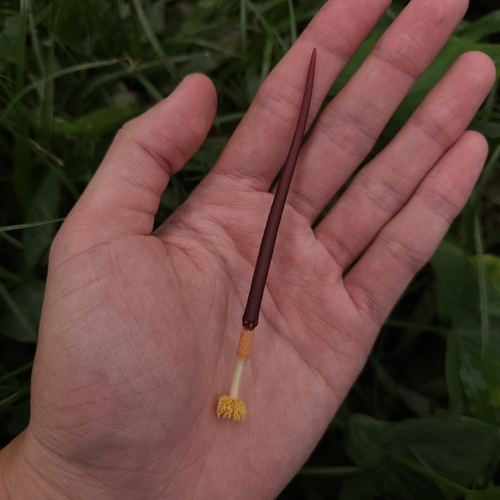
Arisaema dracontium
(L.) Schott.
Green dragon, Dragon root
iNaturalist· cc-by-nc
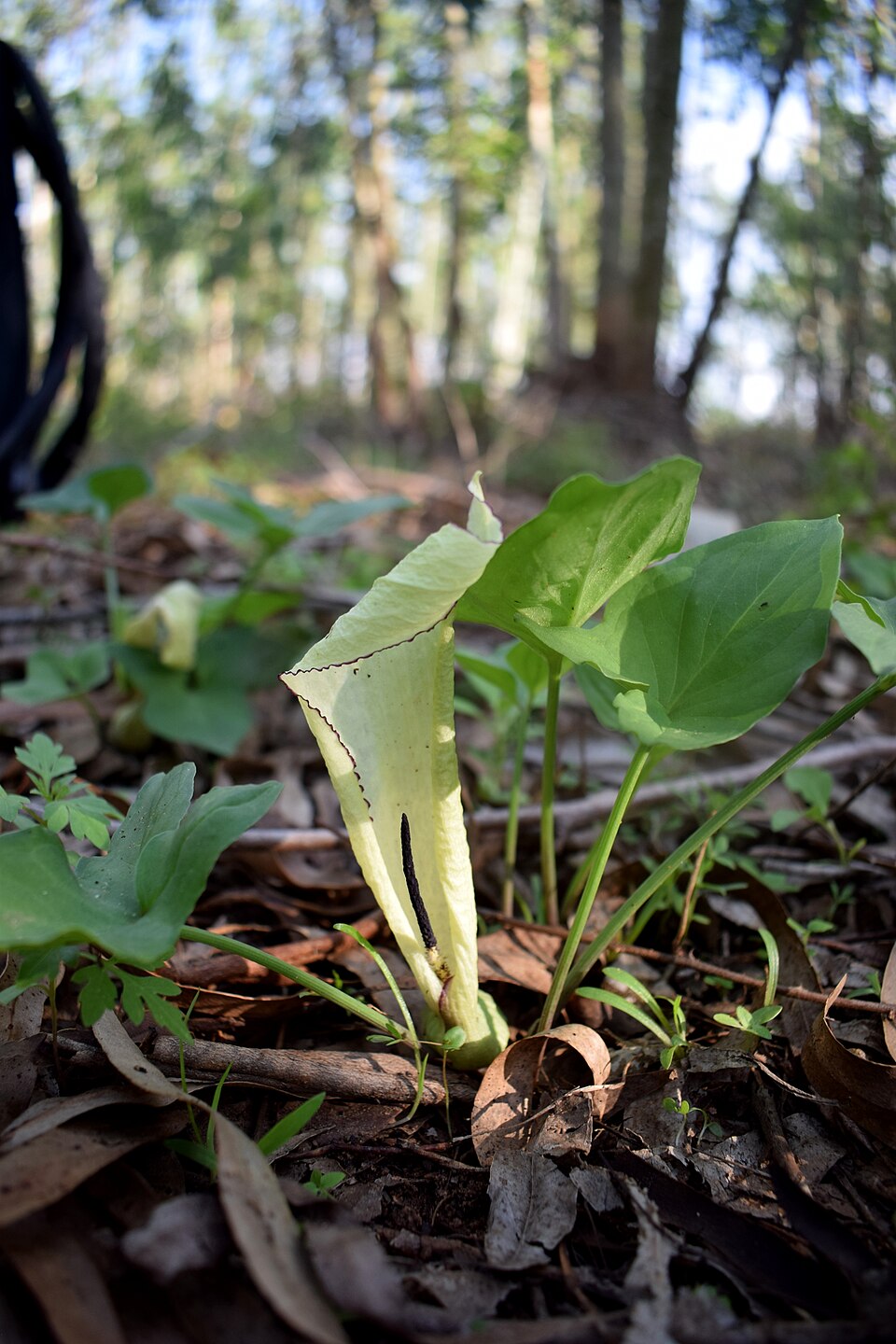
(c) Susan Elliott, some rights reserved (CC BY-NC), uploaded by Susan Elliott
iNaturalist· cc-by-nc
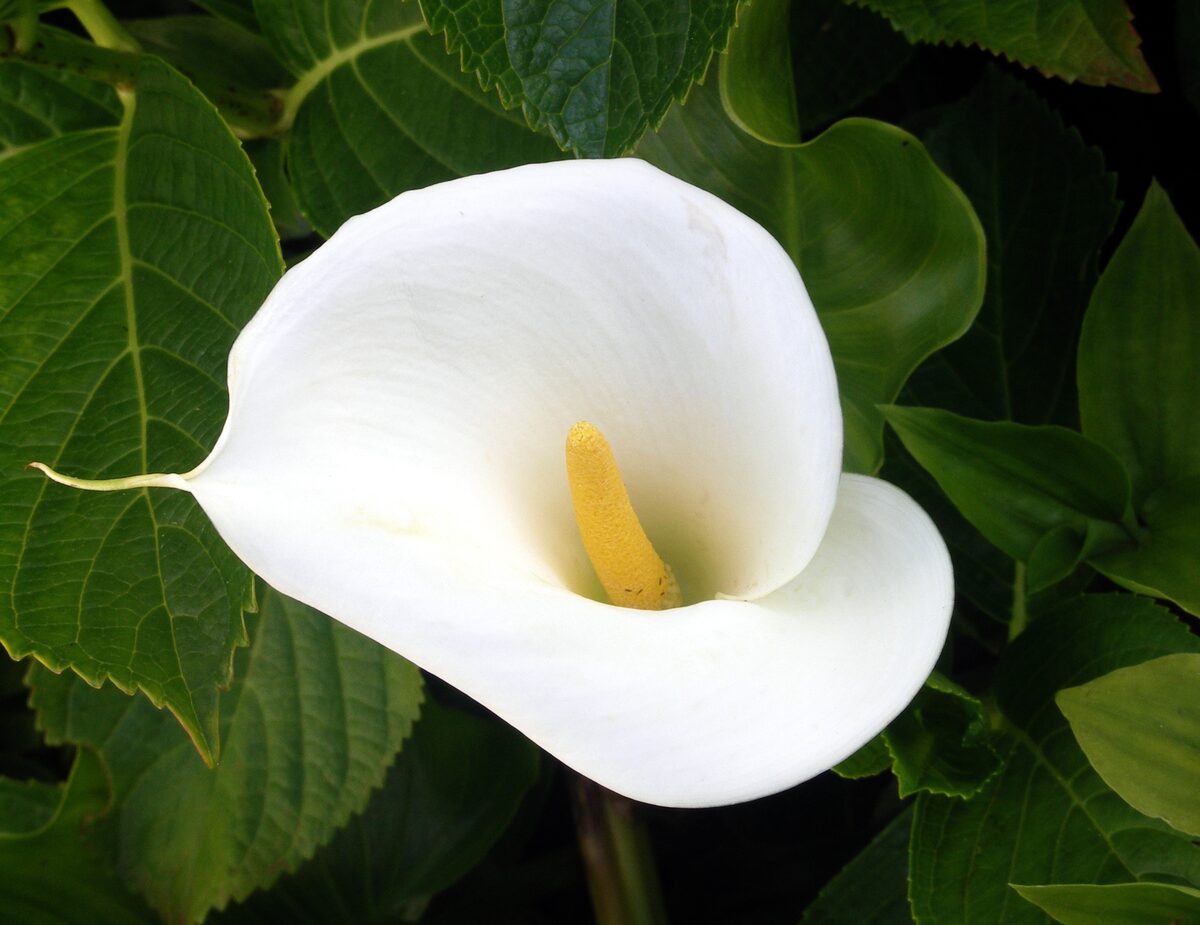
(c) Clem, some rights reserved (CC BY-NC), uploaded by Clem
iNaturalist· cc-by-nc-sa
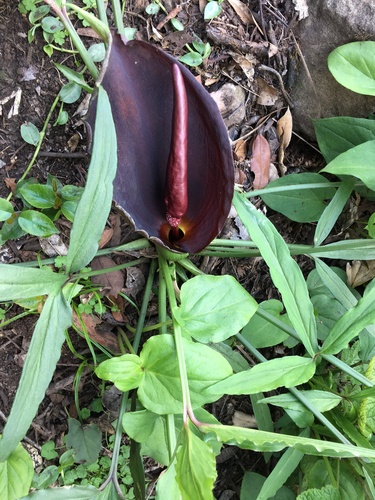
(c) Lee Elliott, some rights reserved (CC BY-NC-SA)
Summary
Source: WikipediaArisaema dracontium, the dragon-root or green dragon, is a herbaceous perennial plant in the genus Arisaema and the family Araceae. It is native to North America from Quebec through Minnesota south through Florida and Texas, where it is found growing in damp woods. It has also been reported from northeastern Mexico (Nuevo León + Veracruz) Plants grow 20–50 centimetres (7.9–19.7 in) tall when in bloom and after flowering reach 100 centimetres (39 in), and each grows from a corm. Normally, a plant produces one leaf with a long petiole, its leaf is composed of 7 to 13 leaflets, with its central leaflet being the largest one and with leaflets becoming smaller as they are produced distally, the leaflets are held out horizontally over the plant. During flowering in spring, a single slender, green spathe 3–6 centimetres (1.2–2.4 in) long is produced; it covers a tapering, long thin spadix. The tail-like spadix grows out around the top of its spathe. After flowering, up to 150 berries are produced in a club-shaped column. In late summer, the green berries turn orange-red, each berry produces 1 to 3 seeds. It is listed as a vulnerable species in Canada. Harriet Martineau, in recounting her travels in America in the 1830s, reported observing a young woman "rubbing her teeth with dragon-root."
Description
A tuber plant which keeps growing from year to year. The leaf stalk is mottled. It is 80 cm high. There is a single leaf with leaflets which radiate. There are 7-15 oblong leaflets. These are 10-20 cm long. The flower appears below the leaves. The bract around the flower is narrow and hooded. It is green and 5-7 cm long. The flower spike is fleshy and 15 cm long. It is white at the base and forms threads and is green at the tip.
Edible Uses
Edible Parts: Root Edible Uses: Root. Considered to be edible once it has been dried, aged and elaborately processed. The root contains calcium oxalate crystals - these are destroyed by drying the plant or by thorough cooking.
Traditional Uses
The roots are dried and then cooked. Caution: They contain calcium oxalate crystals so need this processing.
This uses section is brief — help expand it
Medicinal Uses
Antiasthmatic Women's complaints The dried and aged root was used by the N. American Indians in the treatment of 'female disorders'. The plant (leaves?) were chewed in the treatment of asthma.
Distribution
It is a temperate plant. It is native to the USA. It suits low lying woods on moist soils. Even though it goes dormant the soil should not be allowed to dry out. It suits hardiness zones 4-9.
Where It Grows
Australia, Canada, North America, USA, Tasmania,
Propagation
Seed - best sown as soon as it is ripe in a shady position in a cold frame. Stored seed remains viable for at least a year and can be sown in spring in the greenhouse but it will probably require a period of cold stratification. Germination usually takes place in 1 - 6 months at 15°c. When large enough to handle, prick the seedlings out into individual pots and grow them on in light shade in the greenhouse for at least a coupe of years until the corms are more than 20mm in diameter. Plant out into their permanent positions whilst they are dormant. Division of tubers when the plant dies down in late summer.
Other Uses
None known Special Uses
Notes
There are about 150-170 Arisaema species.
References (9)
- Bodkin, F., 1991, Encyclopedia Botanica. Cornstalk publishing, p 97
- Brown, D., 2000, Aroids. Plants of the Arum family. Timber Press. (Second edition) p 314
- Cundall, P., (ed.), 2004, Gardening Australia: flora: the gardener's bible. ABC Books. p 184
- Hibbert, M., 2002, The Aussie Plant Finder 2002, Florilegium. p 32
- Kermath, B. M., et al, 2014, Food Plants in the Americas: A survey of the domesticated, cultivated and wild plants used for Human food in North, Central and South America and the Caribbean. On line draft. p 88
Show all 9 references Hide references
- Loughmiller, C & L., 1985, Texas Wildflowers. A Field Guide. University of Texas, Austin. p 13
- Marinelli, J. (Ed), 2004, Plant. DK. p 169
- Plants for a Future database, The Field, Penpol, Lostwithiel, Cornwall, PL22 0NG, UK. http://www.scs.leeds.ac.uk/pfaf/
- H. Schott & S. L. Endlicher, Melet. bot. 17. 1832