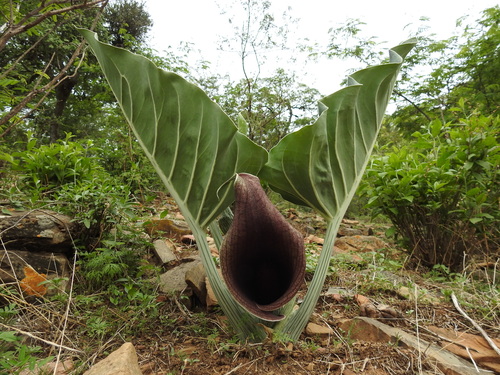
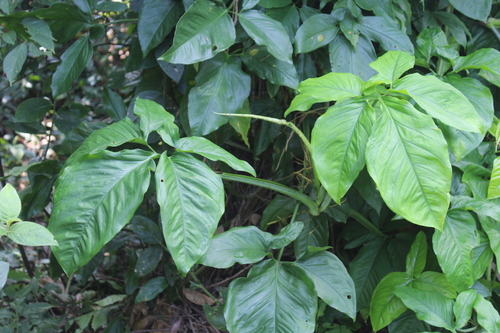
Philodendron hederaceum var. oxycardium
(Schott) Croat
iNaturalist· cc-by
(c) Brittany Savoie, some rights reserved (CC BY), uploaded by Brittany Savoie
iNaturalist· cc-by-nc
(c) Alex Castelein, some rights reserved (CC BY-NC)
Summary
Source: WikipediaPhilodendron hederaceum, the heartleaf philodendron (syn. Philodendron scandens) is a species of flowering plant in the family Araceae, native to Central America and the Caribbean which is common in the houseplant trade. Philodendron hederaceum var. hederaceum, the "velvet philodendron," is a subspecies which is in the houseplant trade under its previous name of Philodendron micans. While toxic under certain conditions, it is also under current review for numerous health benefits.
Description
A taro family herb. It is a non woody vine. It climbs by means of aerial roots. It can be 10 m long.
This description is brief — help expand it
Edible Uses
The fruit is edible.
Known Hazards
Parts of the plant are known to contain calcium oxalate crystals in varying concentrations. When ingested in large quantities, P. hederaceum cannot be properly digested. These calcium oxalate crystals are deposited in organs such as the kidneys, and can cause cardiac-related issues in humans Although the plant is known to be toxic to mice and rats, the current literature is conflicting with regards to its toxicity in cats. Although Philodendron species can be harmful if ingested, they also have a reputation of being a source of potential therapeutic applications for medical research. This reputation is due to the presence of terpenoids and flavonoids, natural compounds that are of interest because of their biological abilities in acting as an antioxidant, anti-inflammatory, and disease preventative. According to the American Society for the Prevention of Cruelty to Animals, Philodendron hederaceum can cause oral irritation, a painful and swollen mouth, lips, and tongue, drooling, vomiting (except in horses), and difficulty swallowing in animals.
Distribution
It is a tropical plant.
Where It Grows
Mexico, North America, Pacific, Tuvalu,
Synonyms
References (2)
- Reis, S. V. and Lipp, F. L., 1982, New Plant Sources for Drugs and Foods from the New York Botanical Garden herbarium. Harvard. p 20 (As Philodendron scandens subsp. oxycardium)
- Thaman, R. R, 2016, The flora of Tuvalu. Atoll Research Bulletin No. 611. Smithsonian Institute p 40 (As Philodendron scandens subsp. oxycardium)