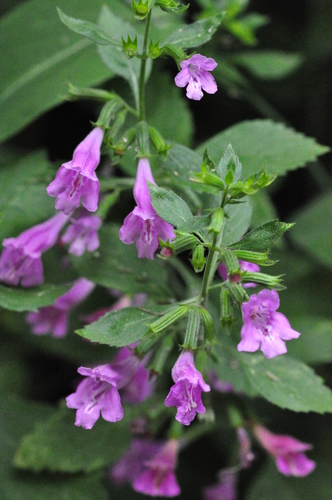
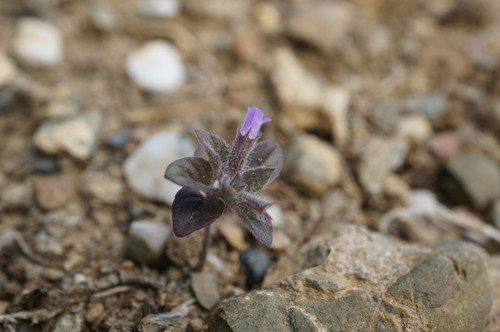
Stachys sieboldii
Miq.
Chinese Artichoke, Japanese artichoke, Japanese potato
wikimedia· cc-by-sa
Wikimedia Commons
wikimedia· cc-by-sa
Wikimedia Commons - Krzysztof Ziarnek, Kenraiz
Description
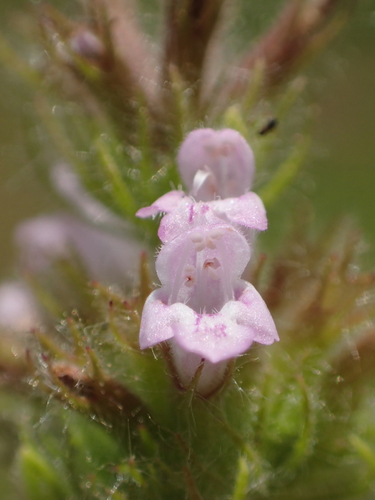
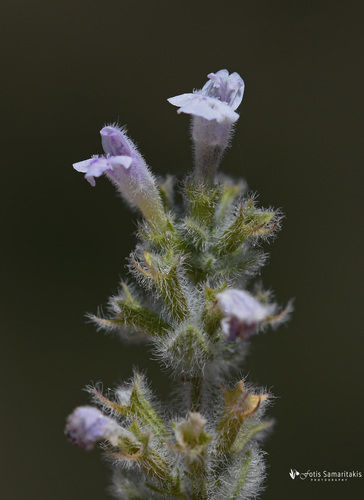
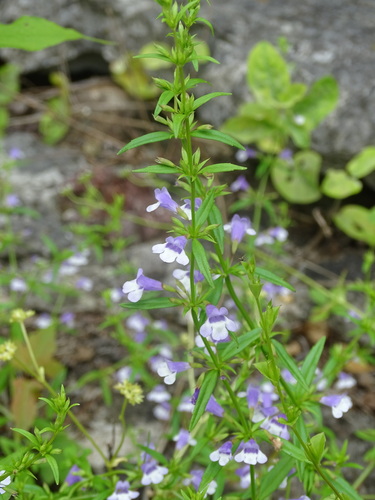
A herb. It keeps growing from year to year. The underground stems or rhizomes are white. The stems above ground are 30-120 cm long. The leaf stalks are 1-3 cm long and the leaf blades are oval and 3-12 cm long by 1.5-6 cm wide. The base is wedge shaped. The flowers are red to purple. The nutlets are black-brown and oval. They are 1.5 cm across.
Edible Uses
The tubers have a crunchy texture and a sweet, nutty flavour. They can be eaten raw, pickled, dried or cooked. A wide range of uses for this vegetable leads to various dishes in the cuisine of many countries. They can be prepared similarly to Jerusalem artichokes. The leaves can be dried and made into a tea. In Chinese and Japanese cuisine, S. affinis is primarily pickled. In particular, its tuber is a part of Osechi, cooked for celebrating Japanese New Year. Dyed red by leaves of Perilla (red shiso) after being pickled, it is called chorogi. In Korea it is called choseokjam (초석잠). In French cuisine, its cooked tuber is often served alongside dishes named japonaise or Japanese-styled.
Traditional Uses
The rhizomes are eaten. The tubers are salted or preserved in plum vinegar. The leaves are eaten raw or boiled or salted. The tubers are usually boiled for a few minutes then eaten. They are also fried, roasted, steamed or pickled. They are pickled with ume plums and salt and Perilla leaves. The tubers discolor when exposed to air and lose flavour when peeled.
Medicinal Uses
In traditional Chinese medicine, the entirety of S. affinis is used as an agent to treat colds and pneumonia. In addition, root extract of S. affinis has shown antimicrobial activity. Furthermore, Baek et al. observed antioxidant activity in 2004. Also in 2004 inhibitory effects on acetylcholine esterase, monoamine oxidase and xanthine oxidase activities were observed in rat brains after 20 days of feeding with methanolic extracts of S. affinis. Ethanol extract from this plant also seems to have antitumour activity.
Distribution
It is a cool temperate plant. It can grow in cold places. They need a temperate climate, full sun and a well drained soil. In China it grows on wet hillsides and areas covered with water up to 3200 m altitude in northern regions. It needs a pH between 6-6.5 for best growth. It suits plant hardiness zones 4-8. Hobart Botanical Gardens. In Sichuan.
Where It Grows
Arabia, Asia, Australia, Belgium, Canada, China, Egypt, Europe, France, India, Inner Mongolia, Japan, Malaysia, Middle East, North Africa, North America, SE Asia, Slovenia, South Africa, Southern Africa, Tasmania, USA,
Cultivation
It can be grown from seed or tubers. Tubers can be planted 5 cm deep and 30 cm apart. The tubers are harvested after the plant dies back.
Other Information
It is a commercially cultivated vegetable. It is cultivated in China. It is widely cultivated for its root tubers in Japan.
Notes
There are about 300 Stachys species. Chemical composition: leaves and tubers contain stachydrin; tubers contain stachyose and manneotetrose.
Nutrition
| Part | Moisture | kJ | kcal | Protein | Vit A | Vit C | Iron | Zinc |
|---|---|---|---|---|---|---|---|---|
| Tuber | 66.7 | 226 | 54 | 2.3 | — | — | 7.4 | — |
Synonyms
Also Known As
Choro-gi, Chorogi, Crosnes de Japan, Crosnes, Digua, Gan lu zi, Knotroot, Kon loh, Luosicai, Sieboldov čišljak, Tung tung chow
References (32)
- Ambasta, S.P. (Ed.), 2000, The Useful Plants of India. CSIR India. p 597
- Ann. Mus. Bot. Lugduno-Batavum 2:112. 1865
- Arora, R. K., 2014, Diversity in Underutilized Plant Species - An Asia-Pacific Perspective. Bioversity International. p 109
- Cundall, P., (ed.), 2004, Gardening Australia: flora: the gardener's bible. ABC Books. p 1366 (As Stachys affinis)
- Facciola, S., 1998, Cornucopia 2: a Source Book of Edible Plants. Kampong Publications, p 137
Show all 32 references Hide references
- Flora Malesiana 8(3) p 364
- Food Composition Tables for use in East Asia FAO http://www.fao.org/infoods/directory No. 412
- Hadfield, J., 2001, The A-Z of Vegetable Gardening in South Africa. Struik p 73
- Hibbert, M., 2002, The Aussie Plant Finder 2002, Florilegium. p 293 (As Stachys affinis)
- http://www.botanic-gardens-ljubljana.com/en/plants
- Hu, Shiu-ying, 2005, Food Plants of China. The Chinese University Press. p 656
- Jia, X., et al, 2022, Ethnobotany of wild edible plants in multiethnic areas of the Gansu–Ningxia–Inner Mongolia junction zone. Journal of Ethnobiology and Ethnomedicine 18:53
- Kays, S. J., and Dias, J. C. S., 1995, Common Names of Commercially Cultivated Vegetables of the World in 15 languages. Economic Botany, Vol. 49, No. 2, pp. 115-152
- Kiple, K.F. & Ornelas, K.C., (eds), 2000, The Cambridge World History of Food. CUP p 1754
- Larkcom, J., 1991, Oriental Vegetables, John Murray, London, p 66 (As Stachys affinis)
- Lawton, B.P., 2002, Mints. A Family of Herbs and Ornamentals. Timber Press, Portland, Oregon. p 201 (As Stachys affinis)
- Li Hai-wen, Hedge, I.C., Lamiaceae. Flora of China. p 235
- Li Hai-wen, Hedge, I.C., Lamiaceae. Flora of China. p 236 (As Stachys tuberifera)
- Lim, T. K., 2015, Edible Medicinal and Non Medicinal Plants. Volume 9, Modified Stems, Roots, Bulbs. Springer p 79
- Macmillan, H.F. (Revised Barlow, H.S., et al), 1991, Tropical Planting and Gardening. Sixth edition. Malayan Nature Society. Kuala Lumpur. p 359 (As Stachys affinis)
- Plants for a Future database, The Field, Penpol, Lostwithiel, Cornwall, PL22 0NG, UK. http://www.scs.leeds.ac.uk/pfaf/ (As Stachys affinis)
- READ,
- Romanowski, N., 2007, Edible Water Gardens. Hyland House. p 90 (As Stachys affinis)
- Schneider, E., 2001, Vegetables from Amaranth to Zucchini: The essential reference. HarperCollins. p 236
- Smith, K., 1998. Growing Uncommon Fruits and Vegetables. New Holland. p 68 (As Stachys affinis)
- Solomon, C., 2001, Encyclopedia of Asian Food. New Holland. p 12 (As Stachys affinis)
- Terra, G.J.A., 1973, Tropical Vegetables. Communication 54e Royal Tropical Institute, Amsterdam, p 77
- USDA, ARS, National Genetic Resources Program. Germplasm Resources Information Network - (GRIN). [Online Database] National Germplasm Resources Laboratory, Beltsville, Maryland. Available: www.ars-grin.gov/cgi-bin/npgs/html/econ.pl (10 April 2000)
- van Wyk, B., 2005, Food Plants of the World. An illustrated guide. Timber press. p 207
- Wang, J. et al, 2013, A Study on the Utilization of Wild Plants for Food in Liangshan Yi Autonomous Prefecture. Plant Diversity and Resources. 35(4): 416-471
- Woodward, P., 2000, Asian Herbs and Vegetables. Hyland House. p 124 (As Stachys affinis)
- Zeven, A. C. & de West, J. M. J., 1982, Dictionary of cultivated plants and their regions of diversity. Wageningen. p 39