Clinopodium chinense
(Benth.) Kuntze
Wild Basil, Chinese Savory
iNaturalist· cc0
no rights reserved, uploaded by 葉子
iNaturalist· cc-by-nc
(c) Kinmatsu Lin, some rights reserved (CC BY-NC)
iNaturalist· cc-by-nc
(c) Benny Wu, some rights reserved (CC BY-NC)
Summary
Clinopodium chinense is a perennial herb reaching 0.5 m tall. Hardy to UK zone 7. Flowers August to September with seeds ripening September to October. Hermaphroditic flowers are bee and insect-pollinated. Tolerates light sandy, medium loamy, or heavy clay soils with good drainage and mildly acid to mildly alkaline pH. Grows in semi-shade or full sun. Prefers consistently moist soil.
Description
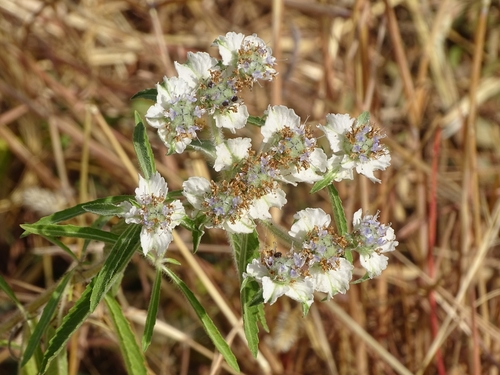
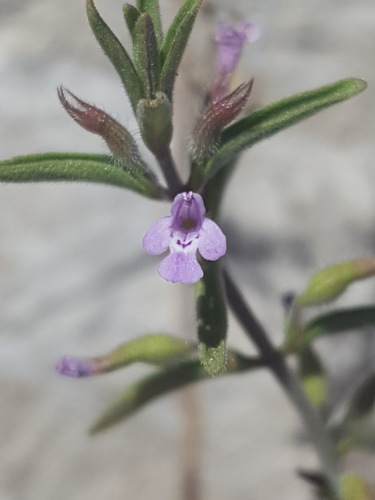
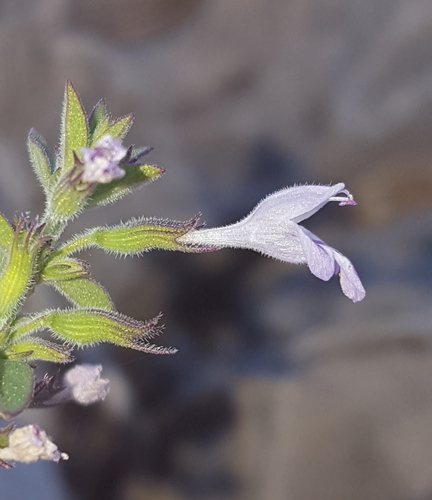
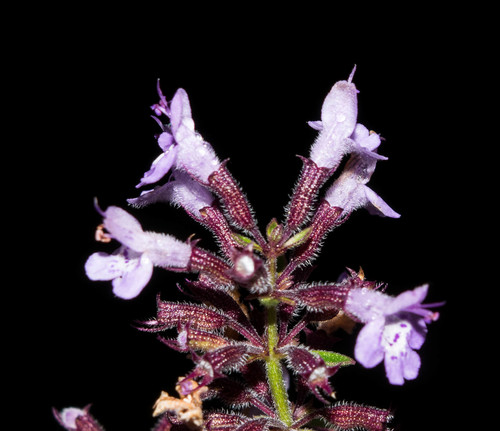
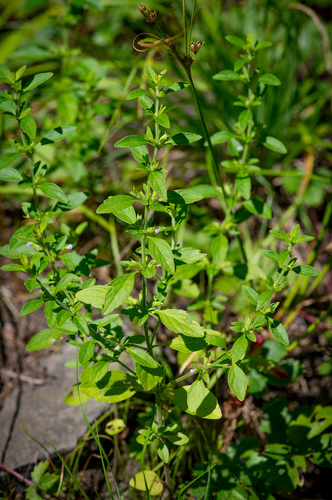
A herb. It grows to about 30 cm to 1 m high. The base is trailing. There are fine lines along it. It is densely hairy. These straight white hairs give it a silvery appearance. The leaf stalk is 3-8 mm long. The leaf blade is oval and 2-4 cm long by 1.3-2.6 cm wide. They are papery. The base is rounded or wedge shaped. The edges have teeth. There are many flowers in a half round head about 3 cm across. They are purple-red.
Edible Uses
Young leaves are cooked as a vegetable. The leaves can also be used to make a sweet, aromatic herbal tea.
Traditional Uses
The leaves are eaten with oil and salt.
This uses section is brief — help expand it
Medicinal Uses
No medicinal uses are known for this plant.
Distribution
It is a temperate plant. In China is grows on hillsides and in grassy areas near streams. It grows from sea level to 1000 m altitude. It suits plant hardiness zone 7. In Yunnan.
Where It Grows
Asia, China, Japan, Taiwan,
Propagation
Sow seed in spring in a cold frame, barely covering it. Germination usually takes place within 2 weeks at 21°c. Prick seedlings into individual pots when large enough to handle and grow on in the greenhouse. Plant out in summer if sufficient growth has been made, otherwise plant out in late spring or early summer of the following year. Divide clumps in spring — larger clumps can go directly into permanent positions, while smaller ones are best potted up in a cold frame until rooting well, then planted out in summer or the following spring. Softwood cuttings can be taken in May or June.
Other Uses
No other uses are known for this plant.
Other Information
It is sold in local markets in China.
Notes
There are about 20 Clinopodium species.
Synonyms
Also Known As
Feng lun cai, Long dan cao, Zhaun zhuan cai
References (8)
- A. L. P. P. de Candolle, Prodr. 12:233. 1848 (As Calamintha chinensis)
- Lawton, B.P., 2002, Mints. A Family of Herbs and Ornamentals. Timber Press, Portland, Oregon. p 123 (Drawing)
- Li Hai-wen, Hedge, I.C., Lamiaceae. Flora of China. p 302
- Li, D. et al, 2017, Ethnobotanical survey of herbal tea plants from the traditional markets in Chaoshan, China. Journal of Ethnopharmacology. 205 (2017) 195-206
- Luo, B., et al, 2019, Wild edible plants collected by Hani from terraced rice paddy agroecosystem in Honghe Prefecture, Yunnan, China. Journal of Ethnobiology and Ethnomedicine 15:56
Show all 8 references Hide references
- Plants for a Future database, The Field, Penpol, Lostwithiel, Cornwall, PL22 0NG, UK. http://www.scs.leeds.ac.uk/pfaf/
- Revis. gen. pl. 2:515. 1891
- READ, (As Calamintha chinensis)