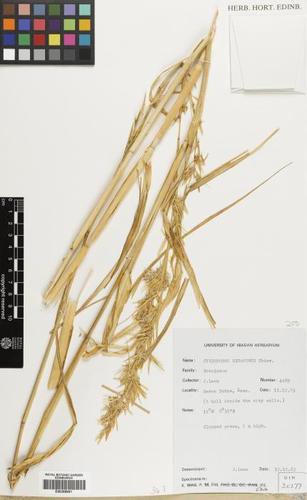
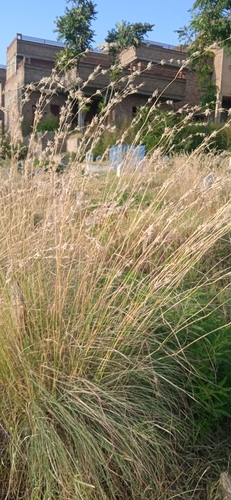
Sporobolus pyramidalis
P. Beauv.
Rat's tail grass, Catstail grass, Catstail drop seed
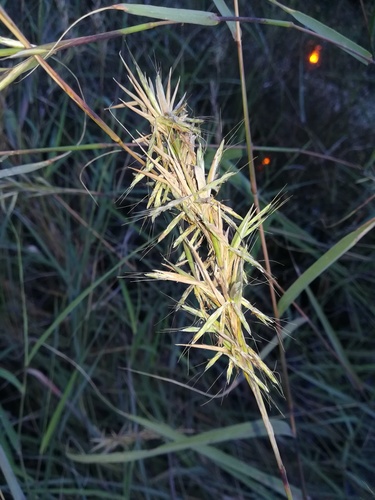
iNaturalist· cc-by-nc
(c) Mark Hyde, Bart Wursten and Petra Ballings, some rights reserved (CC BY-NC)
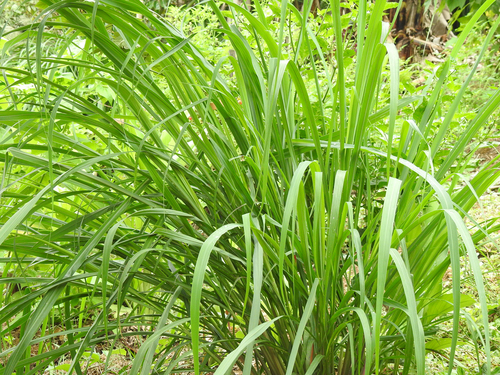
iNaturalist· cc-by
(c) prossington, some rights reserved (CC BY)
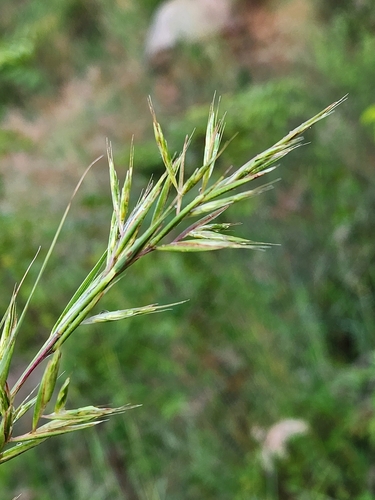
iNaturalist· cc-by-nc
(c) James Bailey, some rights reserved (CC BY-NC), uploaded by James Bailey
Summary
Source: WikipediaSporobolus pyramidalis is a species of grass native to Africa and Yemen. It does not have a distinct established English name, but it is one of the two species of giant rat's tail grasses. It has become a weed in eastern Australia.
Description
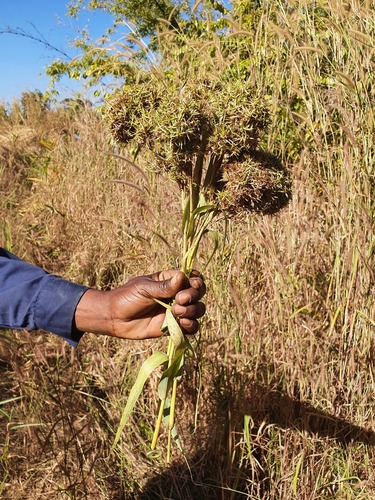
A herb. It is a robust grass and densely tufted. It keeps growing from year to year. It grow 1.7 m high. The leaves are long and roll inwards. They are greyish. They taper to a long fine point. The flowering shoots are 45 cm long. They are very narrow. The branches are erect and 10 cm long. They have small, dark grey-green spikelets.
Edible Uses
The seeds are eaten as a grain and used in flat bread. It serves as a famine food.
Traditional Uses
The seeds are eaten as a grain. They are used in flat bread.
This uses section is brief — help expand it
Medicinal Uses
No medicinal uses mentioned.
Distribution
A tropical plant. It grows over most of tropical Africa often near water. In southern Africa it grows from sea level to 2,290 m altitude. It grows in hot arid areas. It can tolerate shade. It can grow in arid places. In Argentina it grows from sea level to 1,900 m above sea level.
Where It Grows
Africa, Angola, Arabia, Argentina, Australia, Benin, Botswana, Brazil, Burkina Faso, Cameroon, Central Africa, Central African Republic, CAR, Congo, Côte d'Ivoire, East Africa, Eswatini, Ethiopia, French Guiana, Gambia, Ghana, Guinea, Guinée, Guinea-Bissau, Ivory Coast, Kenya, Lesotho, Liberia, Madagascar, Malawi, Mali, Mauritius, Middle East, Mozambique, Namibia, Nigeria, Paraguay, Rwanda, Sao Tome and Principe, Senegal, Sierra Leone, South Africa, Southern Africa, South America, South Sudan, St. Kitts and Nevis, Sudan, Swaziland, Tanzania, Togo, Uganda, Uruguay, West Africa, Yemen, Zambia, Zimbabwe,
Other Information
It is a famine food.
Notes
There are about 160 Sporobolus species. They are mainly in the tropics and subtropics. It has a C4 pathway.
Synonyms
Also Known As
Aish el far, Burdi, Gansaga, Girole, Keri, Kurbata, Mol, Mon, Motisan, Saga, Tamara el fahr, Tot, Tsinde
References (19)
- Abbiw, D.K., 1990, Useful Plants of Ghana. West African uses of wild and cultivated plants. Intermediate Technology Publications and the Royal Botanic Gardens, Kew. p 26
- Addis, G., Asfaw, Z & Woldu, Z., 2013, Ethnobotany of Wild and Semi-wild Edible Plants of Konso Ethnic Community, South Ethiopia. Ethnobotany Research and Applications. 11:121-141
- Asfaw, Z. and Tadesse, M., 2001, Prospects for Sustainable Use and Development of Wild Food Plants in Ethiopia. Economic Botany, Vol. 55, No. 1, pp. 47-62
- Balemie, K., & Kebebew, F., 2006, Ethnobotanical study of wild edible plants in Derashe and Kucha Districts, South Ethiopia. Journal of Ethnobiology and Ethnomedicine. 2:53
- Burkill, H. M., 1985, The useful plants of west tropical Africa, Vol. 2. Kew.
Show all 19 references Hide references
- Fl. Oware 2:36, t. 80. 1816
- Flora Zambesiaca. http://apps.kew.org/efloras
- Fowler, D. G., 2007, Zambian Plants: Their Vernacular Names and Uses. Kew. p 73
- Gallagher, D. E., 2010, Farming beyond the escarpment: Society, Environment, and Mobility in Precolonial Southeastern Burkina Faso. PhD University of Michigan.
- Hussey, B.M.J., Keighery, G.J., Cousens, R.D., Dodd, J., Lloyd, S.G., 1997, Western Weeds. A guide to the weeds of Western Australia. Plant Protection Society of Western Australia. p 70
- Jardin, C., 1970, List of Foods Used In Africa, FAO Nutrition Information Document Series No 2.p 8
- JSTOR Global Plants edible
- Lulekal, E., et al, 2011, Wild edible plants in Ethiopia: a review on their potential to combat food insecurity. Afrika Focus - Vol. 24, No 2. pp 71-121
- Norton, et al, 1987,
- Peters, C. R., O'Brien, E. M., and Drummond, R.B., 1992, Edible Wild plants of Sub-saharan Africa. Kew. p 28
- Royal Botanic Gardens, Kew (1999). Survey of Economic Plants for Arid and Semi-Arid Lands (SEPASAL) database. Published on the Internet; http://www.rbgkew.org.uk/ceb/sepasal/internet [Accessed 4th June 2011]
- Swaziland's Flora Database http://www.sntc.org.sz/flora
- World Checklist of Useful Plant Species 2020. Royal Botanic Gardens, Kew
- Yimer, A., et al, 2021, Ethnobotanical study of wild edible plants used by Meinit Ethnic Community at Bench-Maji Zone, Southwest Ethiopia. Research Square. p 5