Phalaris canariensis
L.
Canary grass
iNaturalist· cc-by-nc
(c) Christian Sørensen, some rights reserved (CC BY-NC), uploaded by Christian Sørensen
iNaturalist· cc-by-nc-sa
(c) Rob Curtis, some rights reserved (CC BY-NC-SA), uploaded by Rob Curtis
iNaturalist· cc-by-nc
(c) Eric Cleveland, some rights reserved (CC BY-NC), uploaded by Eric Cleveland
Summary
Source: WikipediaAnnual grass growing to 1m tall. Hardy to UK zone 6. Foliage May to October; flowering July to September. Hermaphrodite, wind-pollinated. Tolerates light sandy, medium loamy, and heavy clay soils with mildly acid to mildly alkaline pH. Requires full sun and prefers moist or wet soil.
Description
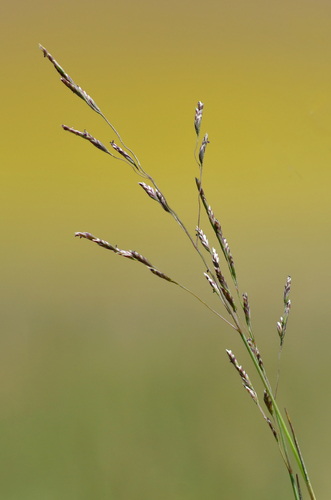
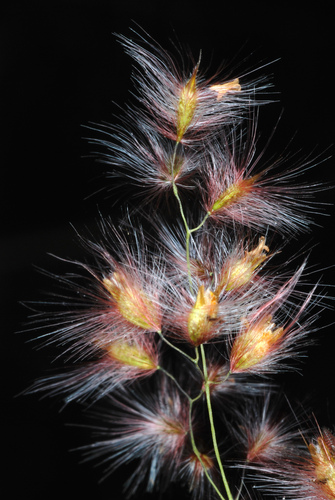
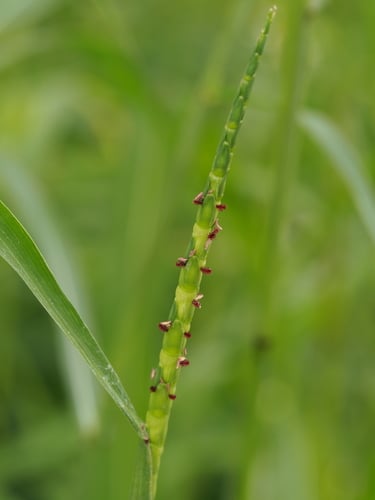
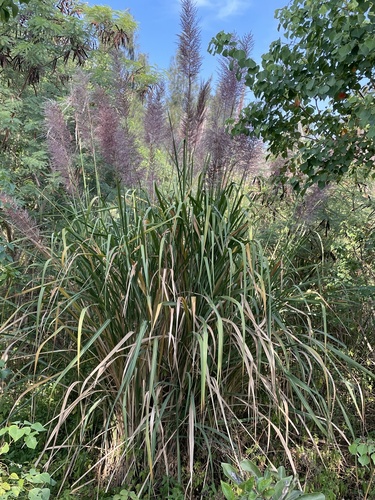
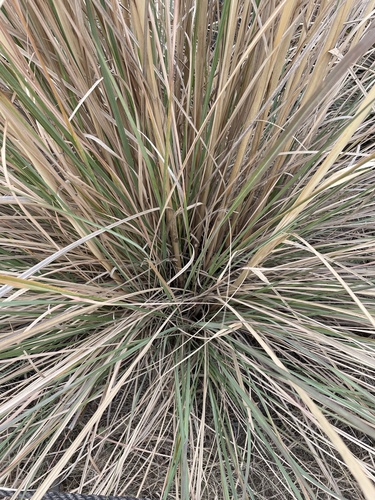
An annual grass. It grows 20-100 cm tall. It forms clumps. The stems are erect but there can be a bend near the base. The leaves are green and 15 cm long. The flower panicles are dense. They are 1.5-4 cm long. The spikelets are 6-10 mm long and 2.5-3 mm wide. The glumes are equal and have an abrupt point. The seeds are straw coloured. They are 4 mm long.
Edible Uses
The seeds can be cooked and used as a cereal — though small, they work well for making porridge, or can be ground into flour for cakes and puddings. While widely grown as birdseed, the grain is perfectly suitable for human use. Young leaves can also be cooked and eaten.
Medicinal Uses
None known
Distribution
It is a temperate plant. It can grow in arid places. in Argentina it grows below 600 m above sea level. It suits hardiness zones 6-10.
Where It Grows
Africa, Alaska, Albania, Algeria, Argentina, Armenia, Asia, Australia, Austria, Azores, Balkans, Belarus, Brazil, Britain, Bulgaria, Canada, Canary Islands, Caucasus, Central Asia, Chile, China, Cyprus, Czech Republic, East Africa, Egypt, Europe, France, Germany, Greece, Hungary, India, Italy, Jordan, Kazakhstan, Kenya, Korea, Libya, Mediterranean*, Mexico, Middle East, Moldova, Morocco, Mozambique, New Zealand, North Africa, North America, Pakistan, Peru, Portugal, Romania, Saudi Arabia, Slovakia, Slovenia, South Africa, South America, Spain - Canary Islands, Switzerland, Syria, Taiwan, Tasmania, Ukraine, Uruguay, USA, Yugoslavia, Zambia, Zimbabwe,
Cultivation
An easily grown plant, succeeding in an ordinary garden soil. It is tolerant of most conditions, dry or wet. Cultivated for its seed which is commonly used in wild bird food mixes.
Propagation
Sow seed in spring, direct in the ground where it is to grow.
Other Uses
None known
Other Information
It was cultivated as a cereal in southern Europe until the nineteenth century.
Notes
There are about 15 Phalaris species.
Synonyms
Also Known As
Alpista, Kanarska pisana trava
References (20)
- Ambasta, S.P. (Ed.), 2000, The Useful Plants of India. CSIR India. p 443
- Cundall, P., (ed.), 2004, Gardening Australia: flora: the gardener's bible. ABC Books. p 1022
- Curtis, W.M., & Morris, D.I., 1994, The Student's Flora of Tasmania. Part 4B St David's Park Publishing, Tasmania, p 251
- Flora of Australia Volume 49, Oceanic Islands 1, Australian Government Publishing Service, Canberra. (1994) p 460
- Flora of Pakistan. www.eFloras.org
Show all 20 references Hide references
- Hedrick, U.P., 1919, (Ed.), Sturtevant's edible plants of the world. p 481
- http://www.botanic-gardens-ljubljana.com/en/plants
- Hussey, B.M.J., Keighery, G.J., Cousens, R.D., Dodd, J., Lloyd, S.G., 1997, Western Weeds. A guide to the weeds of Western Australia. Plant Protection Society of Western Australia. p 64
- Jardin, C., 1970, List of Foods Used In Africa, FAO Nutrition Information Document Series No 2.p 7
- Kiple, K.F. & Ornelas, K.C., (eds), 2000, The Cambridge World History of Food. CUP p 119
- Lazarides, M. & Hince, B., 1993, Handbook of Economic Plants of Australia, CSIRO. p 187
- Paczkowska, G. & Chapman, A.R., 2000, The Western Australian Flora. A Descriptive Catalogue. Western Australian Herbarium. p 113
- Plants for a Future database, The Field, Penpol, Lostwithiel, Cornwall, PL22 0NG, UK. http://www.scs.leeds.ac.uk/pfaf/
- Royal Botanic Gardens, Kew (1999). Survey of Economic Plants for Arid and Semi-Arid Lands (SEPASAL) database. Published on the Internet; http://www.rbgkew.org.uk/ceb/sepasal/internet [Accessed 3rd June 2011]
- Sp. pl. 1:54. 1753
- Tasmanian Herbarium Vascular Plants list p 88
- USDA, ARS, National Genetic Resources Program. Germplasm Resources Information Network - (GRIN). [Online Database] National Germplasm Resources Laboratory, Beltsville, Maryland. Available: www.ars-grin.gov/cgi-bin/npgs/html/econ.pl (10 April 2000)
- Wiersema, J. H. & Leon, B., 2013, World Economic Plants. A Standard Reference CRC Press. 2nd Ed. p 513
- World Checklist of Useful Plant Species 2020. Royal Botanic Gardens, Kew
- Zeven, A. C. & de West, J. M. J., 1982, Dictionary of cultivated plants and their regions of diversity. Wageningen. p 111