Phalaris arundinacea
L.
Reed canarygrass
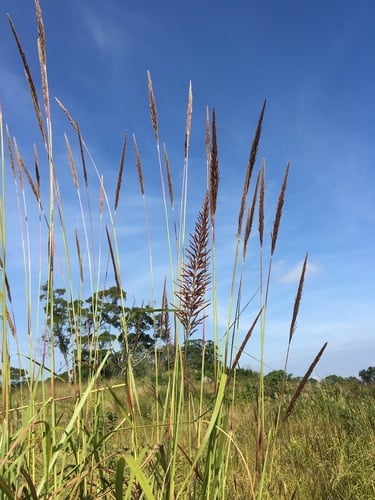
iNaturalist· cc-by-nc
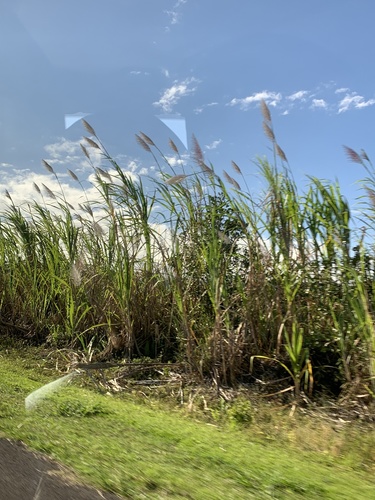
(c) annk, some rights reserved (CC BY-NC)
iNaturalist· cc-by-nc
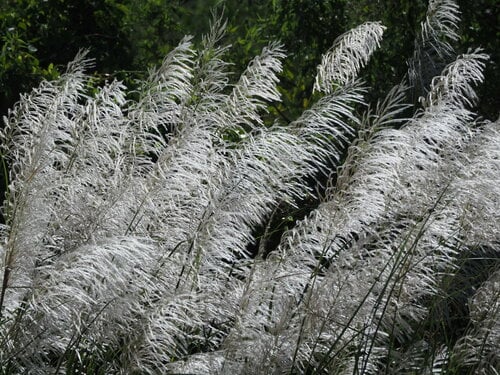
(c) julian_g, some rights reserved (CC BY-NC)
iNaturalist· cc-by-nc
(c) Алина и Александр, some rights reserved (CC BY-NC), uploaded by Алина и Александр
Summary
Source: WikipediaPhalaris arundinacea, or reed canary grass, is a tall, perennial grass that commonly forms extensive single-species stands along the margins of lakes and streams and in wet open areas, with a wide distribution in Europe, Asia, northern Africa and North America. Other common names for the plant include gardener's-garters and ribbon grass in English, alpiste roseau in French, Rohrglanzgras in German, kusa-yoshi in Japanese, caniço-malhado in Portuguese, and hierba cinta and pasto cinto in Spanish.
Description
Perennial grass reaching 1.5m tall with a spreading habit of 3m, growing at a fast rate. Hardy to UK zone 4. Flowers July to September. Wind-pollinated hermaphrodite. Tolerates light sandy, medium loamy, and heavy clay soils across mildly acid to mildly alkaline pH ranges. Grows in semi-shade or full sun and adapts to dry, moist, or wet conditions. Forms dense impenetrable ground cover with running root systems.
Edible Uses
None known
Medicinal Uses
None known
Distribution
It is a temperate plant. It grows on wet stream banks.
Where It Grows
America, Asia, Central Asia, Falklands, Korea, Luxembourg, North America, Slovenia, Tajikistan, USA,
Cultivation
A very easy plant to grow, it succeeds in ordinary garden soil, though it grows best on moist sandy soils, rich in organic matter. It also does well on fertile loams and clays. Succeeds in most soils, whether dry or wet and is moderately tolerant of drought. It does not like saline soils. The plant is reported to tolerate an annual precipitation in the range of 30 to 260cm, an annual temperature in the range of of 5 to 23°C and a pH of 4.5 to 8.2. Plants can be very invasive, especially in moist conditions, there dense growth provides good cover for water fowl. Plants are hardy to at least -20°c. This is one of the first grasses to come into growth in the spring. There are many named forms, selected mainly for their ornamental value.
Propagation
Sow seed in spring in a cold frame, barely covering it; germination should occur within 2 weeks. Prick seedlings into individual pots once large enough and plant out in summer. Division in spring is very easy — larger divisions can go straight into permanent positions, while smaller ones are better potted up and grown on in light shade in a cold frame until well established, then planted out in late spring or early summer.
Other Uses
Plants develop a running root system that forms impenetrable ground cover. During the first two to three years, mow two to three times to encourage dense growth; space plants approximately 60cm apart each way. The leaves can be woven into hats and mats. This is one of the main species used in reed bed systems for water purification, treating grey water and sewage effluent from municipal and industrial sources using irrigation with pollution control. It is among the highest-yielding fodder grasses, with annual yields of 8–20 tonnes per hectare, and has potential as a biomass crop.
Synonyms
Also Known As
Pisana čužka
References (4)
- Anderson, M. K., 2012, Edible Seeds and Grains of California Tribes and the Klamath Tribe of Oregon in the Phoebe Apperson Hearst Museum of Anthropology Collections, University of California, Berkeley. USDA p 77
- http://www.botanic-gardens-ljubljana.com/en/plants
- Upson, R., & Lewis R., 2014, Updated Vascular Plant Checklist and Atlas for the Falkland Islands. Falklands Conservation and Kew.
- World Checklist of Useful Plant Species 2020. Royal Botanic Gardens, Kew