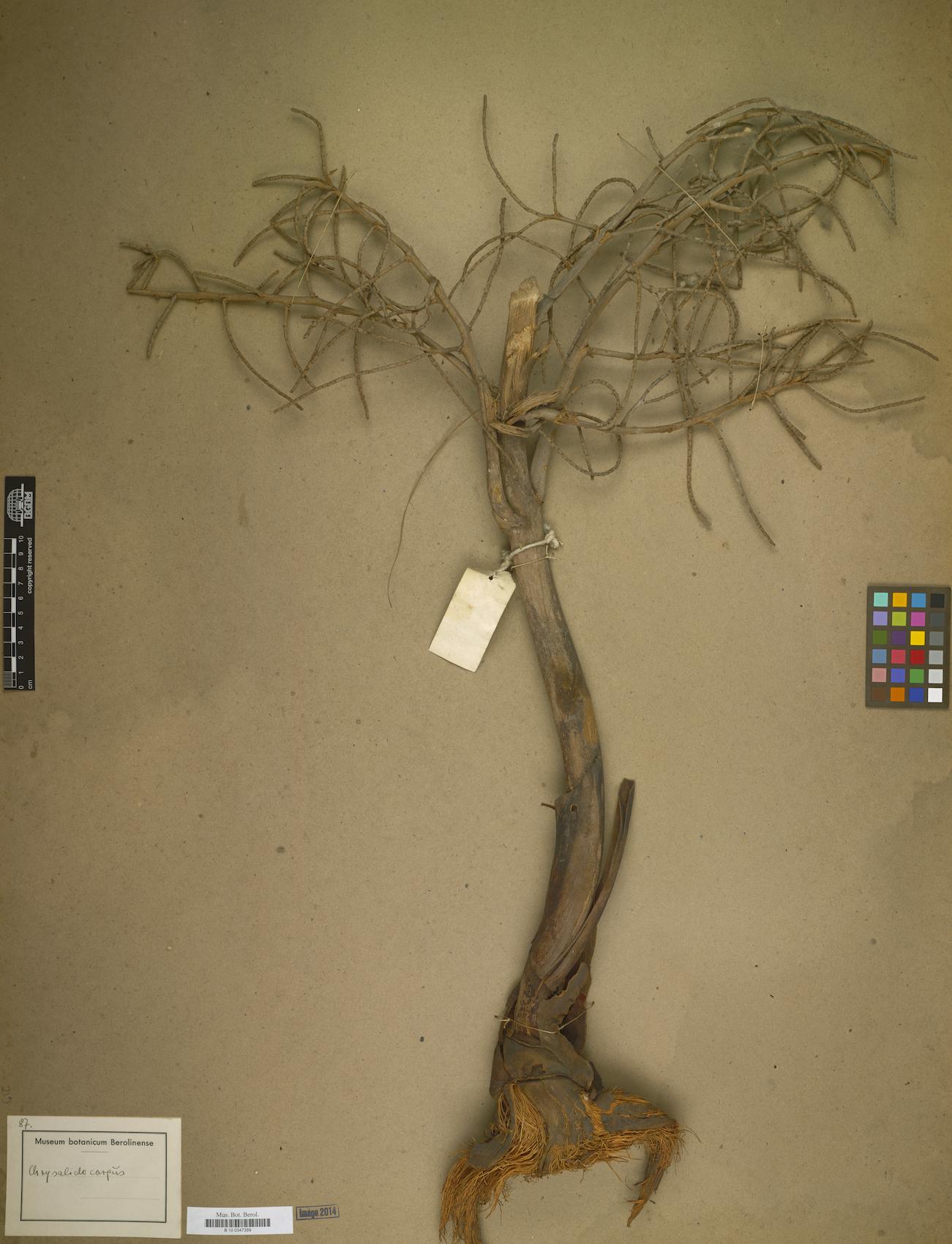
Arenga australasica
(Wendl. & Drude) S.T. Blake
Cabbage palm, Australian Sugar Palm
iNaturalist· cc-by
(c) coenobita, some rights reserved (CC BY), uploaded by coenobita
iNaturalist· cc-by-nc
(c) sworboys, some rights reserved (CC BY-NC)
iNaturalist· cc-by-nc
(c) sworboys, some rights reserved (CC BY-NC)
Summary
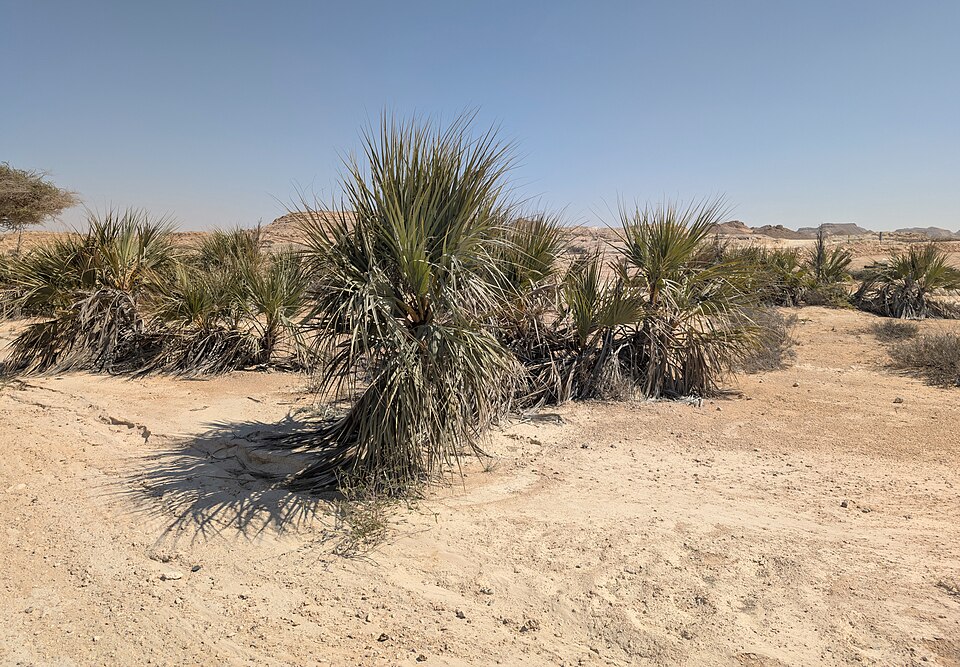
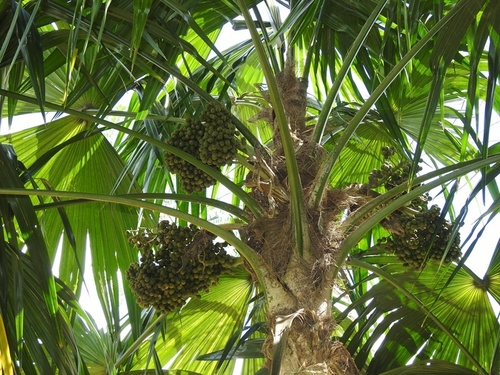
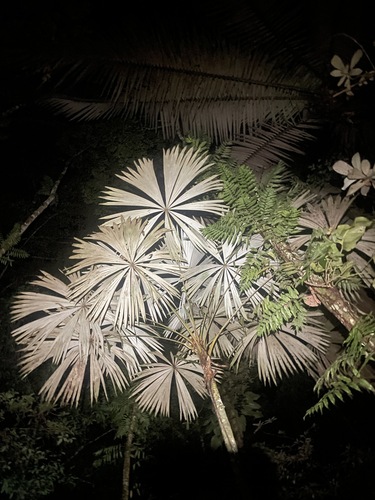
Source: WikipediaArenga australasica, commonly known as arenga palm or southern arenga, is a plant in the palm family Arecaceae found only in the Northern Territory and Queensland, Australia. It has a clustering habit and it may reach 20 m (66 ft) in height with a trunk diameter of 30 cm (12 in). Fronds can be up to 4 m (13 ft) long with numerous leaflets (often more than 100), dark green above and grey underneath. Inflorescences are produced from the bases of the fronds and can reach a length of 2 m (6 ft 7 in), carrying numerous pendant panicles of flowers. The flowers are in clusters of 3 with one pistillate (functionally female) and two staminate (functionally male) flowers. The red or purple fruit are almost spherical in shape, about 28 mm (1.1 in) diameter and contain two or three seeds.
Description
An evergreen palm. It grows to 10-20 m high and spreads to 3 m across. The stem is erect and slender. It is has the black fibrous remains of old leaf bases along it which fall off to leave rings of leaf scars. Several stems develop forming a clump. It normally has 3 developed stems and several suckers. The trunk is light grey and 30 cm across. The fronds are widely spaced along the trunk. There is no crown-shaft of leaf bases. The leaves are long and pinnate or feather-like. They are 2-3.5 m long. The leaf stalk is rough textured. Leaflets are stiff and spreading. They are grouped into small clusters. The leaflets are narrow to oval or sword shaped. Those at the end are fused to give a fishtail appearance. The flowering stalks is 1-2 m long. There are several long, hanging, green branches. Several flowering stalks develop in the axils of leaves, then the trunk dies. Only one stem in the clump flowers at one time. The flowers are small. The fruit are small rounded berries. They don't all ripen together. The fruit are about 2 cm across. The outer flesh contains a juice that can irritate the skin.
Edible Uses
The bud, cabbage (palm heart), and palm heart are edible portions.
Known Hazards
The outer flesh of the fruit contains calcium oxalate, which can burn and irritate the skin.
Distribution
It is a tropical plant. It does best in well-composted, moist, well-drained soil. It needs a protected sunny position. It is damaged by drought and frost. It grows naturally in stony creek beds often in light shade. They are very sensitive to cold. It suits hardiness zones 11-12. In the Cairns Botanical gardens. In Townsville Anderson BG.
Where It Grows
Asia, Australia*, Indonesia, North America, SE Asia, USA,
Cultivation
Plants are grown from seed. The seed germinate erratically taking 2-12 months or more. It can also be grown by suckers.
Notes
The flesh of the fruit contains calcium oxalate which can burn the skin. There are 17-20 Arenga species.
Synonyms
Also Known As
An-jardarrk, Palem aren australia
References (20)
- Bodkin, F., 1991, Encyclopedia Botanica. Cornstalk publishing, p 99
- Checklist of NT Vascular Plant Species. January 2003.
- Cooper, W. and Cooper, W., 2004, Fruits of the Australian Tropical Rainforest. Nokomis Editions, Victoria, Australia. p 68
- Cronin, L., 1989, The Concise Australian Flora. Reed. p 217
- Cronin, L., 2000, Australian Palms, Ferns, Cycads and Pandans. Cronin Publications. p 40
Show all 20 references Hide references
- Cundall, P., (ed.), 2004, Gardening Australia: flora: the gardener's bible. ABC Books. p 181
- Elliot, W.R., & Jones, D.L., 1982, Encyclopedia of Australian Plants suitable for cultivation. Vol 2. Lothian. p 225
- Etherington, K., & Imwold, D., (Eds), 2001, Botanica's Trees & Shrubs. The illustrated A-Z of over 8500 trees and shrubs. Random House, Australia. p 104
- Hibbert, M., 2002, The Aussie Plant Finder 2002, Florilegium. p 32
- Jackes, B.R., 2001, Plants of the Tropics. Rainforest to Heath. An Identification Guide. James Cook University. p 42
- Jones D.L, 1986, Ornamental Rainforest Plants in Australia, Reed Books, p 326
- Jones, D.L., 1994, Palms throughout the World. Smithtonian Institution, Washington. p 131
- Jones, D.L., 2000, Palms of Australia 3rd edition. Reed/New Holland. p 78
- Price, S.H. & J.L., Wild Food, Medicine and useful plants of the Wet tropics. Kwik Kopy, Cairns. p 6
- Riffle, R.L. & Craft, P., 2003, An Encyclopedia of Cultivated Palms. Timber Press. p 33, 257
- Smith, N. M., 1991, Ethnobotanical Field Notes from the Northern Territory, Australia, J. Adelaide Bot. Gard. 14(1): 1-65
- Sukarya, D. G., (Ed.) 2013, 3,500 Plant Species of the Botanic Gardens of Indonesia. LIPI p 752
- Townsend, K., 1994, Across the Top. Gardening with Australian Plants in the tropics. Society for Growing Australian Plants, Townsville Branch Inc. p 87
- Tucker, R., 1988, The Palms of Subequatorial Queensland. Palm and Cycad Society of Australia, Milton, Queensland. p 44
- Yunupinu Banjgul, Laklak Yunupinu-Marika, et al. 1995, Rirratjinu Ethnobotany: Aboriginal Plant Use from Yirrkala, Arnhem Land, Australia. Northern Territory Botanical Bulletin No 21. Parks and Wildlife Commission of the Northern Territory. p 19