Solanum uporo
Dunal
Cannibal’s tomato
wikimedia· cc-by-sa
Wikimedia Commons - Zinnmann
wikimedia· cc0
Wikimedia Commons - William Jackson Hooker (1785-1865)
Description
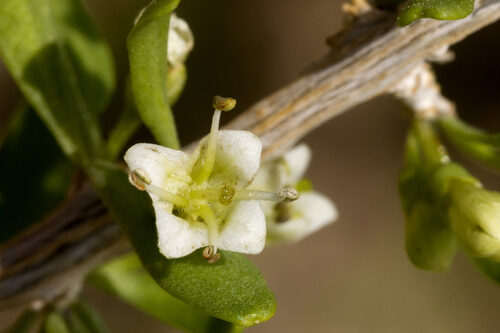
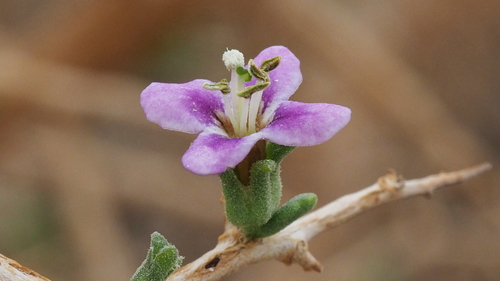
A small shrub similar to a tomato. It grows 1-1.5 m tall. It can be grown as an annual or perennial. The leaves are alternate and dark green. The fruit is bright red. They are 2.5 cm across.
Edible Uses
The bright red fruits are used like tomatoes to flavour sauces and other dishes. The leaves are eaten as salad greens.
Traditional Uses
The fruit is used like tomato to flavour sauces etc. The leaves are eaten as salad greens.
This uses section is brief — help expand it
Medicinal Uses
It is cultivated for edible use.
Distribution
A tropical plant. It grows in a rich, well drained soil in a sunny position.
Where It Grows
Fiji, French Polynesia, New Zealand, Niue, Pacific, Polynesia, Tahiti, Tonga,
Cultivation
Plants are grown from seed.
Other Information
It is cultivated.
Notes
There are about 1400 Solanum species.
Also Known As
Boro dina, Polo iti, Sou bokola, Uporo-poro
References (8)
- Facciola, S., 1998, Cornucopia 2: a Source Book of Edible Plants. Kampong Publications, p 238
- Hedrick, U.P., 1919, (Ed.), Sturtevant's edible plants of the world. p 626
- John, L., & Stevenson, V., 1979, The Complete Book of Fruit. Angus & Robertson p 284
- Martin, F.W. & Ruberte, R.M., 1979, Edible Leaves of the Tropics. Antillian College Press, Mayaguez, Puerto Rico. p 220
- Samuels, J., 2015, Biodiversity of Food Species of the Solanaceae Family: A Preliminary Taxonomic Inventory of Subfamily Solanoideae. Resources 2015, 4. 277-322
Show all 8 references Hide references
- Uphof,
- Yuncker, T.G., 1959, Plants of Tonga, Bernice P. Bishop Museum, Hawaii, Bulletin 220. p 238
- Zeven, A. C. & de West, J. M. J., 1982, Dictionary of cultivated plants and their regions of diversity. Wageningen. p 64