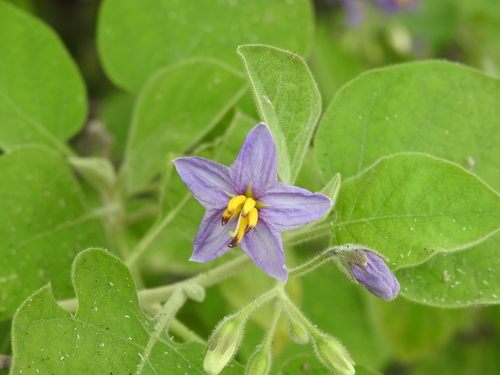
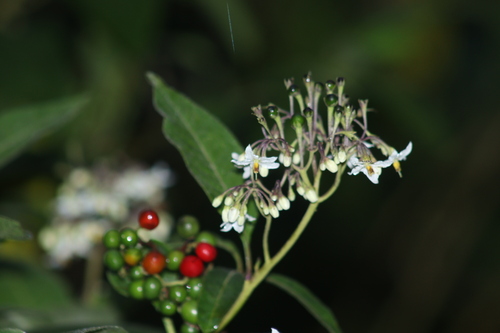
Solanum cari
Molina
No photos yet for Solanum cari
Sign in to contribute a photoSummary
An annual reaching 1 m in height with hermaphroditic insect-pollinated flowers. Adapts to light sandy, medium loamy, and heavy clay soils with adequate drainage. Suitable for mildly acidic to mildly alkaline soils. Requires full sun and consistently moist soil.
Description
An annual reaching 1 m in height with hermaphroditic insect-pollinated flowers. Adapts to light sandy, medium loamy, and heavy clay soils with adequate drainage. Suitable for mildly acidic to mildly alkaline soils. Requires full sun and consistently moist soil.
Edible Uses
Young leaves can be cooked and eaten; they contain approximately 6990mg of beta carotene per 100g. Caution is advised regarding toxicity. The fruit is also edible when cooked, but should only be used once fully ripe. Caution is advised regarding toxicity.
Medicinal Uses
None known
Known Hazards
Unripe leaves and fruit contain toxic compounds; only consume fully mature fruit and properly cooked young leaves.
Distribution
A tropical plant.
Where It Grows
Chile, Ecuador, Mexico, North America, South America,
Cultivation
We have very little information on this species and do not know if it will succeed in Britain, though it should be possible to grow it as a spring-sown annual. The following notes are based on the general needs of the genus. Succeeds in most soils.
Propagation
Sow seed in spring in a greenhouse. Once seedlings are large enough to handle, prick them out into individual pots and plant outside after the last expected frosts.
Other Uses
None known Special Uses
Notes
There are about 1400 Solanum species.
Synonyms
References (2)
- Hedrick, U.P., 1919, (Ed.), Sturtevant's edible plants of the world. p 613
- Plants for a Future database, The Field, Penpol, Lostwithiel, Cornwall, PL22 0NG, UK. http://www.scs.leeds.ac.uk/pfaf/