Solanum catombelense
Peyr.
iNaturalist· cc-by-nc
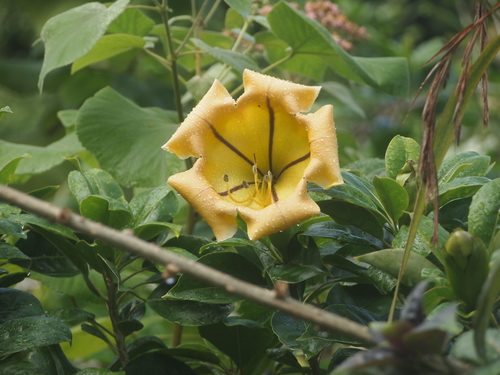
(c) Troos van der Merwe, some rights reserved (CC BY-NC), uploaded by Troos van der Merwe
iNaturalist· cc-by-nc
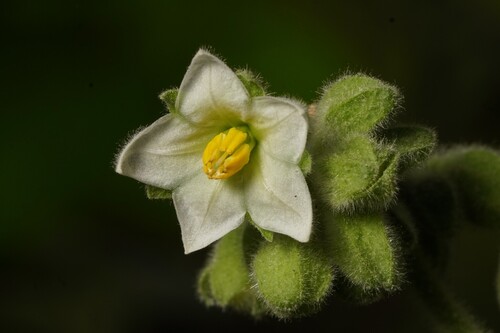
(c) ramoroka, some rights reserved (CC BY-NC)
Description
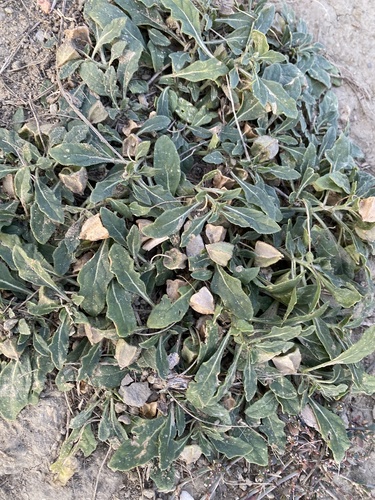
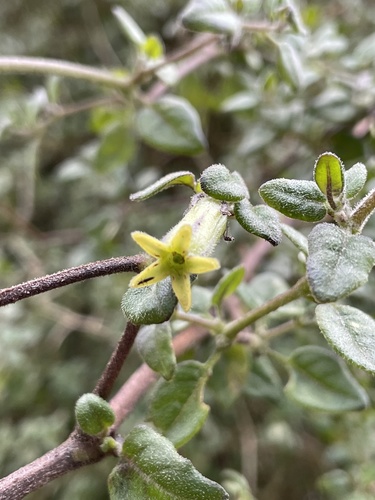
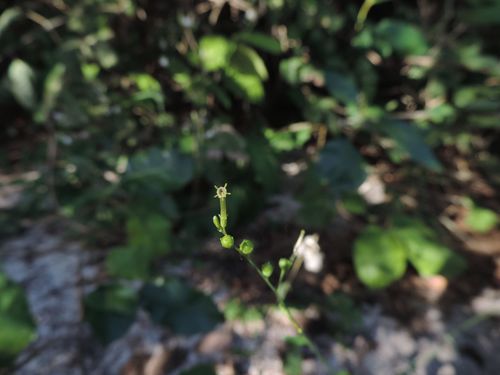
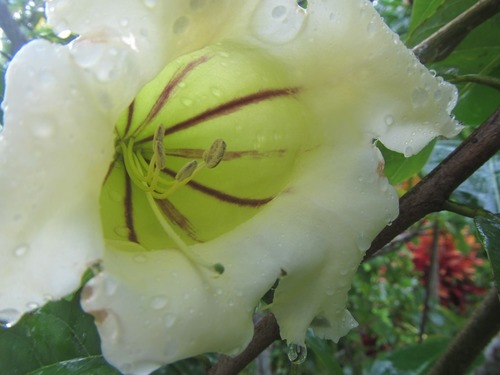
A small shrub. The stems and flowers are spiny. It can grow up to 1 m high. It keeps growing from year to year. The leaves are alternate and have deep lobes. They are densely covered with star shaped hairs. The flowers are white or violet and have 5 stamens. The fruit are small orange-red berries.
Edible Uses
The stems, leaves, and fruit are eaten.
Traditional Uses
The stems and leaves are eaten.
This uses section is brief — help expand it
Medicinal Uses
A tea made of the roots is drunk or the roots are chewed to treat gastro-intestinal disorders. A mixture of the root in water is put in the eye to treat eye inflammations.
Known Hazards
The sap of fresh unripe fruits is applied as arrow poison. Although providing many well-known foods for people, including the potato, tomato, pepper and aubergine, most species in this genus also contain toxic alkaloids. Whilst these alkaloids can make the plant useful in treaing a range of medical conditions, they can also cause problems such as nausea, vomiting, salivation, drowsiness, abdominal pain, diarrhoea, weakness and respiratory depression. Unless there are specific entries with information on edible uses, it would be unwise to ingest any part of this plant.
Distribution
It is a subtropical plant. It grows in hot arid places with a marked dry season. It grows between 190-1,400 m above sea level. It can grow in arid places.
Where It Grows
Africa, Angola, Botswana, East Africa, Eswatini, Mozambique, Namibia, South Africa, Southern Africa, Swaziland, Zimbabwe,
Cultivation
A plant of subtropical to tropical areas, where it is found at elevations up to 1,300 metres. Found on sandy or limestone soils in the wild.
Propagation
Seed - sow in trays in a nursery. Prick out the seedlings into individual pots when they are large enough to handle and grow them on fast. Plant them out when 10cm or more tall. Cuttings of half-ripe wood. Very easy, the cuttings root within a couple of weeks.
Synonyms
Also Known As
Manchu
References (9)
- Ferns, Useful Tropical Plants
- Fox, F. W. & Young, M. E. N., 1982, Food from the Veld. Delta Books. p 347
- http://aflora.africa.kyoto-u.ac.jp
- Peters, C. R., O'Brien, E. M., and Drummond, R.B., 1992, Edible Wild plants of Sub-saharan Africa. Kew. p 186
- Royal Botanic Gardens, Kew (1999). Survey of Economic Plants for Arid and Semi-Arid Lands (SEPASAL) database. Published on the Internet; http://www.rbgkew.org.uk/ceb/sepasal/internet [Accessed 11th June 2011]
Show all 9 references Hide references
- Ruiters-Welcome, A. K., 2019, Food plants of southern Africa. Ph.D. thesis. Univ. of Johannesburg p 103
- Tanaka, 1980,
- Welcome, A. K. & Van Wyk, B.-E., 2019, An inventory and analysis of the food plants of southern Africa. South African Journal of Botany 122 (2019) 136–179
- World Checklist of Useful Plant Species 2020. Royal Botanic Gardens, Kew