Solanum quitoense
Lam.
Naranjilla
iNaturalist· cc-by-nc
(c) Julián Maya, some rights reserved (CC BY-NC), uploaded by Julián Maya
iNaturalist· cc0
no rights reserved, uploaded by Chris
iNaturalist· cc-by-nc
(c) Morten Ross, some rights reserved (CC BY-NC), uploaded by Morten Ross
Summary
Source: WikipediaSolanum quitoense, known as naranjilla (Spanish pronunciation: [naɾaŋˈxiʝa], "little orange") in Ecuador, Costa Rica, Nicaragua, and Panama and as lulo ([ˈlulo], from Quechua) in Colombia, is a tropical perennial plant from northwestern South America. The specific name for this species of nightshade means "from Quito." The lulo plant stands 2.5 m (8 ft 2 in) high, and has large elongated heart- or oval-shaped leaves up to 60 cm (24 in) in length covered in short purple hairs. Naranjilla plants must be protected from strong winds and direct sunlight, growing best in partial shade. The fruit has a citrus flavor, sometimes described as a combination of pineapple and lime. The juice of the naranjilla is green and is used as a juice or for a drink called lulada.
Description
A small shrub up to 2 m high. It is hairy or thorny. The leaves are large (60 cm) and angular and hairy on both surfaces. They have thorns along the veins. Young leaves are purple. The flowers are pale violet and 2-4 cm across. The fruit are produced in clusters on the trunk. The fruit is bright orange in colour and covered with short hairs which can be removed by rubbing. The fruit is about 6 cm across. The flesh is yellow-orange to green. It has numerous small edible seeds.
Edible Uses
The fruit is eaten raw or cooked and is used mainly in sauces and preserves. Its flavour is tart yet sweet and very refreshing, with very juicy pulp. The juice is rich in protein and minerals and is used in effervescent drinks. The hairs on the skin must be removed before eating. Fruits reach up to 5cm in diameter and are produced in clusters of 3–4.
Traditional Uses
Fruit is eaten fresh or used for jams and drinks. The juice is used to flavour ice creams and sherberts.
This uses section is brief — help expand it
Medicinal Uses
None known
Known Hazards
The fruits are covered in stinging hairs, though these are easily removed. Although providing many well-known foods for people, including the potato, tomato, pepper and aubergine, most plants in the family Solanaceae also contain poisonous alkaloids. Unless there are specific entries with information on edible uses, it would be unwise to ingest any part of this plant.(Handling plant may cause skin irritation or allergic reaction Plant has spines or sharp edges; use extreme caution when handling )
Distribution
A tropical plant. It suits the highland areas in the tropics. The best altitude is probably 800 to 2000 m. In the Andes it grows between 1,500-2,800 m altitude. The temperatures are 14-22°C. It is frost sensitive. It likes humidity. It grows well with rainfall of 1,500 mm per year. It suits hardiness zones 10-12.
Where It Grows
Amazon, Andes*, Asia, Australia, Brazil, Central America, Colombia*, Costa Rica, Cuba, Ecuador, Guatemala, Hawaii, Indonesia, Mexico, Nicaragua, Pacific, Panama, Papua New Guinea, PNG, Peru, Philippines, Puerto Rico, SE Asia, Slovenia, South America, Tasmania, USA, Venezuela, West Indies,
Cultivation
Plants can be grown from quite low elevations in the tropics up to an elevation of 2,500 metres or more. They do not do well in hot, lowland tropical areas. They appear to be tolerant of temperatures up to about 30°c, but are intolerant of frost. They prefer an annual precipitation of around 1,500mm fairly evenly spread through the year since dry periods can lead to a check in growth. Plants generally prefer a sunny position, but at lowland elevations they will often benefit from light shade. Can succeed in a range of soils so long as they are rich in organic matter. Prefers a light, fertile, well-drained soil. Prefers a pH in the range 6.5 - 7, tolerating 5.8 - 8. Grows best in a position sheltered from strong winds. Introduced into the Galapagos by settlers, it is considered to be invasive there. Seedling plants generally commence fruiting when about 10 - 13 months old. Annual yields of 1 - 2 tonnes of fruit per hectare are obtained. Plants can flower and fruit all year round. The flowers are hermaphrodite and plants are usually self-fertile. The plant is susceptible to attack by nematodes and other pests, limiting its cultivation. In recent years its has been hybridized with various species, especially with S. Sessiliflorum, with the result that most plants grown and served in Ecuador comes from this hybrid. The hybrid can be distinguished from the true lulo by the colour of its fruit pulp: pure Solanum quitoense has bright green fruit pulp, whereas the hybrids most often have yellowish or, at most, light greenish fruit pulp. Flowering Time: Mid Summer. Bloom Color: White/Near White. Spacing: 24-36 in. (60-90 cm).
Propagation
Sow seed in a seedbed or in containers and plant out when seedlings are 10–15cm tall.
Other Uses
An extract of the fruit is used as an ingredient in commercial cosmetic preparations as a conditioner for both hair and skin. The fruit is also used as a hair shampoo. Suitable for growing in pots.
Production
Plants commence bearing fruit after 6-12 months. They bear fruit throughout the year.
Other Information
It is a commercially cultivated vegetable. Plants are not common in Papua New Guinea, but they are increasing in importance in the highlands.
Notes
There are about 1400 Solanum species.
Nutrition
| Part | Moisture | kJ | kcal | Protein | Vit A | Vit C | Iron | Zinc |
|---|---|---|---|---|---|---|---|---|
| Fruit | 88.5 | 184 | 44 | 1 | 100 | 67 | 0.5 | — |
Synonyms
Also Known As
Cua-ton-to, Daboka, Dabuka, Golden fruit of the Andes, Huevo de perro, Kukuch, Lulo, Lulos, Morelle de quito, Naranjilo, Quito orange, Toronja, Uvilla
References (49)
- Barfod, A. S. & Kvist, L. P., 1996, Comparative Ethnobotanical Studies of the Amerindian Groups in Coastal Ecuador. The Danish Academy of Sciences and Letters. p 79
- Bennett, B. C., 1990, Useful Plants of Amazonian Ecuador. US Agency for International Development. Fifth Progress Report. New York Botanical Gardens. p 40
- Castillo, R. O., 1995, Plant Genetic Resources in the Andes: Impact, Conservation, and Management. Crop Science 35:355-360
- Coronel, R.E., 1982, Fruit Collections in the Philippines. IBPGR Newsletter p 10
- Cundall, P., (ed.), 2004, Gardening Australia: flora: the gardener's bible. ABC Books. p 1348
Show all 49 references Hide references
- D'Ambrosio, U., & Puri, R. K., 2016, Foodways in transition: food plants, diet and local perceptions of change in a Costa Rican Ngäbe community. Journal of Ethnobiology and Ethnomedicine (2016) 12:3 p 27
- Darley, J.J., 1993, Know and Enjoy Tropical Fruit. P & S Publishers. p 122
- Facciola, S., 1998, Cornucopia 2: a Source Book of Edible Plants. Kampong Publications, p 237
- French, B.R., 1986, Food Plants of Papua New Guinea, A Compendium. Asia Pacific Science Foundation p 237
- Gouldstone, S., 1978, Australian and New Zealand Guide to food bearing plants. Books for Pleasure. p 36
- Grandtner, M. M. & Chevrette, J., 2013, Dictionary of Trees, Volume 2: South America: Nomenclature, Taxonomy and Ecology. Academic Press p 619
- Hedrick, U.P., 1919, (Ed.), Sturtevant's edible plants of the world. p 619
- Hermandez Bermejo, J.E., and Leon, J. (Eds.), 1994, Neglected Crops. 1492 from a different perspective. FAO Plant Production and Protection Series No 26. FAO, Rome. p17
- Hibbert, M., 2002, The Aussie Plant Finder 2002, Florilegium. p 292
- http://www.botanic-gardens-ljubljana.com/en/plants
- John, L., & Stevenson, V., 1979, The Complete Book of Fruit. Angus & Robertson p 285
- Kays, S. J., and Dias, J. C. S., 1995, Common Names of Commercially Cultivated Vegetables of the World in 15 languages. Economic Botany, Vol. 49, No. 2, pp. 115-152
- Kew Plants of the World Online
- Kiple, K.F. & Ornelas, K.C., (eds), 2000, The Cambridge World History of Food. CUP p 1821
- Llamas, K.A., 2003, Tropical Flowering Plants. Timber Press. p 353
- Lorenzi, H., Bacher, L., Lacerda, M. & Sartori, S., 2006, Brazilian Fruits & Cultivated Exotics. Sao Paulo, Instituto Plantarum de Estuados da Flora Ltda. p 625
- Macbride, J. F., 1962, Flora of Peru. Vol. 8, Part V-B No. 1 p 260
- Macmillan, H.F. (Revised Barlow, H.S., et al) 1991, Tropical Planting and Gardening. Sixth edition. Malayan Nature Society. Kuala Lumpur. p 307
- Martin, F. W., et al, 1987, Perennial Edible Fruits of the Tropics. USDA Handbook 642 p 62
- Miguel, E., et al, 1989, A checklist of the cultivated plants of Cuba. Kulturpflanze 37. 1989, 211-357
- Morton, Julia F., 1987, Fruits of Warm Climates. Creative Resources Systems, Inc. . p. 425
- Pascual-Mendoza, S. et al, 2021, Traditional knowledge of edible plants in an indigenous community in the Sierra Norte of Oaxaca, Mexico. Plant Biosystems - An International Journal Dealing with all Aspects of Plant Biology
- Penafield Anchundia, D. D., 2017, Traditional food consumption and its nutritional contribution in Guasaganda, Central Ecuador. PhD Ghent University p 72
- Purseglove, J.W., 1968, Tropical Crops Dicotyledons, Longmans. p 556
- Recher, P, 2001, Fruit Spirit Botanical Gardens Plant Index. www.nrg.com.au/~recher/ seedlist.html p 3
- Roa, J. A. G. & Boada, D. S. G., 2018, Fundación para el Fortalecimiento de la Fruticultura y Plantas Alimenticias no Convencionales en Colombia.
- Samuels, J., 2015, Biodiversity of Food Species of the Solanaceae Family: A Preliminary Taxonomic Inventory of Subfamily Solanoideae. Resources 2015, 4. 277-322
- Segura, S., et al, 2018, The edible fruit species in Mexico. Genet Resour Crop Evol (2018) 65:1767–1793
- Smith, P.M., 1979, Solanums, in Simmonds, N.W., (ed), Crop Plant Evolution. Longmans. London. p 322
- Staples, G.W. and Herbst, D.R., 2005, A tropical Garden Flora. Bishop Museum Press, Honolulu, Hawaii. p 539
- Tabl. encycl. 2(vol. 3):16. 1794
- Tankard, G., 1990, Tropical fruit. An Australian Guide to Growing and using exotic fruit. Viking p 112
- Terra, G.J.A., 1973, Tropical Vegetables. Communication 54e Royal Tropical Institute, Amsterdam, p 75
- Tindall, H.D., 1983, Vegetables in the Tropics, Macmillan p 371
- Torre, de la, L., et al, 2008, Enciclopedia de las Plantas Útiles del Ecuador. Herbario QCA. Pontificia Universidad Católica del Ecuador. p 595
- Ulian, T., et al, 2020, Unlocking plant resources to support food security and promote sustainable agriculture. Plants, People, Planet. 2020;2:421–445.
- USDA, ARS, National Genetic Resources Program. Germplasm Resources Information Network - (GRIN). [Online Database] National Germplasm Resources Laboratory, Beltsville, Maryland. Available: www.ars-grin.gov/cgi-bin/npgs/html/econ.pl (10 April 2000)
- Van den Eynden, V., et al, 2003, Wild Foods from South Ecuador. Economic Botany 57(4): 576-603
- van Wyk, B., 2005, Food Plants of the World. An illustrated guide. Timber press. p 348
- Villachica, H., (Ed.), 1996, Frutales Y hortalizas promisorios de la Amazonia. FAO, Lima. p 205
- Wiersema, J. H. & Leon, B., 2013, World Economic Plants. A Standard Reference CRC Press. 2nd Ed. p 647
- World Checklist of Useful Plant Species 2020. Royal Botanic Gardens, Kew
- Zaldivar, M. E., et al, 2002, Species Diversity of Edible Plants Grown in Homegardens of Chibehan Amerindians from Costa Rica. Human Ecology, Vol. 30, No. 3, pp. 301-316
- Zuchowski W., 2007, Tropical Plants of Costa Rica. A Zona Tropical Publication, Comstock Publishing. p 204
More from Solanaceae
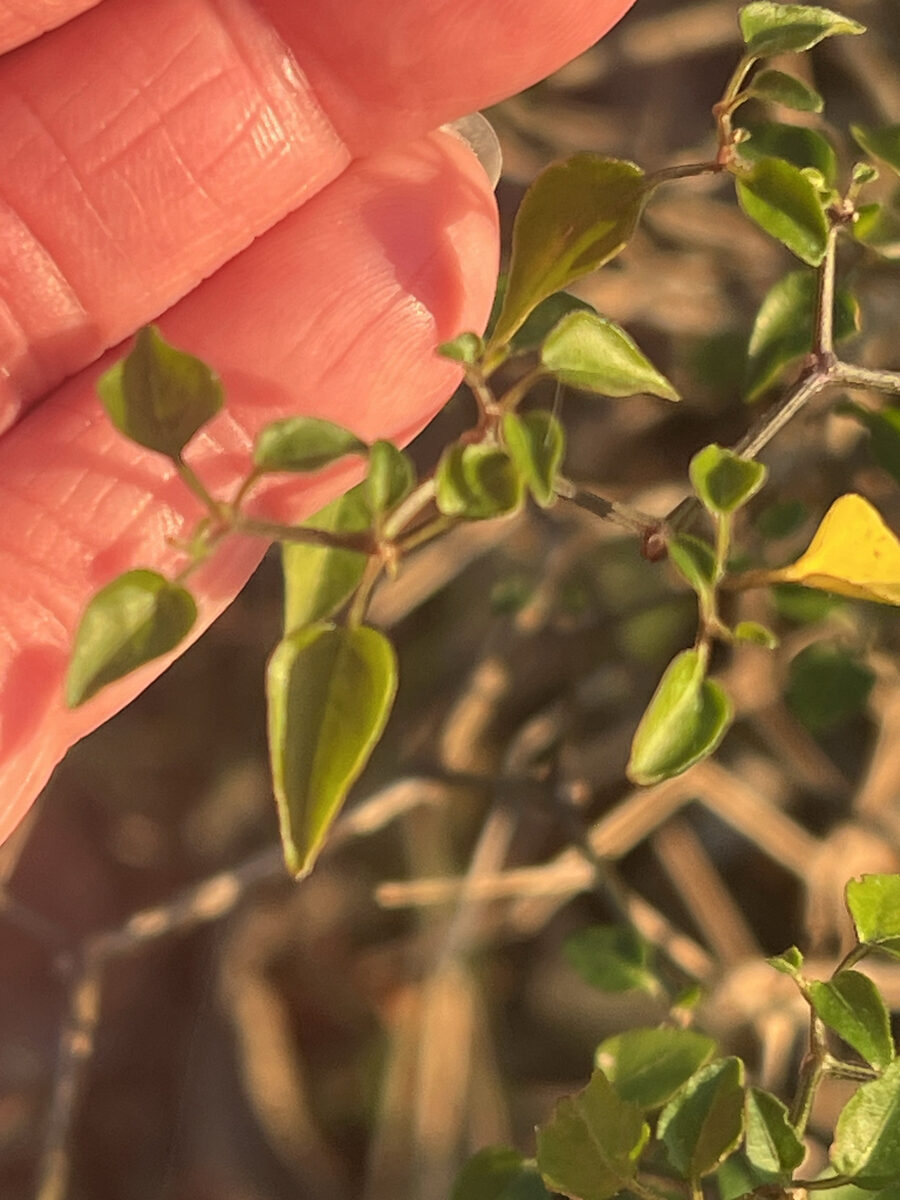
Capsicum annuum var. cerasiforme
Cherry peppers
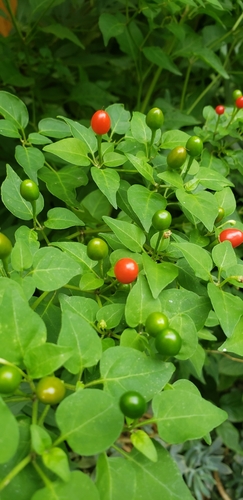
Capsicum annuum var. conoides
Cone peppers, Tabasco
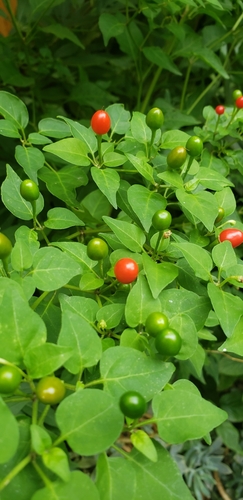
Capsicum annuum var. fasciculatum
Cluster pepper, Red cone pepper
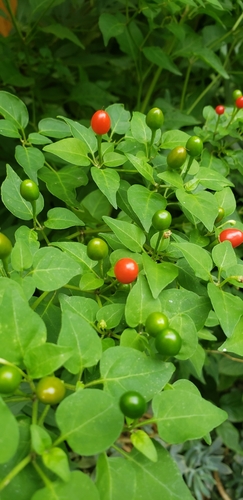
Capsicum annuum var. glabriusculium
Bird pepper
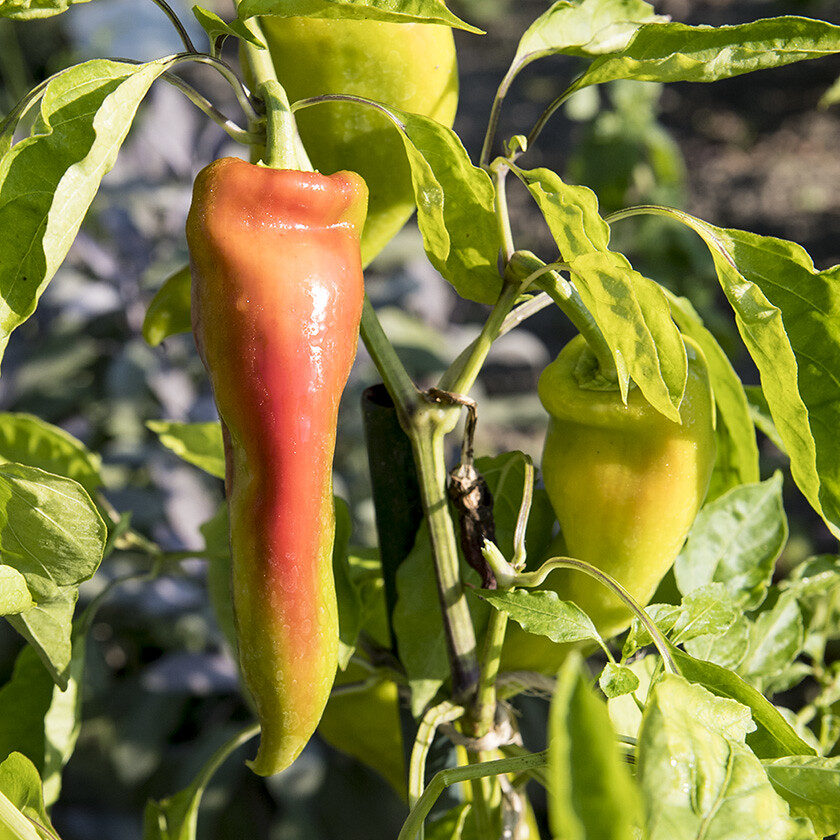
Capsicum annuum var. grossum
Bell pepper
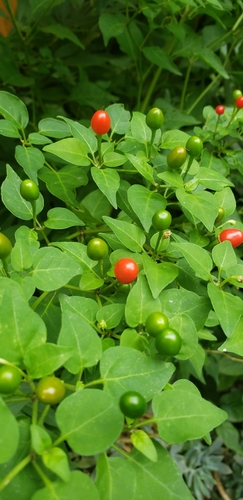
Capsicum annuum var. longum
Long peppers, Afi largo