Smyrnium perfoliatum
L.
Perfoliate Alexanders
iNaturalist· cc-by-nc
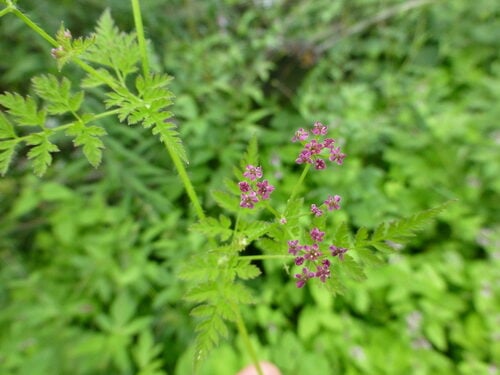
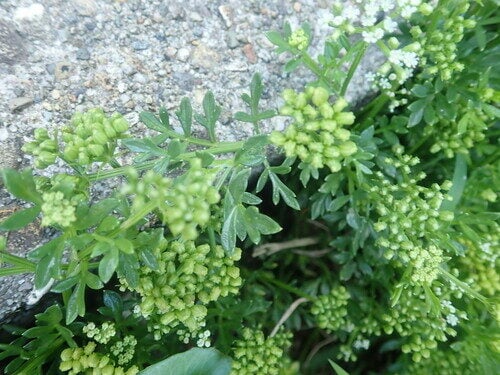
(c) jmneiva, some rights reserved (CC BY-NC), uploaded by jmneiva
iNaturalist· cc-by-nc
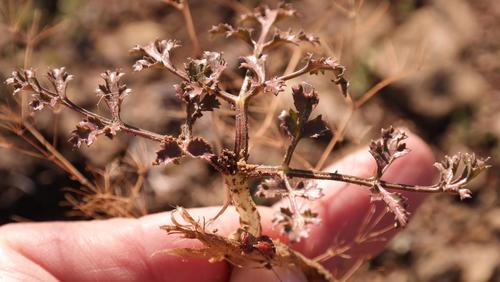
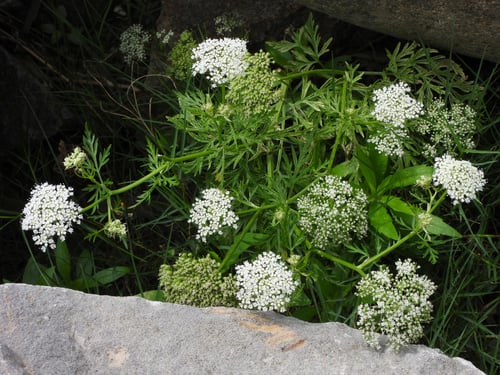
(c) Sophia R, some rights reserved (CC BY-NC)
Summary
Biennial herb growing to 1.5 m tall and 0.6 m wide. Hardy to UK zone 6, not frost tender. Flowers June to August with seeds ripening July to September. Hermaphroditic and self-fertile, pollinated by insects. Adapts to light sandy, medium loamy, or heavy clay soils with good drainage. Tolerates mildly acid to basic pH and grows in semi-shade or full sun. Prefers moist soil.
Description
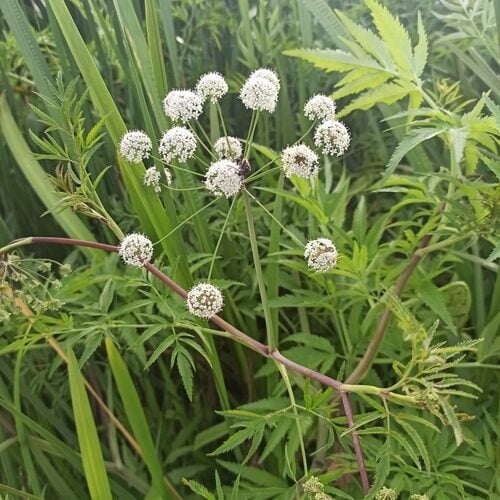
A small plant. It grows 90 cm high and spreads 45 cm wide. It takes 2 years to complete its life cycle. The stems are angled. They are hairy at the nodes only. The lower leaves have 2-3 oval leaflets. These leaves have teeth. The upper leaves are rounded and appear to surround the stem. They are heart shaped at the base. The flowers are in yellow umbels. They are rounded and have 5-12 rays. The fruit are 3-3.5 mm long and broader than long. They are brownish-black.
Edible Uses
Leaves and young shoots can be eaten raw in salads or cooked in soups and stews. The plant begins growth in autumn and leaves are often available throughout winter. They carry a strong celery-like flavour and are frequently blanched by excluding light from the growing plant before use. Leafy seedlings work as a parsley substitute. The stem is eaten raw or cooked with a celery-like taste and is often blanched before use; this species is considered superior to the related S. olusatrum as it blanches better, is more crisp and tender, and has a less harsh flavour. Flower buds are eaten raw with a celery-like flavour and can be added to salads. The spicy seeds are used as a pepper substitute. The root is cooked and boiled for use in soups and is said to be more tender if kept in a cool place throughout winter.
Traditional Uses
The blanched leafstalks are eaten raw in salads and used as a potherb. The flower buds are eaten raw and added to salads.
This uses section is brief — help expand it
Medicinal Uses
None known.
Distribution
It is a temperate plant. It grows in grassy and rocky places. It suits hardiness zones 6-10.
Where It Grows
Australia, Britain, Czech Republic, Europe, France, Greece, Hungary, Ireland, Italy, Mediterranean, Portugal, Sicily, Slovenia, Spain, Tasmania, Turkey, Türkiye,
Cultivation
Succeeds in most soils but prefers an open sunny position in a well-drained moisture retentive soil. Self-sows freely with us in our Cornwall garden, in a suuny, sheltered position.
Propagation
Seed - best sown in an outdoor seedbed in autumn and planted into its permanent position in late spring. Germination can be slow. Can also be sown in situ in spring.
Other Uses
None known.
Also Known As
Lisciandreddu, Ozsalata, Prerasla repušica
References (15)
- Blamey, M and Grey-Wilson, C., 2005, Wild flowers of the Mediterranean. A & C Black London. p 156
- Cerne, M., 1992, Wild Plants from Slovenia used as Vegetables. Acta Horticulturae 318
- Cundall, P., (ed.), 2004, Gardening Australia: flora: the gardener's bible. ABC Books. p 1345
- Denes, A., et al, 2012, Wild plants used for food by Hungarian ethnic groups living in the Carpathian Basin. Acta Societatis Botanicorum Poloniae 81 (4): 381-396
- Ertug, F, Yenen Bitkiler. Resimli Türkiye Florası -I- Flora of Turkey - Ethnobotany supplement
Show all 15 references Hide references
- Facciola, S., 1998, Cornucopia 2: a Source Book of Edible Plants. Kampong Publications, p 22
- Geraci, A., et al, 2018, The wild taxa utilized as vegetables in Sicily (Italy): a traditional component of the Mediterranean diet. Journal of Ethnobiology and Ethnomedicine (2018) 14:14
- Hedrick, U.P., 1919, (Ed.), Sturtevant's edible plants of the world. p 611
- Hermandez Bermejo, J.E., and Leon, J. (Eds.), 1994, Neglected Crops. 1492 from a different perspective. FAO Plant Production and Protection Series No 26. FAO, Rome. p 321
- Hibbert, M., 2002, The Aussie Plant Finder 2002, Florilegium. p 291
- http://www.botanic-gardens-ljubljana.com/en/plants
- Irving, M., 2009, The Forager Handbook, A Guide to the Edible Plants of Britain. Ebury Press p 130
- Pasta, S., et al, 2020, An Updated Checklist of the Sicilian Native Edible Plants: Preserving the Traditional Ecological Knowledge of Century-Old Agro-Pastoral Landscapes. Frontiers in Plant Science. Volume 11|Article 388
- Plants for a Future database, The Field, Penpol, Lostwithiel, Cornwall, PL22 0NG, UK. http://www.scs.leeds.ac.uk/pfaf/
- Sp. pl. 1:262. 1753