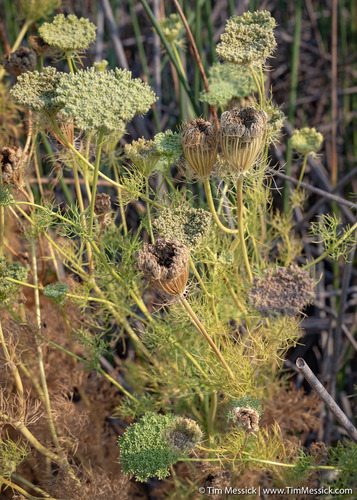
Heteromorpha arborescens var. abyssinica
(Spreng.) Cham. & Schltdl., (A. Rich.) H. Wolff
Parsley tree
iNaturalist· cc-by-nc
(c) Richard Gill, some rights reserved (CC BY-NC), uploaded by Richard Gill
iNaturalist· cc-by-nc
(c) Richard Gill, some rights reserved (CC BY-NC), uploaded by Richard Gill
iNaturalist· cc-by-nc
(c) keanumrc, some rights reserved (CC BY-NC)
Description
An evergreen shrub. It can grow to 7 m high. It is straggling and open. The bark is reddish-brown. It peels in papery flakes. The leaves are alternate and compound. There are 3-9 leaflets. The leaves have a smell like carrots. The flowers are small and often in round heads. The fruit are often flattened and 5-7 mm long.
Edible Uses
The root tubers are cooked and eaten as a vegetable, and are also used as flavouring in dairy preparations.
Traditional Uses
The root tubers are cooked and eaten as a vegetable. They are also used as flavouring in dairy like preparations.
This uses section is brief — help expand it
Distribution
It is a subtropical plant. It grows in hot arid places. It grows in sandy loams. It can grow in arid places.
Where It Grows
Africa, Angola, Botswana, Burundi, Cameroon, Central Africa, Congo, East Africa, Eswatini, Ethiopia, Kenya, Lesotho, Malawi, Middle East, Mozambique, Namibia, Rwanda, South Africa, Southern Africa, Sudan, Swaziland, Tanzania, Uganda, Yemen, Zambia, Zimbabwe,
Synonyms
Also Known As
Idja-mbuzi, Nampyirepyire
References (3)
- Bussman, R. W., 2006, Ethnobotanyof the Samburu of Mt Nyiru, South Turkana, Kenya. Journal of Ethnobiology and Ethnomedicine. 2:35 (As Heteromorpha trifoliata)
- Royal Botanic Gardens, Kew (1999). Survey of Economic Plants for Arid and Semi-Arid Lands (SEPASAL) database. Published on the Internet; http://www.rbgkew.org.uk/ceb/sepasal/internet [Accessed 13th June 2011]
- World Checklist of Useful Plant Species 2020. Royal Botanic Gardens, Kew