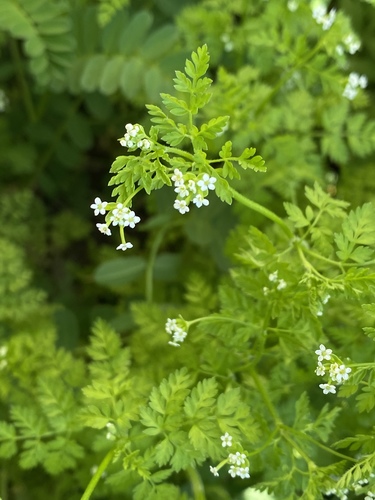
Heracleum wallichii
DC.
iNaturalist· cc-by-nc
(c) connk, some rights reserved (CC BY-NC)
iNaturalist· cc-by-nc
(c) connk, some rights reserved (CC BY-NC)
Summary
A compact perennial reaching 0.6 m tall with hermaphrodite, insect-pollinated, self-fertile flowers. Tolerates light sandy, medium loamy, and heavy clay soils with mildly acidic to basic pH. Grows in full shade, semi-shade, or open conditions, preferring moist soil.
Description
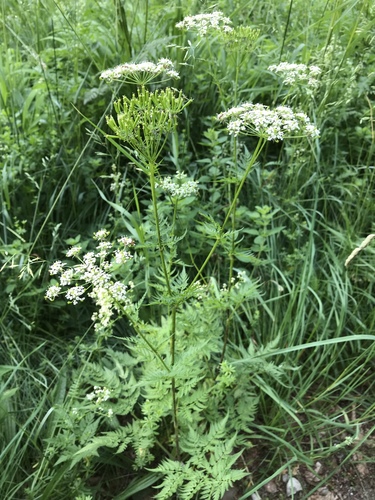
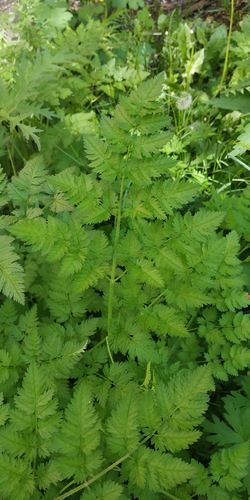
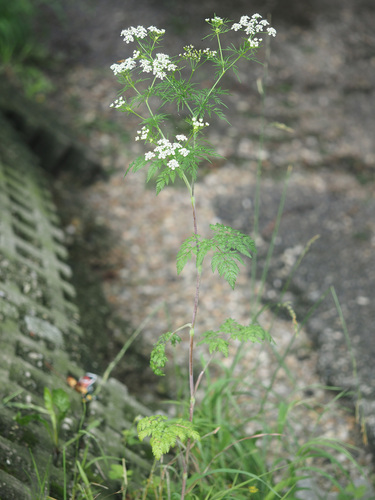
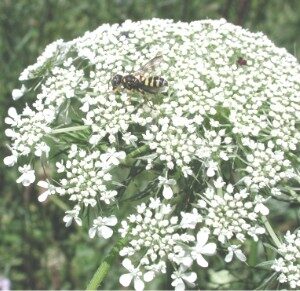
A herb or small shrub. It grows 60 cm tall and keeps growing from year to year. The leaves are divided 1-2 times with 3-5 leaflets. The leaflets are deeply 3 lobed. They are 2-7 cm long by 1-4 cm wide. The end lobe is the largest. It has small teeth along the edge. The flowers are in groups from a common base and 3-8 cm across. The fruit are oval and 7-10 mm long by 6-8 mm wide.
Edible Uses
None known.
Traditional Uses
The fruit are used in pickles. The flowers are also used in pickles. The seeds are used for chutney.
This uses section is brief — help expand it
Medicinal Uses
The root is used as an aphrodisiac and tonic.
Known Hazards
Although no specific mention has been seen for this species, many members of this genus contain furanocoumarins. These have carcinogenic, mutagenic and phototoxic properties. Skin contact with the sap of some members of this genus is said to cause photo-sensitivity and/or dermatitis in some people.
Distribution
It is a subtropical plant. In Sikkim it grows between 1,500-3,300 m above sea level.
Where It Grows
Asia, Bhutan, Himalayas, India, Nepal, Northeastern India, Sikkim,
Cultivation
We have almost no information on this species and do not know if it will be hardy in this country, though judging by its native range it should succeed outdoors in much of Britain. The following notes are based on the general needs of the genus. Succeeds in any ordinary garden soil, doing best in moist soils or deep woodland.
Propagation
Sow seed mid to late spring or early autumn directly in situ. Divide plants in autumn.
Other Uses
None known.
Synonyms
Also Known As
Chimphing, Ganaro, Gante, Phalut, Singalila, Tanglu
References (6)
- Dangol, D. R. et al, 2017, Wild Edible Plants in Nepal. Proceedings of 2nd National Workshop on CUAOGR, 2017.
- Gautam, R. S., et al, 2020, Wild Edible Fruits of Nepal. Int. J. Appl. Sci. Biotechnol. Vol 8(3): 289-304
- Ghimeray, A. K., Lamsal, K., et al, 2010, Wild edible angiospermic plants of the Illam Hills (Eastern Nepal) and their mode of use by local community. Korean J. Pl. Taxon. 40(1)
- Savita, et al, 2006, Studies on wild edible plants of ethnic people in east Sikkim. Asian J. of Bio Sci. (2006) Vol. 1 No. 2 : 117-125
- Sundriyal, M., et al, 1998, Wild edibles and other useful plants from the Sikkim Himalaya, India. Oecologia Montana 7:43-54
Show all 6 references Hide references
- Sundriyal, M., et al, 2004, Dietary Use of Wild Plant Resources in the Sikkim Himalaya, India. Economic Botany 58(4) pp 626-638