Sium latifolium
L.
Water parsnip, Broadleaf Water Parsnip
iNaturalist· cc-by-nc-nd
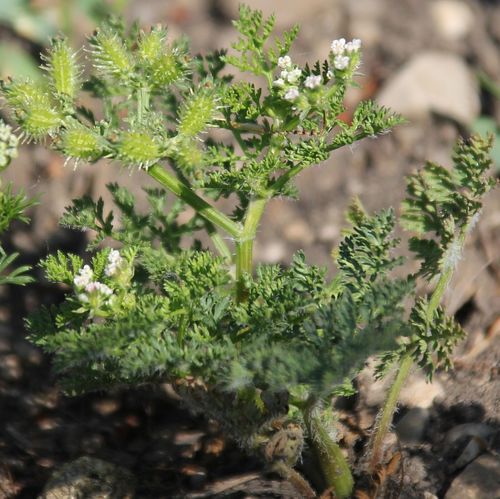
(c) Natural England, some rights reserved (CC BY-NC-ND)
iNaturalist· cc-by-nc
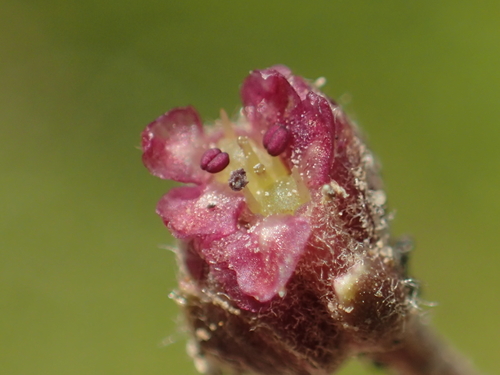
(c) Katerina Kashirina, some rights reserved (CC BY-NC)
iNaturalist· cc-by
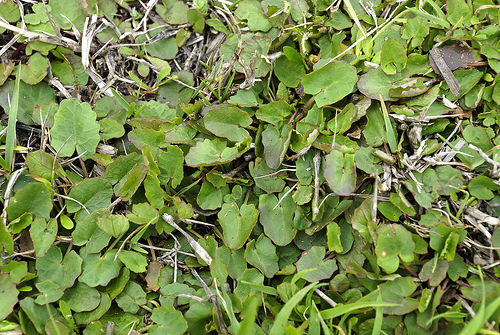
(c) Paul Roots, some rights reserved (CC BY), uploaded by Paul Roots
Summary
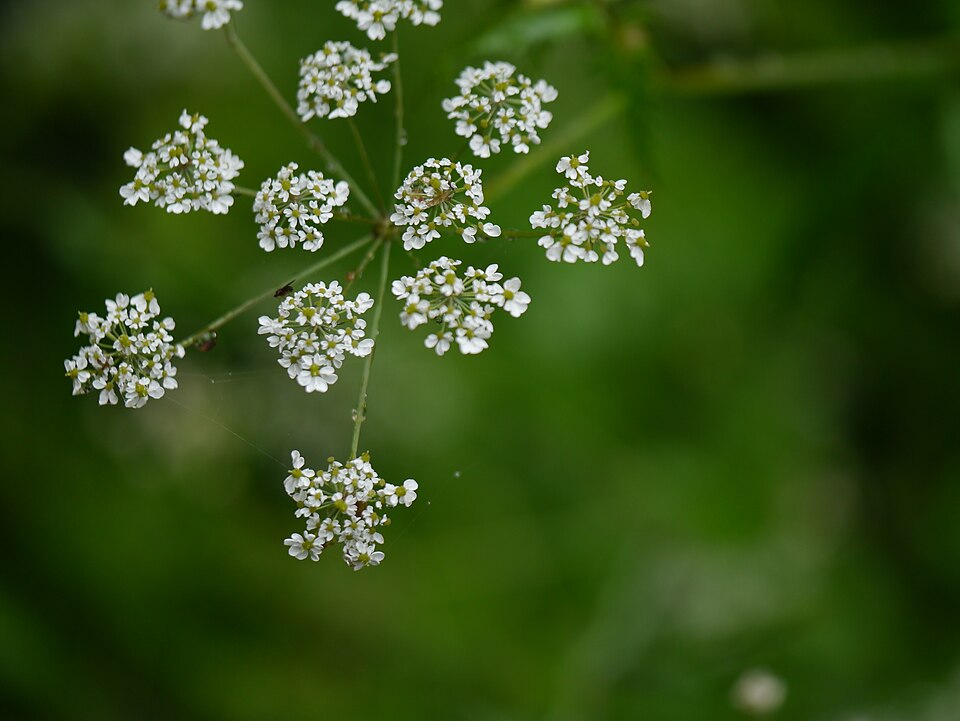
Source: WikipediaSium latifolium is a species of flowering plant in the family Apiaceae known by the common names great water-parsnip, greater water-parsnip, and wideleaf waterparsnip. It is native to much of Europe, Kazakhstan, and Siberia. This plant grows in wet habitat such as swamps and lakeshores, sometimes in the water. It is a perennial herb with a hollow, grooved stem up to 2 meters tall. The herbage is green and hairless. The leaves are up to 30 centimeters long with blades borne on hollow petioles that clasp the stem at their bases. The inflorescence is an umbel of white flowers. When eaten by dairy cows, the plant tends to imbue their milk with an unpleasant taste.
Description
A herb which keeps growing from year to year. It lies along the ground. It forms roots where the nodes are in contact with soil or water. It grows up to 1 m tall. The stems are hollow. They are 3 cm across. There can be leaves under the water but most are above and divided. They are 20 cm long with 2-12 pairs of leaflets without stalks. The lowest pair of leaflets are 5 cm long by 3 cm wide and each pair along the leaf get shorter. The end leaflet has several lobes. The flowers are in compound groups on equal length stalks. The petals are white.
Edible Uses
Leaves can be eaten cooked. Some caution is advised regarding toxicity.
Traditional Uses
CAUTION:
This uses section is brief — help expand it
Medicinal Uses
None known
Known Hazards
Some caution is advised regarding toxicity.
Distribution
It is a temperate plant. It grows along creek banks and near water and drains.
Where It Grows
Asia, Australia, Britain, Central Asia, China, Europe, Italy, Kazakhstan, Mediterranean, North America, Norway, Russia, Scandinavia, USA,
Cultivation
Prefers a light, rich, moisture retentive soil in full sun. A plant of wet ground and shallow water, it grows best in about 20cm of water.
Propagation
Seed - sow late winter to early spring in a cold frame. Germination can be slow. Prick seedlings into individual pots when large enough to handle and plant out in summer if sufficiently developed; otherwise overwinter in a cold frame and plant out the following spring. Division in early spring just before new growth begins, using the side roots. Larger divisions can go directly into permanent positions; smaller divisions are best potted up and grown on in a lightly shaded cold frame until well established before planting out in summer.
Other Uses
An essential oil is obtained from the seed. Scented plant.
References (5)
- Hedrick, U.P., 1919, (Ed.), Sturtevant's edible plants of the world. p 609
- Hibbert, M., 2002, The Aussie Plant Finder 2002, Florilegium. p 291
- http://nordicfood lab/org/blog/2102/9/wild-edible-plants-an-overview
- Plants for a Future database, The Field, Penpol, Lostwithiel, Cornwall, PL22 0NG, UK. http://www.scs.leeds.ac.uk/pfaf/
- Sainty, G.R. & Jacobs, S.W.L., 1981, Waterplants of New South Wales. Water Resources Commission. NSW p 61