Sida rhombifolia
L.
Common Sida, Arrowleaf sida
iNaturalist· cc0
no rights reserved, uploaded by 葉子
iNaturalist· cc-by-sa
(c) Douglas Goldman, some rights reserved (CC BY-SA)
iNaturalist· cc-by-sa
(c) Douglas Goldman, some rights reserved (CC BY-SA)
Summary
Source: WikipediaSida rhombifolia, commonly known as arrowleaf sida, is a perennial or sometimes annual plant in the Family Malvaceae, native to the Old World tropics and subtropics. Other common names include rhombus-leaved sida, Paddy's lucerne, jelly leaf, and also somewhat confusingly as Cuban jute, Queensland-hemp, and Indian hemp (although S. rhombifolia is not closely related to either jute or hemp). Synonyms include Malva rhombifolia. It is used in Ayurvedic medicine, where it is known as kurumthotti.
Description
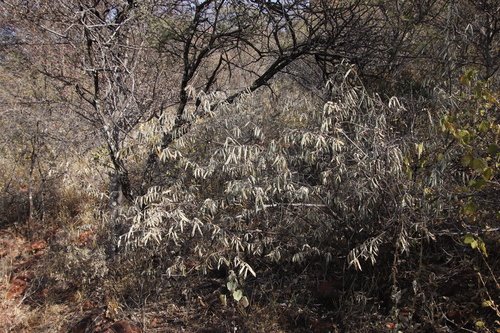
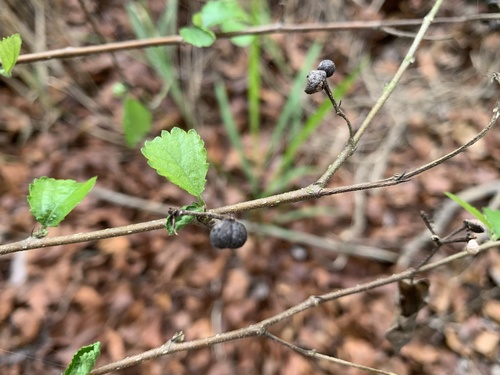
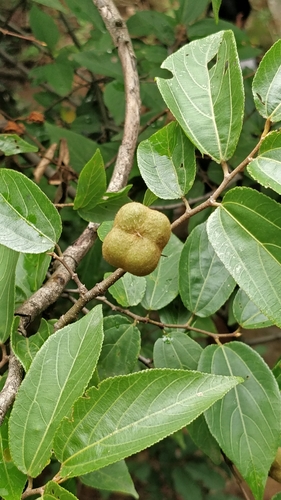
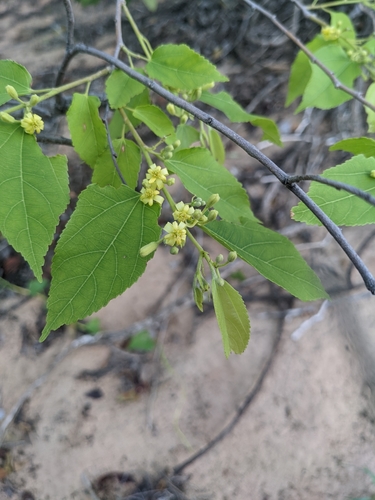
A herb or small shrub. It grows 1-1.5 m tall. It is very hairy. It has many branches. The leaf stalk is 3-5 mm long. The leaf blade is sword shaped and 2.2-4.5 cm long by 0.6-2 cm wide. The flowers occur singly in the axils of leaves. They are yellow and about 1 cm across. The fruit is half round and 6-7 mm across.
Edible Uses
The leaves can be brewed into a tea or cooked and eaten as a vegetable. They contain around 7.4% protein.
Traditional Uses
The leaves are used to make a tea drink. The leaves are eaten as a vegetable. The leaves are also chewed with betel nut.
This uses section is brief — help expand it
Medicinal Uses
A decoction of the whole plant is used to treat fevers, and a paste of the plant addresses indigestion. The plant is also applied as a poultice for headaches, boils, cramps, rheumatism, toothache, chapped lips, and pimples. Ground and mixed with soft grease and sugar, it forms a poultice that softens abscesses and draws out pus. The leaves are diuretic, and an infusion of them is used to treat dysentery. Leaf juice mixed with vinegar serves as an anti-inflammatory and digestive remedy, while a decoction of the leaves is used to bathe wounds. Leaves applied directly to the head can relieve headache. The yellow flowers are eaten with wild ginger to ease labour. The root is scraped into sea water and the mixture drunk to treat diarrhoea, dysentery, and abdominal upsets, and a paste of the root is applied to boils. The plant contains cryptolepine, ephedrine, and vasicine.
Distribution
A tropical plant. It grows along roadsides. It can grow in arid places. It grows up to 2,000 m above sea level. In Sichuan and Yunnan.
Where It Grows
Africa, Amazon, American Samoa, Andes, Argentina, Asia, Australia, Azores, Bahamas, Bangladesh, Belize, Benin, Bhutan, Bolivia, Botswana, Brazil, Burkina Faso, Burundi, Cambodia, Cameroon, Canary Islands, Cape Verde, Caribbean, Central Africa, Central African Republic, CAR, Central America*, Chile, China, Colombia, Congo DR, Cook Islands, Costa Rica, Cuba, Dominica, Dominican Republic, East Africa, East Timor, Easter Island, Ecuador, El Salvador, Equatorial Guinea, Eswatini, Europe, Fiji, French Guiana, Gabon, Gambia, Ghana, Guadeloupe, Guam, Guianas, Guinea, Guinée, Guinea-Bissau, Guyana, Haiti, Hawaii, Himalayas, Honduras, India, Indochina, Indonesia, Japan, Jamacia*, Kenya, Kiribati, Korea, Laos, Lesser Antilles, Liberia, Madagascar, Malawi, Malaysia, Maldives, Mali, Marquesas, Mauritius, Mexico*, Micronesia, Middle East, Mozambique, Myanmar, Nauru, Nepal, New Caledonia, Nicaragua, Niger, Nigeria, Niue, Norfolk Island, North America, Oman, Pacific, Palau, Panama, Papua New Guinea, PNG, Paraguay, Peru, Philippines, Puerto Rico, Rotuma, Rwanda, Samoa, Sao Tome and Principe, Saudi Arabia, SE Asia, Seychelles, Sierra Leone, Solomon Islands, South Africa, Southern Africa, South America*, Spain, Sri Lanka, St Helena, Suriname, Swaziland, Taiwan, Tanzania, Thailand, Timor-Leste, Togo, Tonga, Trinidad-Tobago, Tuvalu, Uganda, Uruguay, USA, Vanuatu, Venezuela, Vietnam, Wallis and Futuna, West Africa, West Indies*, Yemen, Zambia, Zimbabwe,
Cultivation
Grows wild in a range of soil types, from fertile to degraded condition. The awned seeds are spread by adhering to clothing and livestock, in mud on vehicles, and as contaminants in hay and seed crops. The plant has become established in habitats through much of the tropics and has been classified as 'Invasive' in many areas. This species is usually confined to waste ground, such as roadsides and rocky areas, stock camps or rabbit warrens, but can be competitive in pasture, because of its unpalatability to livestock.
Propagation
Seed
Other Uses
A fine, strong, lustrous white fibre obtained from the bark is used to make ropes and twine. It is easily extracted, and experiments have shown that a cord 12.5 mm in circumference can sustain a weight of 180 kilos. The stems are gathered in the morning, tied into bundles, and used as brooms. This plant is also noted for carbon farming applications.
Other Information
It is cultivated.
Notes
There are about 100 Sida species. It is used in medicine.
Synonyms
Also Known As
Afata, Arrowleaf sida, Bai banhbo, Bai bei huang hua ren, Barela, Bhiunli, Big Jack, Broomjute sida, Bunga padang, Chilequitiqui, Cosa cosa, Crementina, Delelmukula, Dewi, Escoba, Escobillo, Guanxuma, Guaxuma, Hihara, Japul tum, Jerun, Kanshunshu, Kanteang bay sa nhi, Kat mawn, Katsi-ne, Label-baba, Lemak ketam, Ligelegele, Maa dhiggaa, Mautofu, Mundundu, Ntalala, Otok-otok, Paddy's lucerne, Palo morado, Perdu sapu, Quebe, Sahadev, Seleguri, Sida daun lancip, Sidaguri, Taaiman, Tapak leman, Teaweed, Uvivane, Wakhahaa, Willu
References (54)
- Acipa, A. et al, 2013, Nutritional Profile of some Selected Food Plants of Otwal and Ngai Counties, Oyam District, Northern Uganda. African Journal or Food, Agriculture, Nutrition and Development. 13(2)
- Ambasta, S.P. (Ed.), 2000, The Useful Plants of India. CSIR India. p 572
- Bodkin, F., 1991, Encyclopedia Botanica. Cornstalk publishing, p 929
- Borrell, O.W., 1989, An Annotated Checklist of the Flora of Kairiru Island, New Guinea. Marcellin College, Victoria Australia. p 97
- Cabalion, P. and Morat, P., 1983, Introduction le vegetation, la flore et aux noms vernaculaires de l'ile de Pentcoste (Vanuatu), In: Journal d'agriculture traditionnelle et de botanique appliquee JATBA Vol. 30, 3-4
Show all 54 references Hide references
- Cooper, W. and Cooper, W., 2004, Fruits of the Australian Tropical Rainforest. Nokomis Editions, Victoria, Australia. p 280
- Cowie, I, 2006, A Survey of Flora and vegetation of the proposed Jaco-Tutuala-Lore National Park. Timor-Lests (East Timor) www.territorystories.nt/gov.au p 50
- Dansi, A., et al, 2008, Traditional leafy vegetables and their use in the Benin Republic. Genet Resour Crop Evol (2008) 55:1239–1256
- Diaz-Betancourt, M., et al, 1999, Weeds as a future source for human consumption. Rev. Biol. Trop. 47(3):329-338
- Facciola, S., 1998, Cornucopia 2: a Source Book of Edible Plants. Kampong Publications, p 148
- Flora of Australia Volume 49, Oceanic Islands 1, Australian Government Publishing Service, Canberra. (1994) p 113
- Franklin, J., Keppel, G., & Whistler, W., 2008, The vegetation and flora of Lakeba, Nayau and Aiwa Islands, Central Lau Group, Fiji. Micronesica 40(1/2): 169–225, 2008
- Henning, B. M., 2014, The Diversity of Conservation: Exploring Narratives, Relationships and Ecosystem Services in Melanesian Market-based Biodiversity Conservation. Ph D dissertation, Uni of Minnesota. p 213
- Henty, E.E., & Pritchard, G.S., 1973, Weeds of New Guinea and their control. Botany Bulletin No 7, Division of Botany, Lae, PNG. p 126
- Henty, E.E., 1980, Harmful Plants in Papua New Guinea. Botany Bulletin No 12. Division Botany, Lae, Papua New Guinea. p 98, 99
- High, C. & Shackleton, C. M., 2000, The comparative value of wild and domestic plants in home gardens of a South African rural village. Agroforestry Systems 48: 141–156, 2000
- Hussey, B.M.J., Keighery, G.J., Cousens, R.D., Dodd, J., Lloyd, S.G., 1997, Western Weeds. A guide to the weeds of Western Australia. Plant Protection Society of Western Australia. p 176
- Kepe, T., 2008, Social Dynamics of the Value of Wild Edible Leaves (Imifino) in a South African Rural Area. Ecology of Food and Nutrition, 47:531-558
- Kermath, B. M., et al, 2014, Food Plants in the Americas: A survey of the domesticated, cultivated and wild plants used for Human food in North, Central and South America and the Caribbean. On line draft. p 801
- Kinupp, V. F., 2007, Plantas alimenticias nao-convencionais da regiao metropolitana de Porto Alegre, RS, Brazil p 81
- Kumar, R. & Saikia, P., 2020, Wild edible plants of Jharkhand and their utilitarian perspectives. Indian Journal of Traditional Knowledge Vol 19 (2), April 2020, pp 237-250
- Latham, P., 2004, Useful Plants of Bas-Congo province. Salvation Army & DFID p 256
- Lazarides, M. & Hince, B., 1993, Handbook of Economic Plants of Australia, CSIRO. p 219
- Liefting, A., et al, Samoan plant names. http://en.wikipedia.org
- Magwede, K., van Wyk, B.-E., & van Wyk, A. E., 2019, An inventory of Vhavenḓa useful plants. South African Journal of Botany 122 (2019) 57–89
- Martin, F.W. & Ruberte, R.M., 1979, Edible Leaves of the Tropics. Antillian College Press, Mayaguez, Puerto Rico. p 72, 204
- Mutie, F. M., et al, 2023, Important Medicinal and Food Taxa (Orders and Families) in Kenya, Based on Three Quantitative Approaches. Plants 2023, 12, 1145
- Paczkowska, G. & Chapman, A.R., 2000, The Western Australian Flora. A Descriptive Catalogue. Western Australian Herbarium. p 293
- Peekel, P.G., 1984, (Translation E.E.Henty), Flora of the Bismarck Archipelago for Naturalists, Division of Botany, Lae, PNG. p 361, 358
- Pham-Hoang Ho, 1999, An Illustrated Flora of Vietnam. Nha Xuat Ban Tre. p 517
- Phon, P., 2000, Plants used in Cambodia. © Pauline Dy Phon, Phnom Penh, Cambodia. p 560
- Plants of Haiti Smithsonian Institute http://botany.si.edu/antilles/West Indies
- Rashid, H. E., 1977, Geography of Bangladesh. Westview. p 320
- Recher, P, 2001, Fruit Spirit Botanical Gardens Plant Index. www.nrg.com.au/~recher/ seedlist.html p 7
- Royal Botanic Gardens, Kew (1999). Survey of Economic Plants for Arid and Semi-Arid Lands (SEPASAL) database. Published on the Internet; http://www.rbgkew.org.uk/ceb/sepasal/internet [Accessed 3rd May 2011]
- Ruiters-Welcome, A. K., 2019, Food plants of southern Africa. Ph.D. thesis. Univ. of Johannesburg p 77
- Shackleton, S. E., et al, 1998, Use and Trading of Wild Edible Herbs in the Central Lowveld Savanna Region, South Africa. Economic Botany, Vol. 52, No. 3, pp. 251-259
- Smith, A.C., 1981, Flora Vitiensis Nova, Lawaii, Kuai, Hawaii, Volume 2 p 437
- Sp. pl. 2:684. 1753
- Sujanapal, P., & Sankaran, K. V., 2016, Common Plants of Maldives. FAO & Kerala FRI, p 245
- Sukarya, D. G., (Ed.) 2013, 3,500 Plant Species of the Botanic Gardens of Indonesia. LIPI p 714
- Swaziland's Flora Database http://www.sntc.org.sz/flora
- Tang ya, Malvaceae. Flora of China. p
- Terashima, H., et al, 1992, Ethnobotany of the Lega in the Tropical Rainforest of Eastern Zaire (Congo): Part Two, Zone de Walikale, African Study Monographs, Suppl. 19:1-60
- Terra, G.J.A., 1973, Tropical Vegetables. Communication 54e Royal Tropical Institute, Amsterdam, p 73
- Thaman, R. R., 1987, Plants of Kiribati: A listing and analysis of vernacular names. Atoll Research Bulletin No. 296
- Thaman, R. R, 2016, The flora of Tuvalu. Atoll Research Bulletin No. 611. Smithsonian Institute p 99
- Torre, de la, L., et al, 2008, Enciclopedia de las Plantas Útiles del Ecuador. Herbario QCA. Pontificia Universidad Católica del Ecuador. p 416
- Welcome, A. K. & Van Wyk, B.-E., 2019, An inventory and analysis of the food plants of southern Africa. South African Journal of Botany 122 (2019) 136–179
- Wild edible plants of Himachal Pradesh
- World Checklist of Useful Plant Species 2020. Royal Botanic Gardens, Kew
- Yuncker, T.G., 1959, Plants of Tonga, Bernice P. Bishop Museum, Hawaii, Bulletin 220. p 182
- Zeven, A. C. & de West, J. M. J., 1982, Dictionary of cultivated plants and their regions of diversity. Wageningen. p 76
- Zizka, G., 1991, Flowering Plants of Easter Island. Palmarum Hortus Francofurtensis