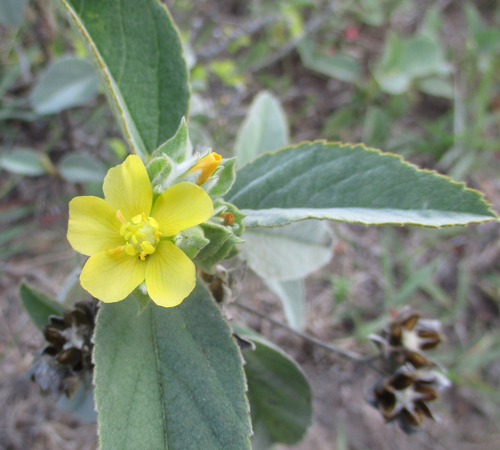
Lavatera cachemiriana
Cambess.
Lavatera
gbif· cc-by
Hazara University
gbif· cc0
Public Domain
gbif· cc0
Public Domain
Description
Lavatera cachemiriana is a PERENNIAL growing to 2.4 m (7ft) by 1 m (3ft 3in) at a fast rate. See above for USDA hardiness. It is hardy to UK zone 8 and is not frost tender. It is in flower from July to August, and the seeds ripen from August to September. The species is hermaphrodite (has both male and female organs) and is pollinated by Insects. Suitable for: light (sandy), medium (loamy) and heavy (clay) soils and prefers well-drained soil. Suitable pH: mildly acid, neutral and basic (mildly alkaline) soils. It cannot grow in the shade. It prefers dry or moist soil. The plant can tolerate maritime exposure.
Edible Uses
Young leaves - raw or cooked. A mild flavour, but they are tough and not very worthwhile. When cooked they have a somewhat slimy consistency. Flowers - raw. Rather bland, but an attractive garnish to a salad.
Medicinal Uses
Demulcent Pectoral Purgative. Demulcent, pectoral, purgative.
Distribution
E. Asia - Himalayas from Pakistan to Uttar Pradesh.
Where It Grows
TEMPERATE ASIA: Kyrgyzstan, Tajikistan, China (Xinjiang Uygur Zizhiqu) TROPICAL ASIA: India (Jammu and Kashmir), Nepal, Pakistan
Cultivation
Avery easily grown plant, succeeding in any ordinary garden soil in sun or partial shade. Prefers a light well-drained moderately fertile soil in full sun. A soil that is too rich encourages foliar growth at the expense of flowering. Tolerates maritime exposure. Plants are hardy to about -20°c. This species is considered by some botanists to be no more than a minor variant of L. thuringiaca.
Propagation
Seed - sow spring in a cold frame and only just cover the seed. Germination is usually quick and good. Prick out the seedlings into individual pots when they are large enough to handle and plant them out in early summer. Basal cuttings in spring. Cuttings of softwood in June/July.
Other Uses
FibreA strong fibre is obtained from the stems, it is used for making string, bags, paper etc.