Sida cordifolia
L.
Goat’s horns, Flannel weed, Heart-leaf sida
iNaturalist· cc0
no rights reserved, uploaded by 葉子
iNaturalist· cc-by-nd
(c) Derek de la Harpe, some rights reserved (CC BY-ND), uploaded by Derek de la Harpe
iNaturalist· cc0
no rights reserved, uploaded by 葉子
Summary
Source: WikipediaSida cordifolia (‘ilima, flannel weed, bala, country mallow or heart-leaf sida) is a perennial subshrub of the mallow family Malvaceae native to India. It has naturalized throughout the world, and is considered an invasive weed in Africa, Australia, the southern United States, Hawaiian Islands, New Guinea, and French Polynesia. The specific name, cordifolia, refers to the heart-shaped leaf.
Description
An erect woody shrub about 0.4 to 1 m high. It keeps growing from year to year. It is covered with short hairs mixed with long hairs. These make the plant feel soft. The leaf stalk is 1-2.5 cm long. The leaves are one after the other and heart shaped at the base. They are toothed at the edge and 1.5 to 4.5 cm long. The flowers are yellow and occur in the axils of the leaves. The fruit are about 6-8 mm across. They have 20 fine bristles on the top.
Edible Uses
The leaves are edible when cooked, traditionally prepared with alkali solution, dried fish, and eaten in curry. Flowers are also edible.
Traditional Uses
The leaves are edible cooked. They are cooked with alkali solution and dried fish and eaten in curry.
This uses section is brief — help expand it
Medicinal Uses
Sida cordifolia is used in Ayurvedic medicine (Sanskrit:-BALA). Known as "malva branca", it is a plant used in Brazilian folk medicine for the treatment of inflammation of the oral mucosa, blennorrhea, asthmatic bronchitis and nasal congestion, stomatitis, of asthma and nasal congestion and in many parts of Africa for various ailments, particularly for respiratory problems. It has been investigated as an anti-inflammatory, for preventing cell proliferation, and for encouraging liver re-growth. Because of its ephedrine content, it possesses psychostimulant properties, affecting the central nervous system and also the heart. The following alkaloids were reported from S. cordifolia growing in India: β-phenethylamine, ephedrine, pseudoephedrine, S-(+)-Nb-methyltryptophan methyl ester, hypaphorine, vasicinone, vasicinol, choline, and betaine. No tannin or glycosides have been identified from the plant. The roots and stems contain the alkaloid ephedrine, normally observed in the different varieties of the gymnosperm genus Ephedra. Recent analyses have revealed that ephedrine and pseudoephedrine constitute the major alkaloids from the aerial parts of the plant, which also show traces of sitosterol and palmitic, stearic and hexacosanoic acids. Two flavanones—5,7-dihydroxy-3-isoprenyl flavone and 5-hydroxy-3-isoprenyl flavone—and two phytosterols—β-sitosterol and stigmasterol—have been isolated from the plant. The analgesic alkaloid (5′-Hydroxymethyl-1′-(1,2,3,9-tetrahydro-pyrrolo [2,1-b] quinazolin-1-yl)-heptan-1-one) has also been found. Sterculic acid, malvalic acid, and coronaric acid have been isolated from the seed oil, along with other fatty acids.
Distribution
A tropical plant. They occur in open waste places and are common and widely distributed in the Philippines. It occurs in the tropics and subtropics. It grows on the Deccan in India. It grows in hot arid places with a marked dry season. It grows in places with an annual rainfall below 520 mm. It grows in dry sandy soils. It can grow in salty soils. It grows below 1,100 m above sea level. In Colombia it grows between 10-2,230 m above sea level. It can tolerate shade. It grows in savannah woodland and wet grass savannah. It can grow in arid places. In Sichuan and Yunnan.
Where It Grows
Africa, Angola, Argentina, Asia, Australia, Bangladesh, Benin, Bhutan, Bolivia, Botswana, Brazil, Burkina Faso, Burundi, Cameroon, Central Africa, Central African Republic, CAR, Central America, Chad, China, Colombia, Congo, Côte d'Ivoire, Cuba, Dominica, Dominican Republic, East Africa, Ecuador, Eswatini, French Guiana, Ghana, Guianas, Guinea, Guinée, Guinea-Bissau, Guyana, Haiti, Hawaii, Himalayas, Honduras, India, Indochina, Indonesia, Ivory Coast, Jamaica, Kenya, Laos, Liberia, Madagascar, Malawi, Malaysia, Mali, Martinique, Mauritius, Middle East, Mozambique, Myanmar, Namibia, Nepal, New Caledonia, Niger, Nigeria, Northeastern India, Pacific, Pakistan, Papua New Guinea, PNG, Paraguay, Peru, Philippines, Puerto Rico, Reunion, Rwanda, Sao Tome and Principe, SE Asia, Senegal, Seychelles, Sierra Leone, Socotra, Somalia, South Africa, Southern Africa, South America, Sri Lanka, St Helena, Sudan, Suriname, Swaziland, Taiwan, Tanzania, Thailand, Togo, Tonga, Trinidad & Tobago, Uganda, Uruguay, USA, Venezuela, Vietnam, West Africa, West Indies, Yemen, Zambia, Zimbabwe,
Cultivation
Prefers a lighter, sandy soil in a sunny position. The plant has become a weed in many areas and in some areas, such as Australia, it is a declared noxious weed. The seeds have awned mericarps and are spread by them adhering to clothing and livestock, in mud on vehicles, and as contaminants in hay and seed crops.
Other Uses
A good quality fibre is obtained from the plant. It can be used like jute (Corchorus spp.). An extract of the whole plant is used as an ingredient in commercial cosmetic preparations as a skin conditioner. An extract of the root is used as an ingredient in commercial cosmetic preparations as a skin conditioner.
Notes
There are about 100 Sida species. It contains ephedrine and is used in medicine.
Nutrition
| Part | Moisture | kJ | kcal | Protein | Vit A | Vit C | Iron | Zinc |
|---|---|---|---|---|---|---|---|---|
| Leaves | 6.6 | 1296 | 310 | 24.2 | — | — | 79.8 | — |
Synonyms
Also Known As
Apalakolong, Bai trang, Bal, Bala, Balu, Bejangnei, Country-mallow, Egweret, Gulipas, Katsi-ne, Pokok kelulut puteh, Xin ye huang hua ren
References (31)
- Ambasta, S.P. (Ed.), 2000, The Useful Plants of India. CSIR India. p 573
- Ara, R. I. T., 2015, Leafy Vegetables in Bangladesh. Photon eBooks. p 107
- Borrell, O.W., 1989, An Annotated Checklist of the Flora of Kairiru Island, New Guinea. Marcellin College, Victoria Australia. p 97
- Burkill, I.H., 1966, A Dictionary of the Economic Products of the Malay Peninsula. Ministry of Agriculture and Cooperatives, Kuala Lumpur, Malaysia. Vol 2 (I-Z) p 2060
- Cooper, W. and Cooper, W., 2004, Fruits of the Australian Tropical Rainforest. Nokomis Editions, Victoria, Australia. p 280
Show all 31 references Hide references
- Ethnobotany of Karbis. Chapter 4 in p 101
- Fowler, D. G., 2007, Zambian Plants: Their Vernacular Names and Uses. Kew. p 46
- Goode, P., 1989, Edible Plants of Uganda. FAO p 36
- Henty, E.E., & Pritchard, G.S., 1973, Weeds of New Guinea and their control. Botany Bulletin No 7, Division of Botany, Lae, PNG. p 125
- Kenneally, K.E., Edinger, D. C., and Willing T., 1996, Broome and Beyond, Plants and People of the Dampier Peninsula, Kimberley, Western Australia. Department of Conservation and Land Management. p 124
- Kumar, R. & Saikia, P., 2020, Wild edible plants of Jharkhand and their utilitarian perspectives. Indian Journal of Traditional Knowledge Vol 19 (2), April 2020, pp 237-250
- Lamp, C & Collet F., 1989, Field Guide to Weeds in Australia. Inkata Press. p 266
- Lazarides, M. & Hince, B., 1993, Handbook of Economic Plants of Australia, CSIRO. p 218
- Monsalud, M.R., Tongacan, A.L., Lopez, F.R., & Lagrimas, M.Q., 1966, Edible Wild Plants in Philippine Forests. Philippine Journal of Science. p 491
- Paczkowska, G. & Chapman, A.R., 2000, The Western Australian Flora. A Descriptive Catalogue. Western Australian Herbarium. p 292
- Pham-Hoang Ho, 1999, An Illustrated Flora of Vietnam. Nha Xuat Ban Tre. p 518
- Pickering, H., & Roe, E., 2009, Wild Flowers of the Victoria Falls Area. Helen Pickering, London. p 82
- Plants of Haiti Smithsonian Institute http://botany.si.edu/antilles/West Indies
- Roodt, V., 1998, Common Wild Flowers of the Okavango Delta. Medicinal Uses and Nutritional value. The Shell Field Guide Series: Part 2. Shell Botswana. p 117
- Royal Botanic Gardens, Kew (1999). Survey of Economic Plants for Arid and Semi-Arid Lands (SEPASAL) database. Published on the Internet; http://www.rbgkew.org.uk/ceb/sepasal/internet [Accessed 3rd May 2011]
- Ruiters-Welcome, A. K., 2019, Food plants of southern Africa. Ph.D. thesis. Univ. of Johannesburg p 77
- Sp. pl. 2:684. 1753
- Swaziland's Flora Database http://www.sntc.org.sz/flora
- Tang ya, Malvaceae. Flora of China. p
- Teron, R. & Borthakur, S. K., 2016, Edible Medicines: An Exploration of Medicinal Plants in Dietary Practices of Karbi Tribal Population of Assam, Northeast India. In Mondal, N. & Sen, J.(Ed.) Nutrition and Health among tribal populations of India. p 152
- Vernon, R., 1983, Field Guide to Important Arable Weeds of Zambia. Dept of Agriculture, Chilanga, Zambia. p 54
- WATT,
- Wehmeyer, A. S, 1986, Edible Wild Plants of Southern Africa. Data on the Nutrient Contents of over 300 species
- Welcome, A. K. & Van Wyk, B.-E., 2019, An inventory and analysis of the food plants of southern Africa. South African Journal of Botany 122 (2019) 136–179
- Wheeler, J.R.(ed.), 1992, Flora of the Kimberley Region. CALM, Western Australian Herbarium, p 227
- Yuncker, T.G., 1959, Plants of Tonga, Bernice P. Bishop Museum, Hawaii, Bulletin 220. p 81
More from Malvaceae
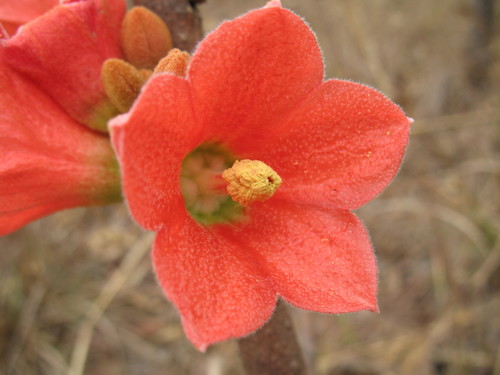
Brachychiton megaphyllus
Red flowered kurrajong
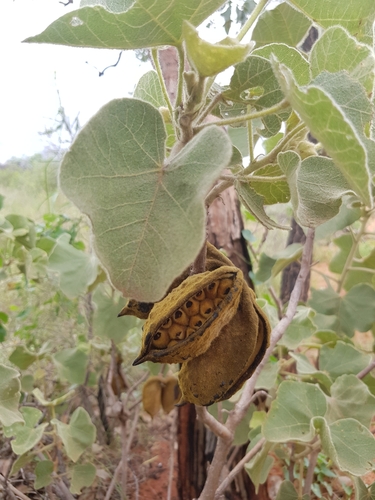
Brachychiton multicaulis
Wild curry kurrajong
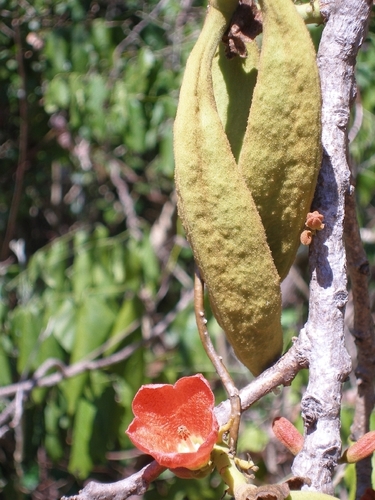
Brachychiton paradoxus
Red Kurrajong, Red-flowered Kurrajong
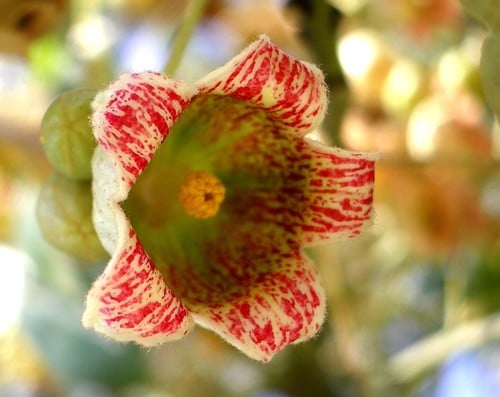
Brachychiton populneus
Black kurrajong
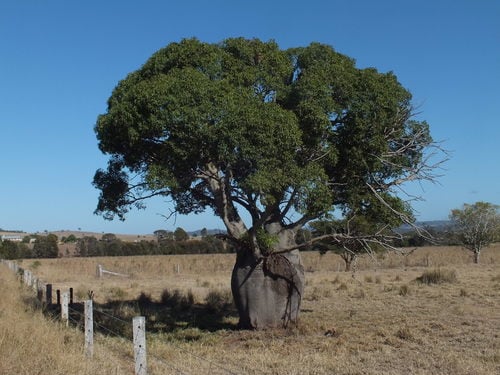
Brachychiton rupestris
Bottle tree, Narrow-leaved bottle tree, Queensland Bottle Tree, Barrel tree
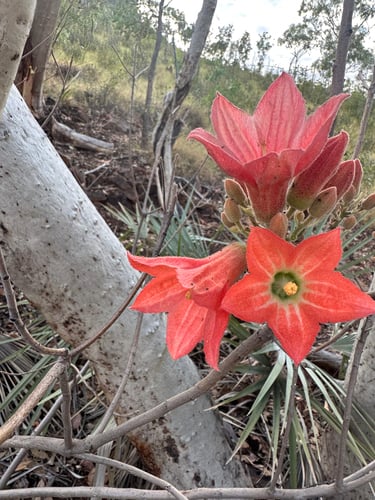
Brachychiton spectabilis