Scolopia zeyheri
(Nees) Szyszyl.
Thorn pear
iNaturalist· cc-by-nc
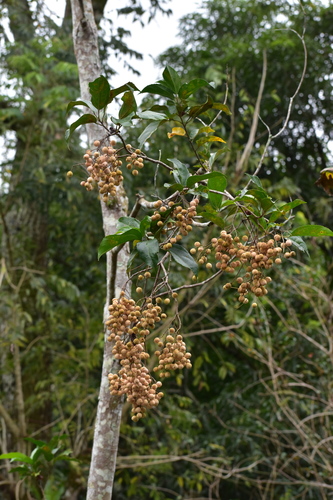
(c) Adriaan Grobler, some rights reserved (CC BY-NC), uploaded by Adriaan Grobler
iNaturalist· cc-by
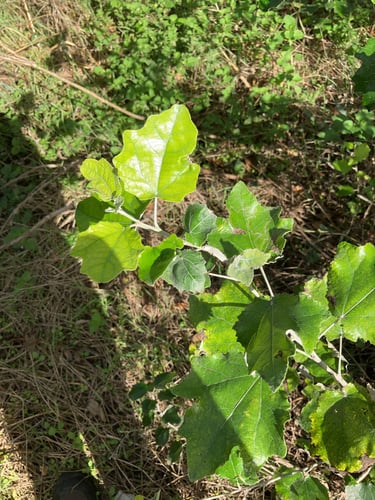
(c) Dave Richardson, some rights reserved (CC BY), uploaded by Dave Richardson
iNaturalist· cc-by-nc
(c) Mark Heystek, some rights reserved (CC BY-NC), uploaded by Mark Heystek
Summary
Source: WikipediaScolopia zeyheri is an evergreen, much-branched shrub or tree usually growing to about 13 –25 metres. Its named after Carl Zeyher, 1799 - 1858, a German naturalist.
Description
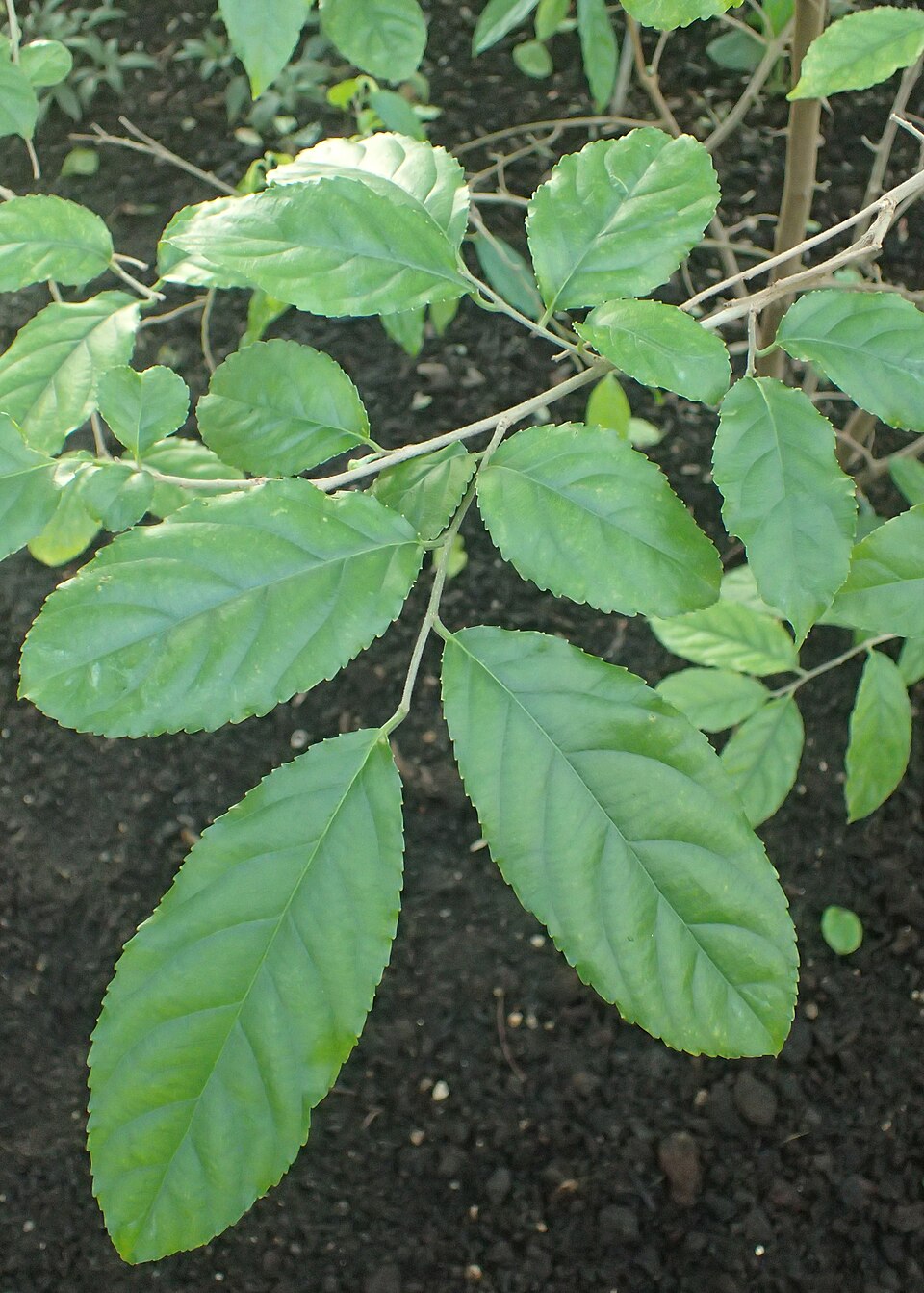
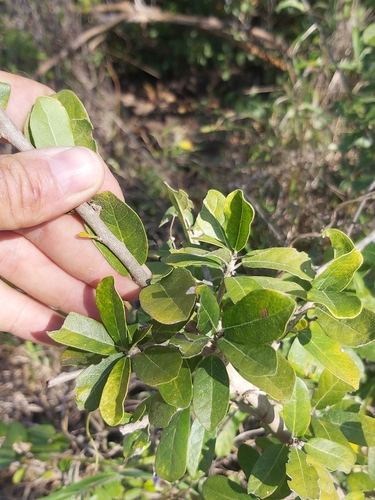
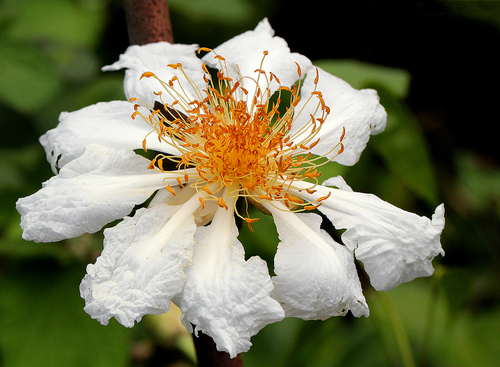
A spiny shrub or small tree. It can grow to 7 m tall. The bark is light grey and smooth. It becomes dark with age and rough and peeling in flakes. There are usually spines on the small branches. The leaves vary in shape. The can be sword shaped or round. They are 2-8 cm long by 1-3.5 cm wide. The are leathery and dark green above but paler underneath. The flowers are small and white or yellow. The fruit is almost round and a berry. It has a style at the tip. It is about 5-10 mm across.
Edible Uses
Fruit - raw. The fleshy fruit has a sweet flavour and is eaten as a snack. The rounded fleshy berries are 5 - 10mm in diameter, turning black when fully ripe.
Traditional Uses
The ripe fruit are fleshy and eaten raw. They are sweet.
This uses section is brief — help expand it
Distribution
A tropical plant. It grows from sea level to 2,400 m altitude in South Africa. It is on the edge of evergreen forest and in open woodland. It grows in rocky and sandy soil. It is often on termite mounds. It can grow in arid places.
Where It Grows
Africa, Angola, Botswana, Cameroon, Central Africa, East Africa, Eswatini, Ethiopia, Kenya, Malawi, Mozambique, Rwanda, South Africa, Southern Africa, Swaziland, Tanzania, Uganda, Zambia, Zimbabwe,
Cultivation
Plants are grown from seed.
Other Uses
The wood is heavy, hard and close-grained. It is used for wagon work, fellies, axles, spokes, tool handles, poles etc. The wood is used for fuel.
Production
Fruit are collected during the rainy season.
Notes
Also put in the Flacourtiaceae family.
Synonyms
Also Known As
Doringrooipeer, Kikongoo, Litungu, Mgogola, Mgola, Msona, Mtwampara, Mtwi-wa-mpaa, Muvhambanguvho, Mywampara, N'tudza, Xitsango
References (16)
- Glover et al, 1981,
- Grivetti, L. E., 1980, Agricultural development: present and potential role of edible wild plants. Part 2: Sub-Saharan Africa, Report to the Department of State Agency for International Development. p 44
- Jardin, C., 1970, List of Foods Used In Africa, FAO Nutrition Information Document Series No 2.p 161
- Magwede, K., van Wyk, B.-E., & van Wyk, A. E., 2019, An inventory of Vhavenḓa useful plants. South African Journal of Botany 122 (2019) 57–89
- Msuya, T. S., et al, 2010, Availability, Preference and Consumption of Indigenous Foods in the Eastern Arc Mountains, Tanzania, Ecology of Food and Nutrition, 49:3, 208-227
Show all 16 references Hide references
- Mutie, F. M., et al, 2023, Important Medicinal and Food Taxa (Orders and Families) in Kenya, Based on Three Quantitative Approaches. Plants 2023, 12, 1145
- Palgrave, K.C., 1996, Trees of Southern Africa. Struik Publishers. p 629
- Peters, C. R., O'Brien, E. M., and Drummond, R.B., 1992, Edible Wild plants of Sub-saharan Africa. Kew. p 114
- Royal Botanic Gardens, Kew (1999). Survey of Economic Plants for Arid and Semi-Arid Lands (SEPASAL) database. Published on the Internet; http://www.rbgkew.org.uk/ceb/sepasal/internet [Accessed 16th April 2011]
- Ruffo, C. K., Birnie, A. & Tengnas, B., 2002, Edible Wild Plants of Tanzania. RELMA p 596
- Ruiters-Welcome, A. K., 2019, Food plants of southern Africa. Ph.D. thesis. Univ. of Johannesburg p 99
- Swaziland's Flora Database http://www.sntc.org.sz/flora
- van Wyk, B, van Wyk, P, and van Wyk B., 2000, Photographic guide to Trees of Southern Africa. Briza. p 284
- Welcome, A. K. & Van Wyk, B.-E., 2019, An inventory and analysis of the food plants of southern Africa. South African Journal of Botany 122 (2019) 136–179
- White, F., Dowsett-Lemaire, F. and Chapman, J. D., 2001, Evergreen Forest Flora of Malawi. Kew. p 280
- World Checklist of Useful Plant Species 2020. Royal Botanic Gardens, Kew