Scolopia spinosa
(Roxb.) Warb.
White rukem tree
gbif· cc-by
Royal Botanic Gardens, Kew
gbif· cc-by
Royal Botanic Gardens, Kew
gbif· cc-by
Royal Botanic Gardens, Kew
Description
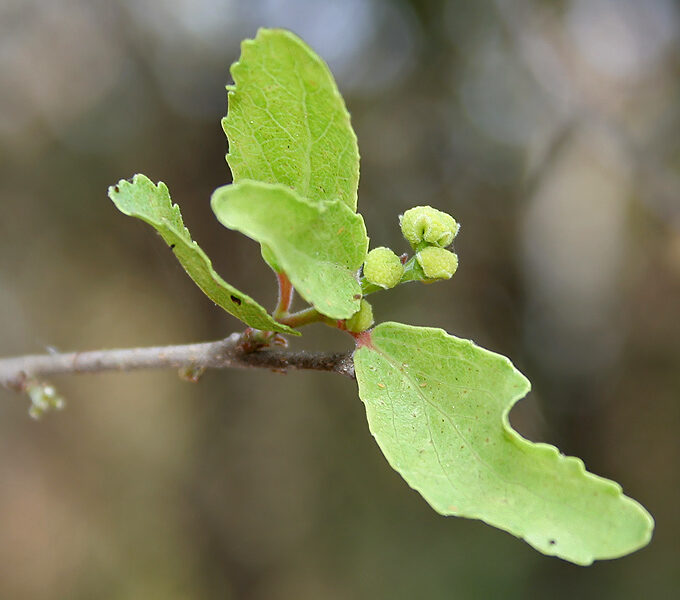
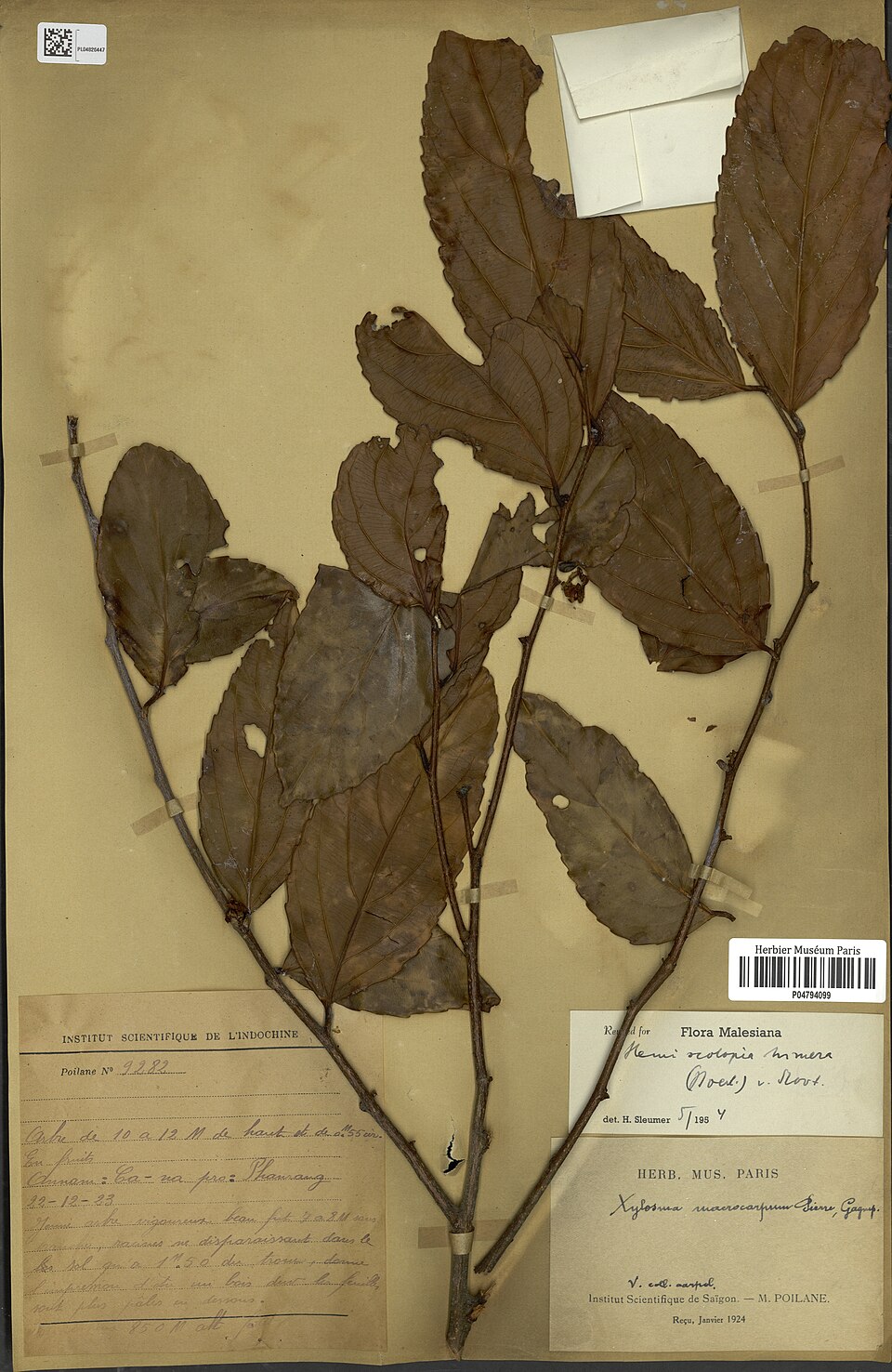
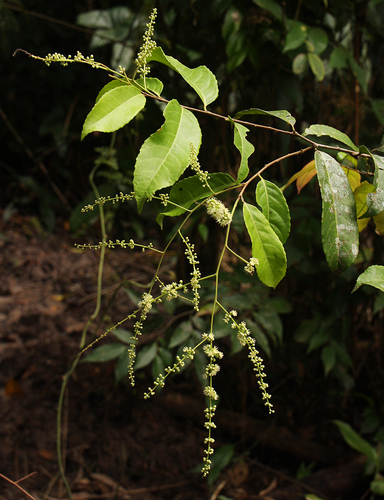
A tree. It grows to 10-15 m high. Occasionally it grows to 27 m high or can be a shrub 6 m tall. The trunk becomes grey, smooth and unarmed but young plants have branched spines. The leaves are broadly wedge shaped. They are rose-red coloured when young. They are 8-18 cm long by 3.5-8 cm wide. They have slight indentations around the edge. The flower cluster is 2-5 cm long with white flowers. The fruit is a berry 1.5-2.5 cm long with a small tip at the end. The fruit is green or purple. It contains 6 or up to 20 bitter seeds.
Edible Uses
The ripe fruit are eaten.
Traditional Uses
The ripe fruit are eaten.
This uses section is brief — help expand it
Distribution
A tropical plant. It grows in secondary rainforest often on limestone soils. It occurs up to 1,100 m altitude.
Where It Grows
Asia, Cambodia, India, Indochina, Indonesia, Laos, Malaysia, Myanmar, SE Asia, Thailand, Vietnam,
Cultivation
Plants can be grown from seeds.
Production
Flowers are produced throughout the year.
Notes
Also put in the Flacourtiaceae family.
Synonyms
Also Known As
Bom gai, Krakhob prei, Pohon rukem putih
References (6)
- Ambasta S.P. (Ed.), 2000, The Useful Plants of India. CSIR India. p 562
- Cengel, D. J. & Dany, C., (Eds), 2016, Integrating Forest Biodiversity Resource Management and Sustainable Community Livelihood Development in the Preah Vihear Protected Forest. International Tropical Timber Organization p 121
- Phon, P., 2000, Plants used in Cambodia. © Pauline Dy Phon, Phnom Penh, Cambodia. p 552
- Sleumer, H., 1954, Flacourtiaceae in Flora Malesiana, Ser 1 Vol 5(1) p10
- Sukarya, D. G., (Ed.) 2013, 3,500 Plant Species of the Botanic Gardens of Indonesia. LIPI p 502
Show all 6 references Hide references
- World Checklist of Useful Plant Species 2020. Royal Botanic Gardens, Kew