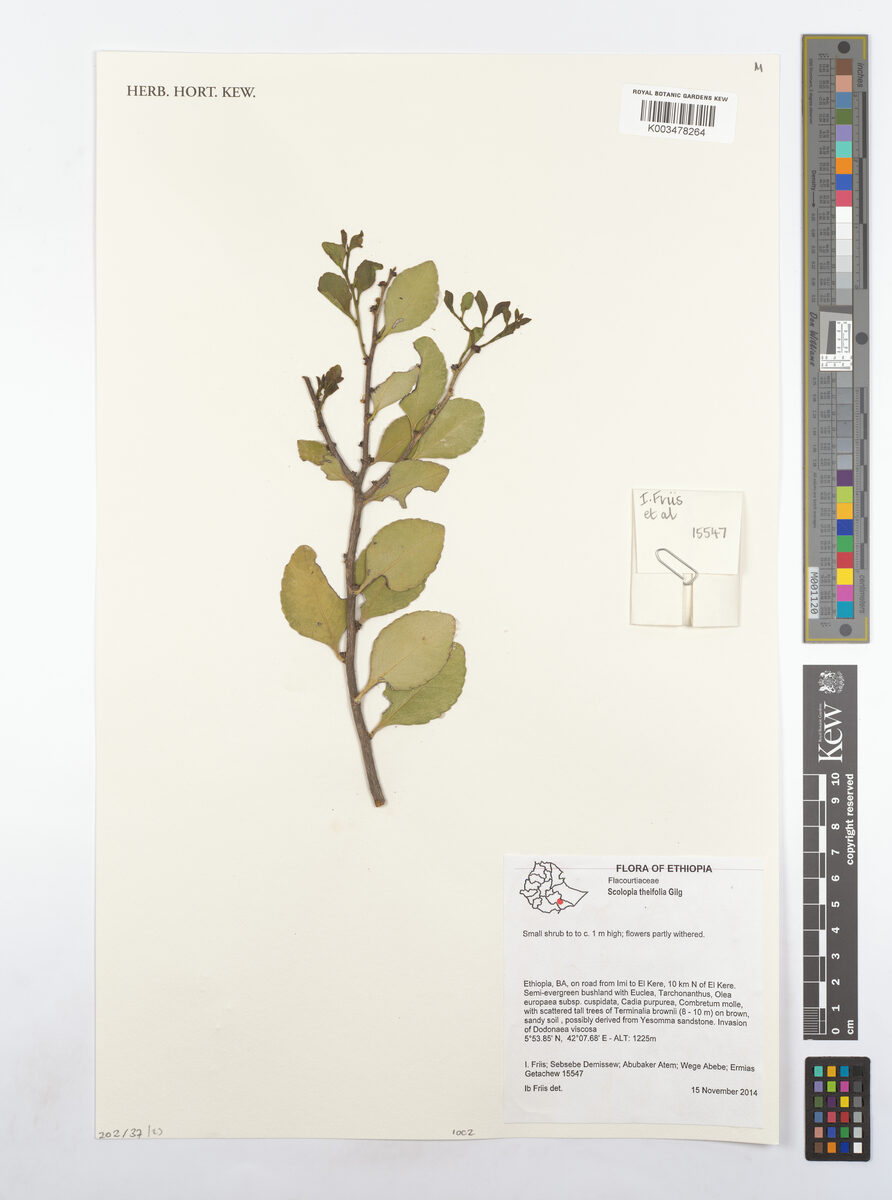
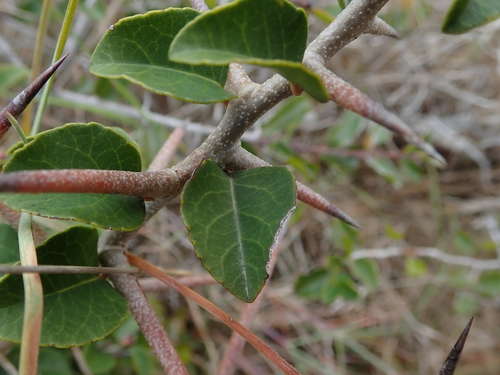
Scolopia rhamniphylla
Gilg.
gbif· cc-by
Herbarium of the University of Coimbra (COI)
gbif· cc-by-nc-sa
MBG
gbif· cc-by-nc-sa
MBG
Description
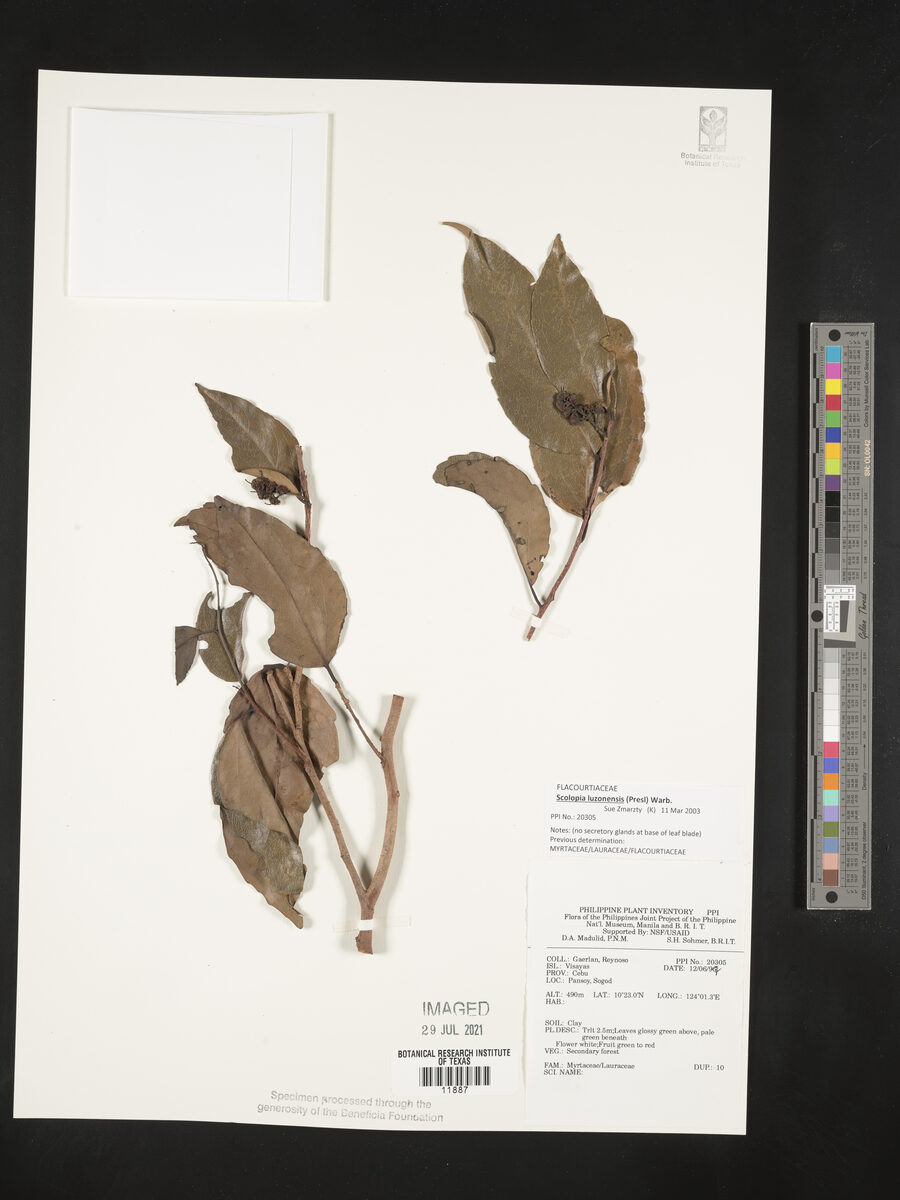
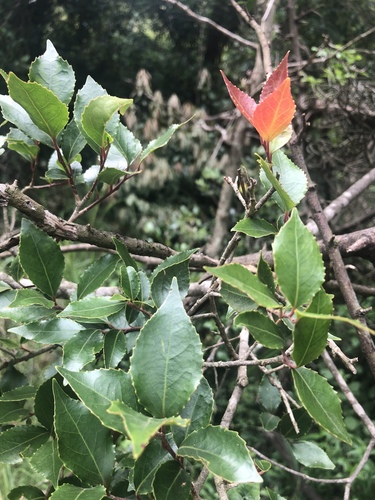
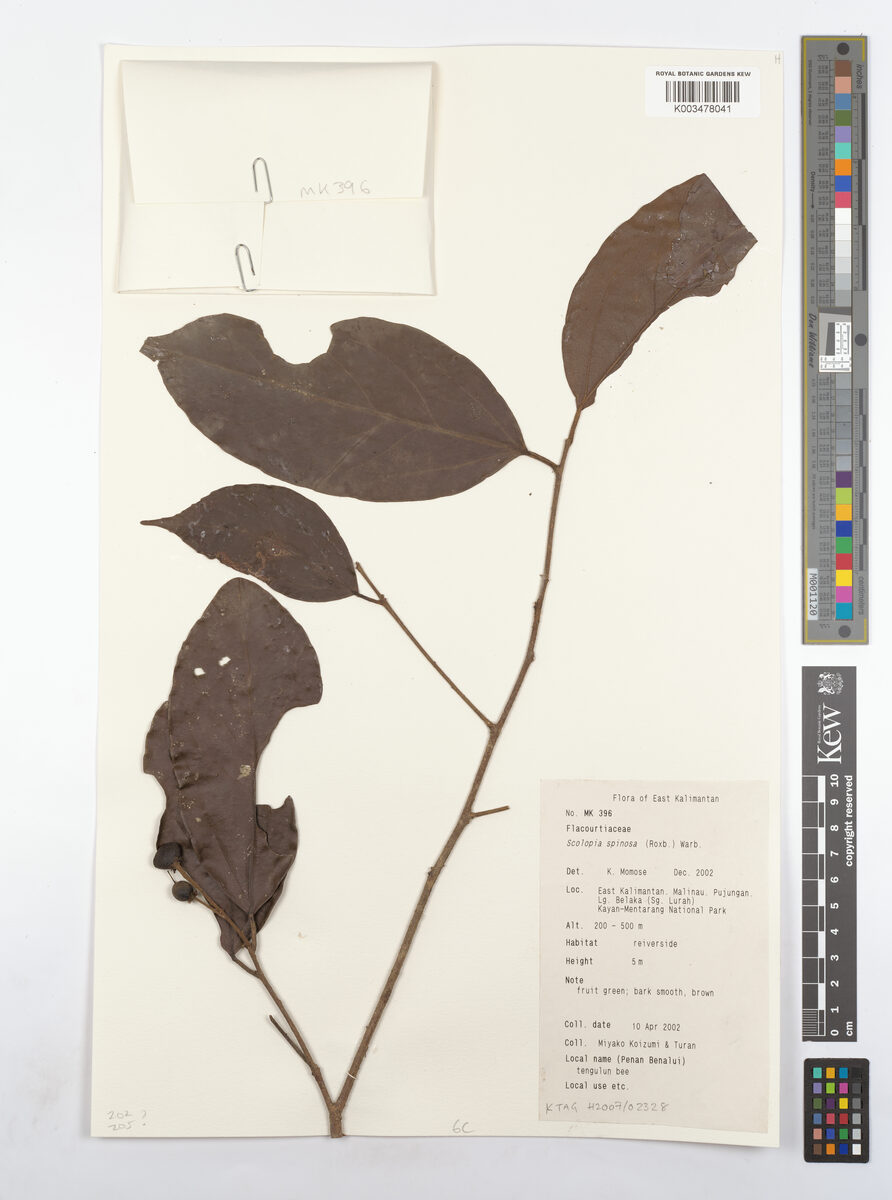
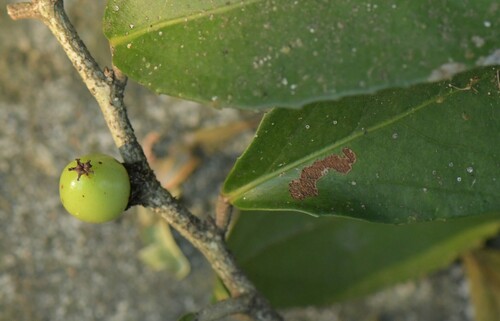
A shrub or small tree. It grows 12 m tall and is branched. The bark is pale brown to grey. The leaves are simple and alternate. The leaves are small and wedge shaped at the base and tapering to the tip. There are teeth along the edge. They are slightly hairy on the veins. The fruit is a flattened fleshy berry. It is 7 mm across.
Edible Uses
Fruit - raw. The fleshy fruit is eaten as a snack, especially by children and travellers. The fruit is a small, round to oval berry, ripening to pink-purple-black and about 6 - 7mm in diameter.
Traditional Uses
The ripe fruit are eaten raw as a snack.
This uses section is brief — help expand it
Distribution
It is a tropical plant. It grows near rivers and in mountain forests. In Tanzania it grows between 1,000-2,000 m above sea level.
Where It Grows
Africa, Angola, Cameroon, Central Africa, Congo, East Africa, Kenya, Rwanda, Tanzania, Uganda, West Africa,
Cultivation
Plants can be grown by seeds.
Other Uses
The wood is hard. It is used for poles, tool handles and yokes. The wood is used for fuel and making charcoal.
Production
The ripe fruit are collected during the rainy season.
Other Information
The fruit are especially eaten by children.
Notes
Also put in the Flacourtiaceae family.
Synonyms
Also Known As
Mgola, Mgovigovi, Omukanaga
References (3)
- Lovett, J. C. et al, Field Guide to the Moist Forest Trees of Tanzania. p 64
- Ruffo, C. K., Birnie, A. & Tengnas, B., 2002, Edible Wild Plants of Tanzania. RELMA p 592
- World Checklist of Useful Plant Species 2020. Royal Botanic Gardens, Kew