Scolopia mundii
(Eckl. & Zeyh.) Warb.
Red pear, Mountain saffron, Red thorn-pear
iNaturalist· cc-by-nc
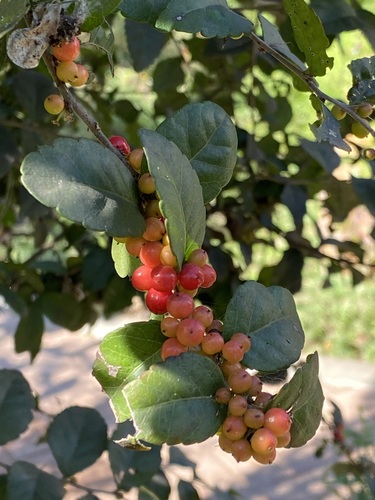
(c) Troos van der Merwe, some rights reserved (CC BY-NC), uploaded by Troos van der Merwe
iNaturalist· cc-by-nc
(c) Nick Helme, some rights reserved (CC BY-NC), uploaded by Nick Helme
iNaturalist· cc-by-nc
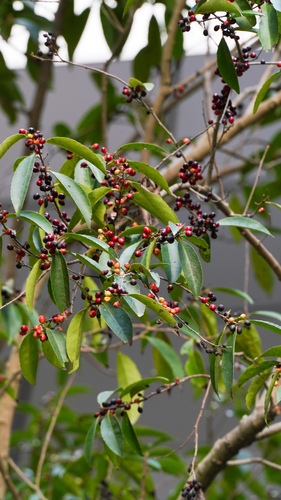
(c) Anthony Walton, some rights reserved (CC BY-NC), uploaded by Anthony Walton
Summary
Source: WikipediaScolopia mundii, the red pear or mountain saffron, is a tree in the family Salicaceae found in Eswatini, Lesotho, South Africa and Zimbabwe. It has dark green foliage and bright yellow or orange berries. A very adaptable species, it can be found in forests, forest edges and mountain slopes from 30-2200m in elevation. While it is not considered threatened over its entire range, it is rare and considered Critically Endangered (CR) in Zimbabwe.
Description
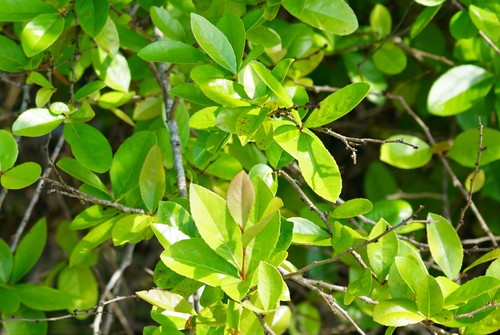
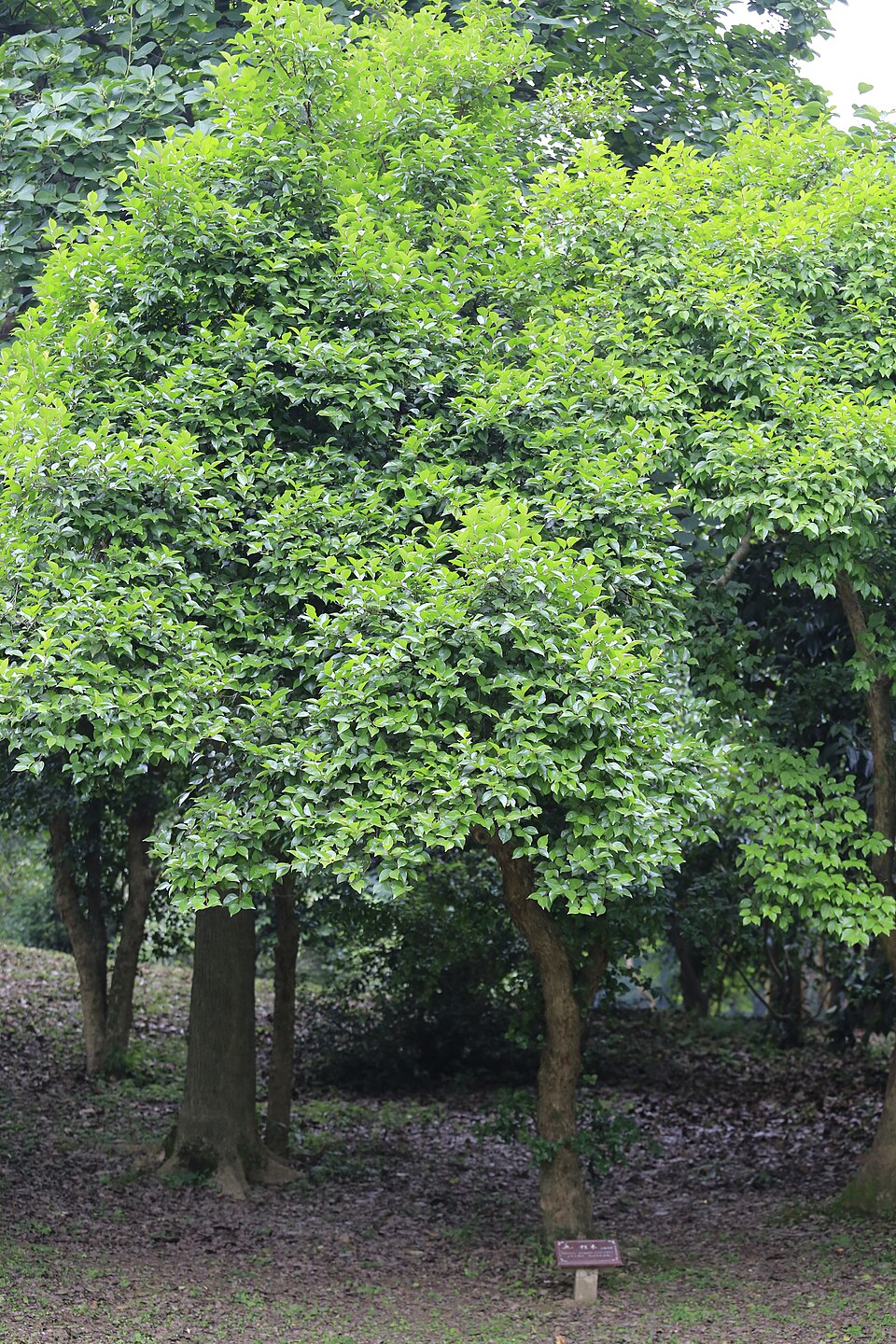
A tree. It can be 9-25 m high and with a trunk 1.2 m across. The crown has spreading branches. The leaves are simple and alternate. They are 2.5-8 cm long by 2.5-5 cm wide. They are oval or egg shaped. The edges of the leaves have sharp teeth. The leaf is dark glossy green above and paler underneath. Leaf stalks are often red. The flowers are small and greenish-white. The groups of flowers are in the axils of leaves. The fruit are 1.3 cm across. They are round with a wispy point. The fruit are yellow or orange when ripe.
Edible Uses
The fruit are kept for two days after harvesting before eating.
Traditional Uses
The fruit are kept for two days after harvesting then eaten. CAUTION: Some reports say the fruit are poisonous until kept to fully ripen.
This uses section is brief — help expand it
Known Hazards
Some reports indicate the fruit are poisonous until fully ripened.
Distribution
A tropical plant. It grows from sea level to about 1900 m altitude. It often grows on high rocky grassy slopes. It suits hardiness zones 9-11.
Where It Grows
Africa, Australia, East Africa, Eswatini, Lesotho, South Africa*, Southern Africa, Swaziland, Zimbabwe,
Cultivation
Plants can be grown from seed or cuttings.
Notes
Also put in the Flacourtiaceae family.
Synonyms
References (15)
- Cundall, P., (ed.), 2004, Gardening Australia: flora: the gardener's bible. ABC Books. p 1327
- Fox, F. W. & Young, M. E. N., 1982, Food from the Veld. Delta Books. p 232
- Long, C., 2005, Swaziland's Flora - siSwati names and Uses http://www.sntc.org.sz/flora/
- Palgrave, K.C., 1996, Trees of Southern Africa. Struik Publishers. p 627
- Palmer, E and Pitman, N., 1972, Trees of Southern Africa. Vol. 3. A.A. Balkema, Cape Town p 1547
Show all 15 references Hide references
- Peters, C. R., O'Brien, E. M., and Drummond, R.B., 1992, Edible Wild plants of Sub-saharan Africa. Kew. p 114
- Ruiters-Welcome, A. K., 2019, Food plants of southern Africa. Ph.D. thesis. Univ. of Johannesburg p 99
- Schmidt, E., Lotter, M., & McCleland, W., 2007, Trees and shrubs of Mpumalanga and Kruger National Park. Jacana Media p 436
- Swaziland's Flora Database http://www.sntc.org.sz/flora
- van Wyk, B, van Wyk, P, and van Wyk B., 2000, Photographic guide to Trees of Southern Africa. Briza. p 284
- Vinnicombe, 1976,
- von Breitenbach, F., 1985, Southern Cape Tree Guide. Department of Environment Affairs, Forestry Branch. Pamphlet 360 Pretoria p 22
- Welcome, A. K. & Van Wyk, B.-E., 2019, An inventory and analysis of the food plants of southern Africa. South African Journal of Botany 122 (2019) 136–179
- World Checklist of Useful Plant Species 2020. Royal Botanic Gardens, Kew
- www.zimbabweflora.co.zw 2011