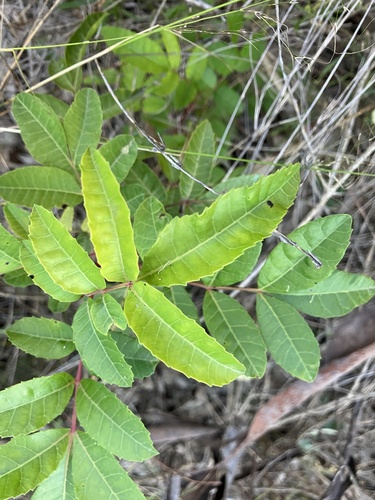
Sclerocarya birrea
(A. Rich.) Hochst.
Ethiopian marvola nut, Maroola plum, Marula
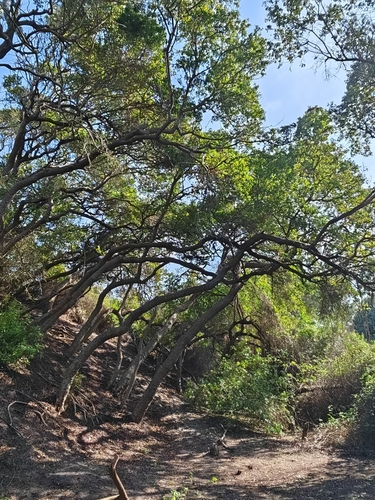
iNaturalist· cc-by-nc
(c) Duncan McKenzie, some rights reserved (CC BY-NC), uploaded by Duncan McKenzie
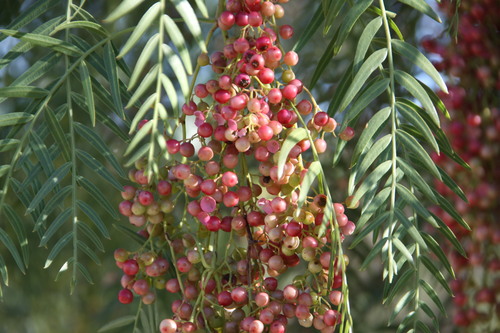
iNaturalist· cc-by-nc
(c) Ricky Taylor, some rights reserved (CC BY-NC), uploaded by Ricky Taylor
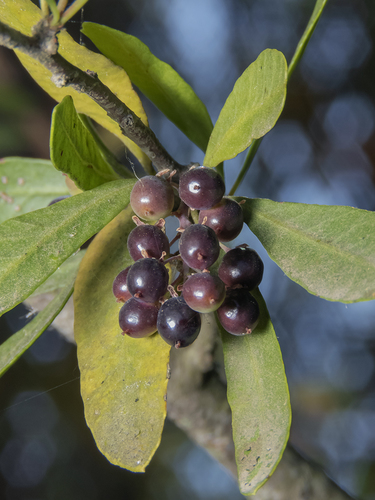
iNaturalist· cc-by-nc
(c) magdastlucia, some rights reserved (CC BY-NC), uploaded by magdastlucia
Summary
Source: WikipediaSclerocarya birrea (Ancient Greek: σκληρός ⟨sklērós⟩, meaning "hard", and κάρυον ⟨káryon⟩, "nut", in reference to the stone inside the fleshy fruit), commonly known as the marula, is a medium-sized deciduous fruit-bearing tree, indigenous to the miombo woodlands of Southern Africa, the Sudano-Sahelian range of West Africa, the savanna woodlands of East Africa and Madagascar.
Description
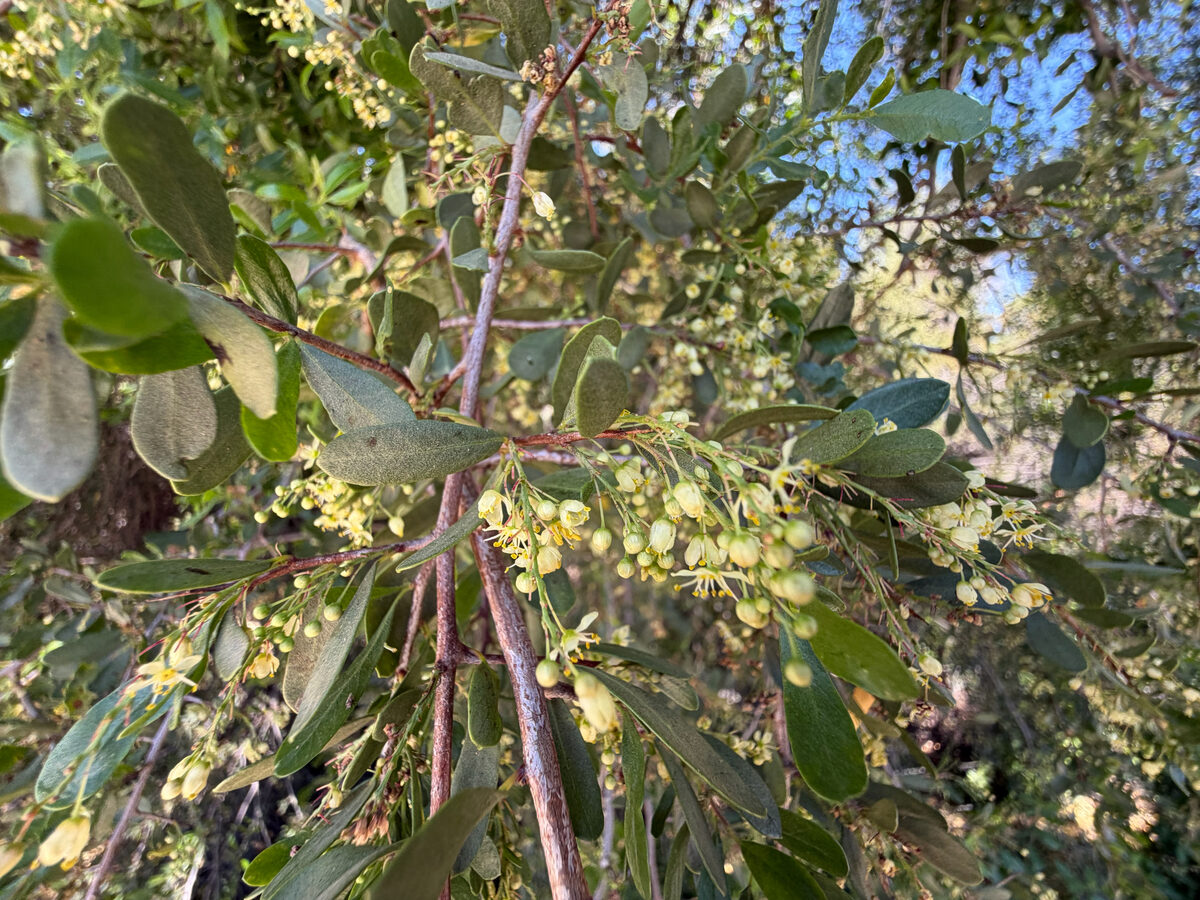
A shrub or tree. It grows 9 m high and spreads 6 m wide. It can be 15 m tall. It loses its leaves during the year. The crown is dense and rounded. The bark is grey and finely cracked. The leaves have leaflets along the stalk. The leaves are near the tips of the branches. The edges of the leaflets can be wavy. Plants are separately male and female. Female flowers are reddish and on long stalks at the ends of branches. The fruit are oval or round and 3-4 cm long. They are green but turn yellow as they ripen. The skin is tough and leathery. The pulp is juicy and white. There is one large stone. There are some subspecies.
Edible Uses
The fruit is eaten raw or cooked. Fully ripe fruits have a mucilaginous texture with a sweetly acid but pleasant taste, variously described as similar to mango or guava, though some find it unremarkable. Often eaten as a snack, travellers find them satisfying to suck for their thirst-quenching qualities. The pulp can be made into jam or wine, or boiled down to a thick black syrup used as a sweetening agent. The fruit contains four times as much vitamin C as oranges. The pale yellow, obovoid fruit reaches up to 37mm long, with a leathery rind and fibrous soft pulp surrounding the stone. Expressed juice makes an agreeable drink and is widely fermented into an alcoholic beverage, or boiled down to a thick black consistency for sweetening guinea-corn gruel. Fruits cannot be stored for more than a week, bruise easily, and are difficult to transport. The nut contains two or three seeds with oily, edible kernels, each up to 20mm long and 8mm wide, with a flavour similar to walnuts or peanuts. The seeds can be ground into flour. An edible oil extracted from the seeds contains 28% protein and is used for cooking; it consists of 64% oleic acid, 17% myristic acid, and small quantities of several other fatty acids. The oil has a quality and fatty acid composition comparable to olive oil, but with a stability ten times greater.
Traditional Uses
The fruit are eaten. The juice is also fermented to produce a cider-like drink. Fruit are used for jam. The oily kernel is eaten. It also produces an edible oil.
Medicinal Uses
The bark is analgesic and anti-inflammatory. An infusion is used to treat stomach pains and constipation, and to ease labour pains. A decoction is used as a purge. The analgesic properties are used to relieve toothache by chewing the bark and placing it into cavities in the teeth. The bark — particularly of the roots, but also of the trunk — is used as a remedy for snake bites: pounded to a paste, it is rubbed onto the affected area until a swelling is raised, then a decoction of the bark is drunk and a dressing is applied. Leaves may also be used for this purpose. The bark is applied externally as an anti-inflammatory preparation; mixed with butter, it is applied to the forehead for headache and to the eyes for blepharitis. A decoction is used as a wash for skin eruptions. The root is pounded with water and the resulting liquid drunk to treat schistosomiasis, and is also used for washing scabies. The fruit is said to be laxative. Leaves and fruits are chewed to treat coughs. The plant is noted for its vitamin C content.
Distribution
A tropical plant. It grows in the lowlands. It grows in equatorial Africa. It grows in dry areas. It grows in the Sahel. It can grow in arid places. It grows in Miombo woodland in Africa. In Brisbane Botanical Garden. In Ethiopia it grows between 500-1,700 m above sea level.
Where It Grows
Africa, Angola, Asia, Australia, Benin, Botswana, Burkina Faso, Cameroon, Central Africa, Chad, Cuba, East Africa, Egypt, Ethiopia, Ghana, Guinea, Guinée, Guinea-Bissau, India, Kenya, Malawi, Mali, Mauritania, Mozambique, Namibia, Niger, Nigeria, North Africa, Sahel, Senegal, South Africa, Southern Africa, South Sudan, Sudan, Tanzania, Togo, Uganda, West Africa, West Indies, Zambia, Zimbabwe,
Cultivation
Plants can be grown by seeds but the seeds do not easily germinate. They need to have a hole cut in the hard seed coat or put into sulphuric acid. The seeds can be soaked over night in water before planting. It can be grown from cuttings and root suckers. Using fertilizer, manure and early irrigation reduce the survival and growth of young plants. They are adapted to low fertility and seasonal rainfall.
Propagation
Dried seed can retain viability for several years. The hard seed shell creates a physical barrier to germination. Removing the opercula (lids) manually with a small chisel significantly improves germination speed and uniformity, though this is normally too time-consuming to be practical. Cracking the stones in a vice has also been reported to improve germination, but must be done carefully as the seeds are very fragile and easily damaged; cracking may also increase seed microflora, so extracting the seeds this way is not recommended. Acid treatment has shown good results. With opercula removed, germination is fast and uniform, reaching 70% after one week and 85% after two weeks from sowing. Without any treatment, germination may take up to nine months. The plant is also easily propagated from cuttings.
Other Uses
The tree provides shade and acts as a windbreak. The bark yields a strong fibre used for making ropes. When injured, the bark exudes a nearly colourless gum that becomes brittle and friable on drying; dissolved in water and mixed with soot, it is used to make ink. The bark contains around 20% tannins and is used to prepare a mauve, pink, brown, or red dye depending on the method used. The seeds contain 56% of a non-drying oil used in skin care. The oil-rich seeds burn brightly like a candle. The heartwood is greyish dirty white to red-brown, not clearly demarcated from the thin sapwood band. The wood is coarse-textured with interlocked grain, light to moderate in weight, soft and weak, but moderately durable when well-seasoned. It works easily with sharp tools, takes nails, turns well, can be carved, and takes a good polish. It is used for mortars, bowls (considered the best species for making strong black-stained bowls), wooden platters, milking vessels, axe handles, drums, hollowed-out canoes, pestles, furniture, saddles, and carvings. The wood is also used as fuel. Several moths breed on the tree, including Argema mimosae, the African Moon Moth.
Other Information
It is a commonly used fruit in Mozambique. Fruit tend to be available in the drier more hungry season. It is cultivated.
Notes
There are 4 Sclerocarya species. The fruit are rich in Vitamin C.
Nutrition
| Part | Moisture | kJ | kcal | Protein | Vit A | Vit C | Iron | Zinc |
|---|---|---|---|---|---|---|---|---|
| Kernels | 3.9 | 2704 | 647 | 28.3 | — | — | 0.4 | — |
| Fruit | 87 | 226 | 54 | 0.5 | — | — | — | — |
Synonyms
Also Known As
Akamil, Arol, Baqusha, Boita, Ciruela de los cafres, Daniya, Danya, Didissa, Dineygama, Eedi, Eijikai, Ejikai, Ekajijai, Enaimu, Gene, Gummel, Hemaidai, Himed, Hudha, Humeid, Ijakait, Kamul, Katetalam, Kokwaro, Kuma, Likok, Mauw'a, M'ckoowee, Mbwegele, Mfule, Mng'ongo, Mngongo, Morula, Mounannikmon, Mtondooko, Muganyan, Mugongo, Muhonga, Mupfura, Muura, Muuw'a, Nagna, Ndouas, Ng'ongwa, Ngoringo, N'gounan, Noabga, Nobray, Nobse, Nunga, Olmagwai, Olmang'wai, Olmangusai, Omugongo, Otitimo, Otitipo, Paatta, Paatta-aguta, Paelen, Pasha, Sorah, Tendonri, Thibo, Tibo, Titigo, Tunkelo, Ubamingbu, Weslecha, Yeberha-lomi
References (103)
- Abbiw, D.K., 1990, Useful Plants of Ghana. West African uses of wild and cultivated plants. Intermediate Technology Publications and the Royal Botanic Gardens, Kew. p 48
- Addis, G., Asfaw, Z & Woldu, Z., 2013, Ethnobotany of Wild and Semi-wild Edible Plants of Konso Ethnic Community, South Ethiopia. Ethnobotany Research and Applications. 11:121-141
- Addis, G., et al, 2013, The Role of Wild and Semi-wild Edible Plants in Household Food Sovereignty in Hamer and Konso Communities, South Ethiopia. Ethnobotany Research & Applications. 11:251-271
- Akinnifesi F. K., et al, 2008, Early growth and survival of three miombo woodland fruit tree species under fertilizer, manure and dry-season irrigation in southern Malawi. Forest Ecology and Management 255:546-557
- Akinnifesi, F. K., et al, 2006, Towards the development of Miombo fruit trees as commercial crops in Southern Africa. Forests, Trees and Livelihoods. Vol. 16 pp 1-3-121
Show all 103 references Hide references
- Akinola, R., et al, 2020, A Review of Indigenous Food Crops in Africa and the Implications for more Sustainable and Healthy Food Systems. Sustainability 2020, 12, 3493;
- Ambasta S.P. (Ed.), 2000, The Useful Plants of India. CSIR India. p 561
- Anywar, G., et al, 2014, Wild Plants Used as Nutraceuticals from Nebbi District, Uganda. European Journal of Medicinal Plants 4(6): 641-660, 2014
- Asfaw, Z. and Tadesse, M., 2001, Prospects for Sustainable Use and Development of Wild Food Plants in Ethiopia. Economic Botany, Vol. 55, No. 1, pp. 47-62
- Ashagre, M., et al, 2016, Ethnobotanical study of wild edible plants in Burji District, Segan Area Zone of Southern Nations, Nationalities and Peoples Region (SNNPR), Ethiopia. Journal of Ethnobiology and Ethnomedicine (2016) 12:32
- Assefa, A. & Abebe, T., 2010, Wild Edible Trees and Shrubs in the Semi-arid Lowlands of Southern Ethiopia. Journal of Science and Development 1 (1) 2010
- Atato, A., et al, 2010, Diversity of Edible Wild Fruit Tree Species of Togo. Global Science Books.
- Atato, A.,et al, 2011, Edible Wild Fruit Highly Consumed during Food Shortage Period in Togo: State of Knowledge and Conservation Status. Journal of Life Sciences 5 (2011) 1046-1057
- Awas, T., 1997, A Study on the Ecology and Ethnobotany of Non-cultivated Food Plants and Wild Relatives of Cultivated crops in Gambella Region, Southwestern Ethiopia. Addis Ababa University. p 36
- Awodoyin, R.O., Olubode, O.S., Ogbu, J.U., Balogun, R.B., Nwawuisi, J.U. and Orji, K.O., 2015, Indigenous Fruit Trees of Tropical Africa: Status, Opportunity for Development and Biodiversity Management. Agricultural Sciences, 6, 31-41
- Ayantunde, A. A., et al, 2009, Uses of Local Plant Species by Agropastoralists in South-western Niger. Ethnobotany Research and Applications. Vol. 7: 53-66
- Balemie, K., & Kebebew, F., 2006, Ethnobotanical study of wild edible plants in Derashe and Kucha Districts, South Ethiopia. Journal of Ethnobiology and Ethnomedicine. 2:53
- Ballal, M. E., et al, 2014, Ethno-botany of Natural Forests of Nuba Mountains, South Kordofan State, Sudan. Journal of Forest Poducts & Industries. 3(1):13-19
- Bationo/Kando, P., et al, 2009, Variability of some biochemical traits of Sclerocarya birrea (A. Rich.) Hochst. fruits in Burkina Faso. Fruits, Vol. 64, p. 251-360
- Belem, B., et al, 2007, Use of Non Wood Forest Products by local people bordering the “Parc National Kaboré Tambi”, Burkina Faso. The Journal of Transdisciplinary Environmental Studies vol. 6, no. 1 p 9
- Belem, M., et al, 2017, Strategy of Conservation and Protection of Wild Edible Plants Diversity in Burkina Faso. ANADOLU 27 (2) 2017, 82- 90
- Bunderson, W. T. et al, 2002, Common Agroforestry Species in Malawi. Malawi Agroforestry Extension Project, Pubication No. 46, Lilongwe. p 3
- Bvenura, C. & Sivakumar, D., 2017, The role of wild fruits and vegetables in delivering a balanced and healthy diet. Food Research International 99 (2017) 15–30
- Cheikhyoussef, A & Embashu, W., 2013, Ethnobotanical knowledge on Indigenous fruits in Ohangwena and Oshito regions in Northern Namibia. Journal of Ethnobiology and Ethnomedicine 9:34
- Cole, D. et al, 2014, Indigenous Plant Products in Namibia. Venture Publications Windhoek, Namibia. p 61
- Cundall, P., (ed.), 2004, Gardening Australia: flora: the gardener's bible. ABC Books. p 1327
- Dale, I. R. and Greenway, P. J., 1961, Kenya Trees and Shrubs. Nairobi. p 30
- Demise, S. & Asfaw, Z., 2020, Ethno Botanical Study of Wild Edible Plants in Adola District, Southern, Ethiopia. International Journal of Research and Analytical Reviews (IJRAR) 7(2).
- Diarra, N. et al, 2016, Etude ethnobotanique des plantes alimentaires utilisées en période de soudure dans les régions Sud du Mali. Int. J. Biol. Chem. Sci. 10(1): 184-197
- Duguma, H. T., 2020, Wild Edible Plant Nutritional Contribution and Consumer Perception in Ethiopia. Hindawi International Journal of Food Science Volume 2020, Article ID 2958623, 16 pages
- Emire, A., et al, 2021, Ethnobotanical Study of Wild Edible Fruit Tree and Shrub Species in Adola Rede and Odo Shakiso Midland Districts of Guji Zone, Southern Ethiopia. Int. J. Adv. Res. Biol. Sci. (2021). 8(12): 96-109
- Engelter, C. & Wehmeyer, A. S., 1970, Fatty Acid Composition of Oils of Some Edible Seeds of Wild Plants. Journal of Agricultural and Food Chemistry. 18(1): 25-26
- Facciola, S., 1998, Cornucopia 2: a Source Book of Edible Plants. Kampong Publications, p 10
- Flora 27 (Bes. Beil.):1. 1844
- Fowler, D. G., 2007, Zambian Plants: Their Vernacular Names and Uses. Kew. p 8
- Gallagher, D. E., 2010, Farming beyond the escarpment: Society, Environment, and Mobility in Precolonial Southeastern Burkina Faso. PhD University of Michigan.
- Gemedo-Dalle, T., et al, 2005, Plant Biodiversity and Ethnobotany of Borana Pastoralists in Southern Oromia, Ethiopia. Economic Botany 59(1) pp. 43-65
- Gilbert, T., et al, 2017, Diversity and local transformation of indigenous edible fruits in sahelian domain of Cameroon. Journal of Animal & Plant Sciences Vol. 26 (2): 5289-5300
- Glew, R. H., et al, 1997, Amino Acid, Fatty Avid and Mineral Composition of 24 Indigenous Plants of Burkina Faso. Journal of Food Composition and Analysis 10, 205-217
- Goode, P., 1989, Edible Plants of Uganda. FAO p 30
- Goode, P., 1989, Edible Plants of Uganda. FAO p 37
- Grivetti, L. E., 1980, Agricultural development: present and potential role of edible wild plants. Part 2: Sub-Saharan Africa, Report to the Department of State Agency for International Development. p 41, 44
- Grubben, G. J. H. and Denton, O. A. (eds), 2004, Plant Resources of Tropical Africa 2. Vegetables. PROTA, Wageningen, Netherlands. p 564
- Gueye, M., et al, 2014, Wild Fruits Traditionally Gathered by the Malinke Ethnic Group in the Edge of Niokolo Koba Park (Senegal). American Journal of Plant Sciences 5, 1306-1317
- Guinko, S. & Pasgo, L. J., Harvesting and marketing of edible products from local woody species in Zitenga, Burkina Faso. Unasylva - No. 168
- Hanawa, Y., 2013, Wild edible plants used by Guiziga people of far northregion of Cameroon. Int. J. Med. Arom. Plants. Vol 3 (2) : 136-143
- Harris, F. M. A. and Mohammed, S., 2003, Relying on Nature: Wild Foods in Northern Nigeria. Ambio Vol. 32 No. 1. p 25-30
- Hedrick, U.P., 1919, (Ed.), Sturtevant's edible plants of the world. p 599
- Ibrahim, H. A., et al, 2012, Ethnobotanical Survey of the Wild Edible Food Plants Consumption among Local Communities in Kano State, North-Western, Nigeria, International Journal of Science and Technology. Vol. 2. No. 10 p 716
- INFOODS:FAO/INFOODS Databases
- Janick, J. & Paul, R. E. (Eds.), 2008, The Encyclopedia of Fruit & Nuts. CABI p 26
- Jardin, C., 1970, List of Foods Used In Africa, FAO Nutrition Information Document Series No 2.p 36, 161
- Johns, T., Mhoro, E. B. and Sanaya, P., 1996, Food Plants and Masticants of the Batemi of Ngorongoro District, Tanzania. Economic Botany, Vol. 50, No. 1, pp. 115-121
- JSTOR Global Plants edible
- Keay, R.W.J., 1989, Trees of Nigeria. Clarendon Press, Oxford. p 374
- Kidane, B., et al, 2014, Ethnobotany of Wild and Semi-wild Edible Fruit Species used by Maale and Ari Ethnic Communities in South Ethiopia. Ethnobotany Research and Applications. Vol. 12, 1546-3465-12-455
- Lamien-Meda, A., et al, 2008, Polyphenol Content and Antioxidant Activity of Fourteen Wild Edible Fruits from Burkina Faso. Molecules 2008,13, 581-594
- Leakey, R. R. B., 1999, Potential for novel food products from agroforestry trees: A review. Food Chemistry. 66:1-14
- Leakey, R. R. B., & Asaah, E. K., 2013, Underutilised Species as the Backbone of Multifunctional Agriculture – the Next Wave of Crop Domestication. Proc. 2nd Int. Symp. on Underutilized Plants Species “Crops for the Future – Beyond Food Security”. Acta Hort. 979, ISHS p 293
- Le Houerou, H. N., (Ed.), 1980, Browse in Africa. The current state of knowledge. International Livestock Centre for Africa, Ethiopia. p 161
- Lulekal, E., et al, 2011, Wild edible plants in Ethiopia: a review on their potential to combat food insecurity. Afrika Focus - Vol. 24, No 2. pp 71-121
- Magaia, T., et al, 2013, Dietary fiber, organic acids and minerals in selected wild edible fruits of Mozambique. SpringerPlus 2013, 2:88
- Malaisse, F., 1997, Se nourrir en floret claire africaine. Approche ecologique et nutritionnelle. CTA., p 67
- Mannheimer, C. A. & Curtis. B.A. (eds), 2009, Le Roux and Muller's Field Guide to the Trees and Shrubs of Namibia. Windhoek: Macmillan Education Namibia. p 274
- Martin, F. W., et al, 1987, Perennial Edible Fruits of the Tropics. USDA Handbook 642 p 14
- Masters, T., 2021, Traditional food plants of the upper Aswa River catchment of northern Uganda—a cultural crossroads. Journal of Ethnobiology and Ethnomedicine (2021) 17:24
- Maundu, P. et al, 1999, Traditional Food Plants of Kenya. National Museum of Kenya. 288p
- Maydell, H. von, 1990 Trees and shrubs of the Sahel: their characteristics and uses. Margraf. p 369
- Mbuvi, M. T. E., et al, 2019, Annonated checklist of plant species of Loita Forest Narok County, Kenya. Int. J. Adv. Res. Biol. Sci. (2019). 6(3): 54-110
- Menninger, E.A., 1977, Edible Nuts of the World. Horticultural Books. Florida p 54
- Mertz, O., Lykke, A. M., and Reenberg, A., 2001, Importance and Seasonality of Vegetable Consumption and Marketing in Burkina Faso. Economic Botany, 55(2):276-289
- Maroyi, A., 2011, The Gathering and Consumption of Wild Edible Plants in Nhema Communal Area, Midlands Province, Zimbabwe. Ecology of Food and Nutrition 50:6, 506-525
- Maroyi, A. & Cheikhyoussef, A., 2017, Traditional knowledge of wild edible fruit in southern Africa: A comparative use patterns in Namibia and Zimbabwe. Indian Journal of Traditional Knowledge. 16(3): 385-392
- Mashile, S. P., et al, 2019, Indigenous fruit plants species of the Mapulana of Ehlanzeni district in Mpumalanga province, South Africa. South African Journal of Botany 122 (2019) 180–183
- Moksia, F., et al, 2019, Diversity and Socio-Economic Value of Wild Edible Plants in the Mounts Mandara Region, Cameroon. International Journal of Sciences. Vol. 8:10
- MORTIMORE
- Motlhanka, D. M. & Makhabu, S. W., 2011, Medicinal and edible wild fruit plants of Botswana as emerging new crop opportunities. Journal of Medicinal Plants Research Vol. 5(10), pp. 1836-1842
- Mpasiwakomu, R. A., 2017, The Diversity and Utilization of Wild Edible and Medicinal Plant Species found in Uvinza Miombo Woodlands, Tanzania. M. Sc. thesis University of Tanzania.
- Mutie, F. G., 2020, Conservation of Wild Food Plants and Their Potential for Combatting Food Insecurity in Kenya as Exemplified by the Drylands of Kitui County. Plants 2020, 9, 1017
- Mutie, F. M., et al, 2023, Important Medicinal and Food Taxa (Orders and Families) in Kenya, Based on Three Quantitative Approaches. Plants 2023, 12, 1145
- Neelo, J., et al, 2015, Ethnobotanical Survey of Woody Plants in Shorobe and Xobe Villages, Northwest Region of Botswana. Ethnobotany Research & Applications 14:367-379
- Neudeck, L. et al, 2012, The Contribution of Edible Wild Plants to Food Security, Dietary Diversity and Income of Households in Shorobe Village, Northern Botswana. Ethnobotany Research & Applications 10:449-462
- Nyadanu, D., et al, 2015, Agro-biodiversity and challenges of on-farm conservation: the case of plant genetic resources of neglected and underutilized crop species in Ghana. Genet. Resourc. Crop Evol. 62(7):
- Ojelel, S. & Kakudidi E. K., 2015, Wild edible plant species utilized by a subsistence farming community in the Obalanga sub-county, Amuria district, Uganda. Journal of Ethnobiology and Ethnomedicine. 11:7
- Ojelel, S., et al, 2019, Wild edible plants used by communities in and around selected forest reserves of Teso-Karamoja region, Uganda. Journal of Ethnobiology and Ethnomedicine (2019) 15:3
- Oryema, C., et al, 2013, Edible wild fruit species of Gulu District, Uganda. International Journal of Biology and Biological Sciences Vol 2(4) pp 068-082
- Pakia, M., 2000, Plant Ecology and Ethnobotany of two sacred forests (Kayas) at the Kenya Coast. M. Sc. Thesis.
- Ruiters-Welcome, A. K., 2019, Food plants of southern Africa. Ph.D. thesis. Univ. of Johannesburg p 14
- Salih, N. K. M., & Ali, A. H., 2014, Wild food trees in Eastern Nuba Mountain, Sudan: Use, diversity, and threatening factors. Journal of Agriculture and Rural Development in the Tropics and Subtropics Vol. 115 No. 1 pp 1-7
- Segnon, A. C. & Achigan-Dako, E. G., 2014, Comparative analysis of diversity and utilization of edible plants in arid and semi-arid areas in Benin. Journal of Ethnobiology and Ethnomedicine 2014, 10:80
- Shumsky, S., et al, 2014, Institutional factors affecting wild edible plant (WEP) harvest and consumption in semi-arid Kenya. Land Use Policy 38(2014) 48-69
- Termote, C., et al, 2014, Assessing the potential of wild foods to reduce the cost of a nutritionally adequate diet: An example from eastern Baringo District, Kenya. Food and Nutrition Bulletin, vol. 35, no. 4
- Ulian, T., et al, 2020, Unlocking plant resources to support food security and promote sustainable agriculture. Plants, People, Planet. 2020;2:421–445.
- van Wyk, Be, & Gericke, N., 2007, People's plants. A Guide to Useful Plants of Southern Africa. Briza. p 24, 56
- van Wyk, B-E., 2011, The potential of South African plants in the development of new food and beverage products. South African Journal of Botany 77 (2011) 857–868
- Vivien, J., & Faure, J.J., 1996, Fruitiers Sauvages d'Afrique. Especes du Cameroun. CTA p 28
- Walsh, M., 2009, The Use of Wild and Cultivated Plants as famine Foods on Pemba Island, Zanzibar. Études océan Indien. 42-43
- Wehmeyer, A. S, 1986, Edible Wild Plants of Southern Africa. Data on the Nutrient Contents of over 300 species.
- Welcome, A. K. & Van Wyk, B.-E., 2019, An inventory and analysis of the food plants of southern Africa. South African Journal of Botany 122 (2019) 136–179
- Wickens, G.E., 1995, Edible Nuts. FAO Non-wood forest products. FAO, Rome. p 108
- Wiersema, J. H. & Leon, B., 2013, World Economic Plants. A Standard Reference CRC Press. 2nd Ed. p 622
- World Checklist of Useful Plant Species 2020. Royal Botanic Gardens, Kew
- Zika, A., et al, 2015, Traditional plant use in Burkina Faso (West Africa): a national-scale analysis with focus on traditional medicine. Journal of Ethnobiology and Ethnomedicine 2015, 11:9