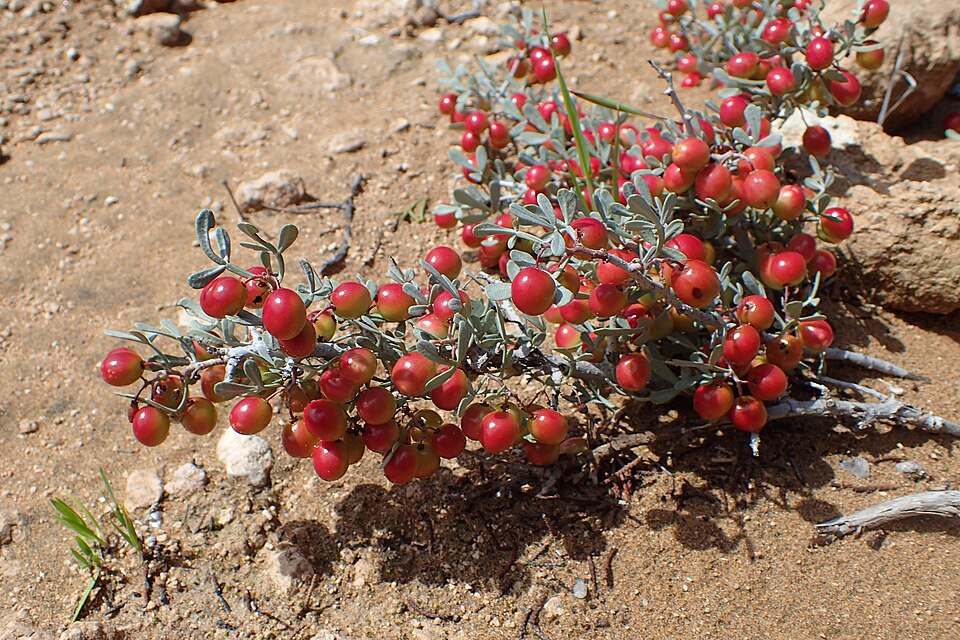
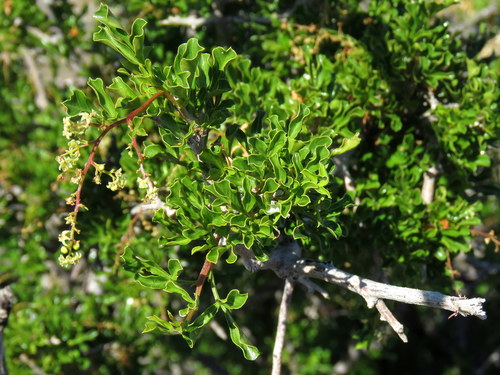
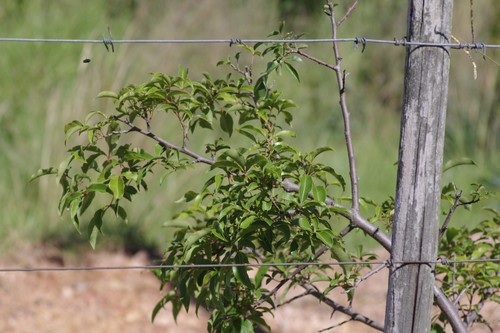
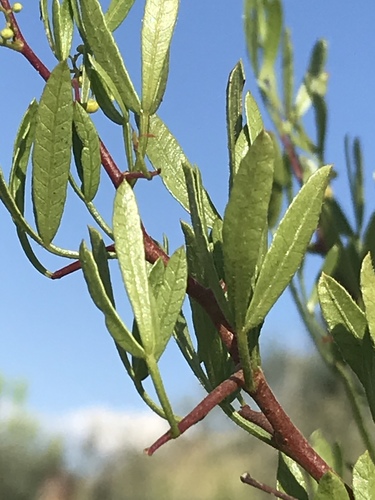
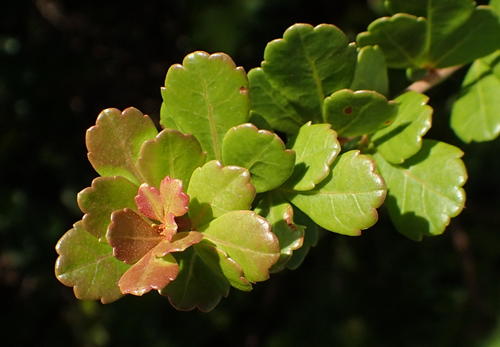
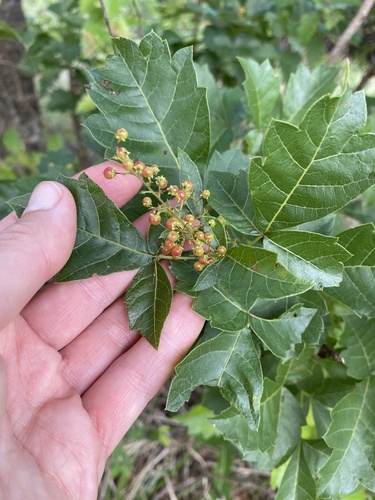
Schinus polygama
(Cav.) Cabrera
Chilean pepper
iNaturalist· cc-by-nc-sa
(c) Claudio Maureira, some rights reserved (CC BY-NC-SA), uploaded by Claudio Maureira
iNaturalist· cc-by
(c) Dick Culbert, some rights reserved (CC BY)
iNaturalist· cc-by
(c) Aira Francisca Faúndez Fallau, some rights reserved (CC BY), uploaded by Aira Francisca Faúndez Fallau
Summary
Source: WikipediaSchinus polygama, the Hardee peppertree or Chilean pepper tree, is a species of plant in the family Anacardiaceae native to Argentina and Chile and naturalized in California.
Description
An evergreen shrub. It grows 3-4 m tall. The crown is low and round. The trunk is 15-25 cm across. It branches low down.
This description is brief — help expand it
Edible Uses
The fruit are used as a flavoring and spice, and are used to make wine.
Traditional Uses
The fruit are used as flavouring. The fruit are used to make wine.
This uses section is brief — help expand it
Medicinal Uses
The fruit, and a resin obtained from the fruit, is antirheumatic. The resin obtained from the trunk is used in the treatment of insect larvae in the body.
Distribution
It is a warm temperate to tropical plant. In Chile it grows from sea level to 2,000 m above sea level. It can grow in drier areas and arid areas. It is best in full sun. It can tolerate light frost but not snow. In Argentina it grows from sea level to 3,200 m above sea level. It suits hardiness zone 9. Geelong Botanical Gardens.
Where It Grows
Argentina, Australia, Bolivia*, Brazil, Chile*, Slovenia, South America, Tasmania,
Cultivation
Plants can be grown from seeds. Seeds germinate in 20-30 days. It can also be grown from cuttings.
Propagation
Seed - sow in a nursery seedbed in a semi-shaded position. A high germination rate is usually achieved within 20 - 30 days. Transplant the seedlings to individual containers when they are about 4 - 5cm tall and plant out when about 20 - 30cm tall. Cuttings of almost ripe wood, 8cm long with a heel. Fair to good percentage.
Other Uses
An aromatic resin is obtained from the fruit of this species, it is mainly used medicinally. A heavy oil is obtained from the fruits. A resin is obtained from the trunk. It is used medicinally. The leaves are rich in tannin. The wood is straight-grained, fine-textured, moderately heavy, hard, with moderate mechanical properties and of low durability. It is used for making small artefacts. The wood is used as a fuel.
Synonyms
Also Known As
Assobiadeira, Boroco, Borocoi, Huingan, Incienso, Molho, Molle
References (9)
- Brack, P., et al, 2020, Frutas nativas do Rio Grande do Sul, Brasil: riqueza e potencial alimentício. Native fruits of Rio Grande do Sul, Brazil: richness and potential as food. Rodriguésia 71: e03102018.
- Chamorro, M. F., & Ladio, A., 2020, Native and exotic plants with edible fleshy fruits utilized in Patagonia and their role as sources of local functional foods. BMC Complementary Medicine and Therapies. 20:155
- Cordero, S. E., Abello, L. A., & Galvez, F. L., 2017, Plantas silvestres comestibles y medicinales de Chile y otras partes del mundo. CORMA p 127
- Hedrick, U.P., 1919, (Ed.), Sturtevant's edible plants of the world. p 597 (As Schinus dependens)
- http://www.botanic-gardens-ljubljana.com/en/plants
Show all 9 references Hide references
- Kinupp, V. F., 2007, Plantas alimenticias nao-convencionais da regiao metropolitana de Porto Alegre, RS, Brazil p 59
- Leon-Lobos, P., et al, 2022, Patterns of Traditional and Modern Uses of Wild Edible Native Plants of Chile: Challenges and Future Perspectives. Plants (Basel) v 11 (6) Table S1
- Nov. pl. descr. dec. 8:102. 1798 (As Schinus dependens)
- www.chileflora.com